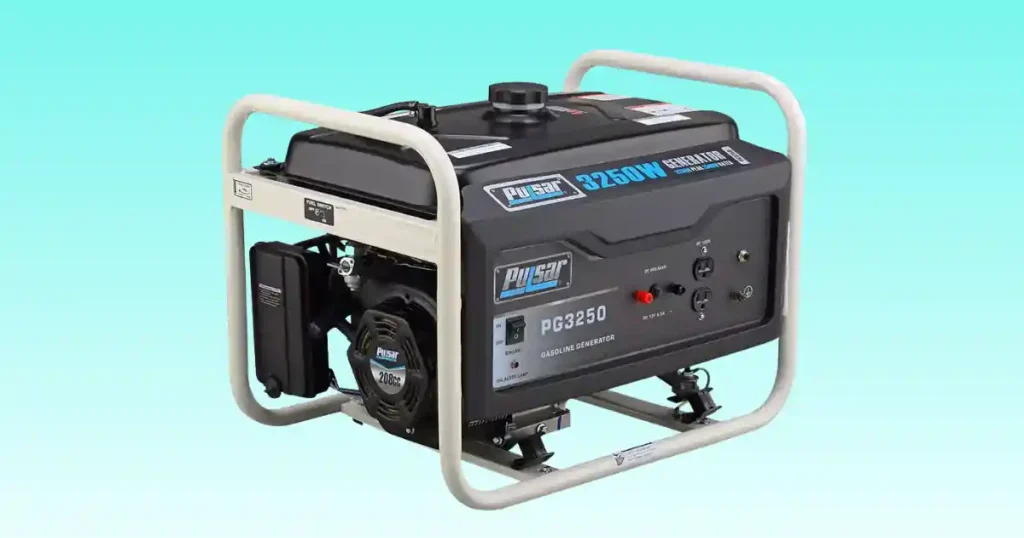
The power goes out in Minneapolis, Minnesota, rain tapping steadily against the windows, and you pull the Pulsar generator out of the garage ready for exactly this moment. Then nothing happens. A Pulsar generator not starting can mean several genuinely different problems: the engine won’t crank at all, it cranks but never fires, it starts and immediately dies, or it starts but runs rough. Don’t start swapping parts randomly before you know which one you’re actually dealing with. This guide walks through the full troubleshooting path, covering fuel, oil, the switch, choke, spark, air, battery, and carburetor, in the same order a technician would check them.
Before touching anything, one safety note matters more than any repair step here. Portable generators must run outdoors, at least 20 feet from homes and buildings, with the exhaust directed away from any windows, doors, or vents. The Consumer Product Safety Commission is blunt about this: never use a portable generator inside a home, garage, basement, shed, or any other enclosed area.
First, Figure Out What Your Pulsar Generator Is Doing
Don’t start taking things apart yet. The sound and behavior of the generator can narrow the problem down quickly.
Nothing happens when you try to start it
Possible causes include the engine switch being OFF, a dead or weak battery, a loose battery connection, a fuse or electrical issue, or a problem with the starter switch itself.
Electric starter clicks but engine does not crank
A weak battery, corroded battery terminals, a failing starter relay, a worn starter motor, or a loose electrical connection are the most likely culprits here.
Recoil starter pulls normally but engine will not fire
Look closely at fuel, the fuel valve, the choke position, the spark plug, the air filter, the carburetor, and any low-oil protection system that may be engaged.
Engine starts but quickly shuts off
Low oil, fuel starvation, an incorrect choke position, a dirty carburetor, an overload protection trip, or a fuel-system restriction can all cause this exact symptom.
Engine starts but runs rough
Stale fuel, a dirty fuel filter, a dirty air filter, an incorrect choke position, carburetor trouble, or a fouled spark plug are all worth checking. Pulsar’s PG2200R manual lists dirty air filters, clogged fuel filters, stale fuel, disconnected spark-plug wires, bad spark plugs, water in fuel, incorrect choke use, low oil, and a flooded engine among its documented no-start or rough-running causes.
Check These Easy Things Before Opening the Generator
This section should save you time and unnecessary repairs. Many no-start problems begin with something wonderfully boring.
Make sure the engine switch is ON
Check the main engine or power switch, confirm it’s in the correct RUN or ON position, and don’t assume it was left there after the last outage. Pulsar troubleshooting instructions specifically identify an OFF engine switch as a possible no-start cause.
Check the fuel valve
Confirm the fuel valve is open, look for the correct ON position, and check your owner’s manual for the exact control layout on your specific model.
Check the fuel level
Don’t rely on memory here. Confirm there’s fresh gasoline in the tank, and consider whether the generator has been sitting unused for months.
Check the oil level
Park the generator on a level surface, check the oil according to the manual, and avoid overfilling. Low-oil protection can prevent starting entirely on some models. Pulsar manuals identify insufficient oil as a no-start cause, and some models automatically shut the engine down once oil falls below the required level.
Disconnect electrical loads
Turn off connected appliances, unplug loads before troubleshooting, and start the generator without a load whenever the manual calls for it.
Check the Fuel and Choke
Fuel problems sit high on the list when a generator has been sitting in a shed since the last storm.
Is the gasoline fresh?
Old gasoline can cause starting problems on its own. Stale fuel gums up the fuel system over time, and water contamination can also prevent proper combustion entirely. Pulsar’s PG2200R troubleshooting table specifically lists stale fuel and water in fuel as possible causes.
Use the choke correctly on a cold engine
Cold gasoline engines often need enrichment to start reliably. Use the START or CHOKE position specified by your manual, then move the choke back toward RUN once the engine starts and warms up. Pulsar’s dual-fuel PG2200BiS manual instructs users to use the choke for starting a cold gasoline engine and then push it back once the engine runs normally.
Do not over-choke the engine
Watch for a fuel smell, an engine that tries to start but doesn’t, a wet spark plug, or repeated unsuccessful starting attempts, all signs of over-choking.
What to do if you think the engine is flooded
Stop repeated starting attempts immediately. Follow the model-specific flooded-engine procedure, allow time for excess fuel to clear if the manual calls for it, and never introduce sparks near fuel. The PG2200R manual lists engine flooding as a no-start cause and instructs waiting before trying again.
Check the Pulsar Generator Battery
This section is especially important for electric-start Pulsar models, and pairing your checks with a reliable multimeter makes battery diagnosis far more accurate.
Signs of a weak starter battery
Nothing happening at all, a clicking sound, slow engine cranking, a starter that works briefly then stops, or dash indicators that seem weak can all point to a struggling battery, especially if it’s been sitting unused.
Inspect the battery connections
Check the positive terminal, check the negative terminal, look closely for corrosion, check for loose connections, and never create a short across the terminals while inspecting them.
Recharge or replace the battery
Use the correct charger for your model, follow the battery instructions exactly, and remember that a battery can show some voltage while still failing under actual starting load. Pulsar’s PG2200R troubleshooting information lists a dead battery as a possible cause and recommends recharging or replacing it.
What if the new battery also goes flat?
Investigate the charging system, look for a parasitic drain, check for loose connections, consider a faulty starter circuit, and think about whether long storage without charging played a role.
Check the Spark Plug and Ignition
If fuel is present and the engine still refuses to fire, spark becomes the next major branch of the diagnosis.
Inspect the spark-plug wire or cap
Confirm it’s securely connected, look for visible damage, check for moisture, and avoid pulling hard on the wire itself. Pulsar manuals identify a disconnected spark-plug wire or cap as a possible ignition-related no-start cause.
Inspect the spark plug
Look for fouling, carbon deposits, wetness, a damaged electrode, an incorrect gap, or a cracked insulator.
Replace a bad spark plug when appropriate
Use the exact plug specified for your generator model, set the gap according to the owner’s manual, and don’t guess a plug specification from a different Pulsar model. A basic spark plug gap gauge takes the guesswork out of this step.
Spark-testing safety
Perform only the test described by the manufacturer, keep gasoline and fuel vapors away from ignition sources, and if you’re not comfortable testing ignition yourself, use a qualified small-engine technician instead.
Check the Air Filter and Intake
An engine needs air as well as fuel and ignition. A surprisingly dirty air filter can cause both starting and running problems.
Signs of a dirty air filter
Hard starting, rough running, a noticeable lack of power, engine bogging, and excess fuel consumption all point toward the air filter.
Inspect the air filter
Remove it according to the manual, look for dirt and blockage, check for damage, and clean or replace it based on the filter type. Pulsar’s PG2200R troubleshooting table lists a dirty air filter as a possible cause of starting and power problems, and keeping a spare replacement air filter on hand avoids delays during an outage.
Check the air intake
Remove leaves, clear obvious debris, check for blockage, and keep the intake area clear at all times.
Don’t run the generator with missing filter components
The air filter system is part of the engine’s intended operation. Never improvise a replacement using household materials.
Check the Carburetor and Fuel System
This is where a simple no-start problem can quietly turn into a real repair job.
Signs of a carburetor problem
A generator that’s sat for a long time, an engine that starts briefly then dies, an engine that only runs with the choke engaged, a fuel smell, rough running, or fuel simply failing to reach the combustion chamber all point toward the carburetor.
Common carburetor causes
Old gasoline, varnish deposits, clogged passages, a stuck needle, contaminated fuel, and a clogged fuel filter are the usual suspects. Pulsar’s GD400BN manual lists contaminated or old fuel, debris in the fuel valve, and a fouled carburetor among its documented engine no-start causes.
Fuel filter problems
Restricted fuel flow, dirt, sediment, and an old filter often show up as symptoms specifically under load rather than at idle. A basic inline fuel filter replacement is often cheap insurance against this exact issue.
When carburetor cleaning should be left to a technician
Fuel leaks, a stuck float, heavy varnish buildup, a damaged needle, repeated flooding, or simply not being sure of the correct adjustment procedure are all good reasons to call a professional instead of pushing forward yourself.
Check the Low-Oil Shutdown System
This deserves its own section because it can make a perfectly healthy engine appear completely dead.
Why low oil can stop the generator
This engine protection system relies on an oil-level sensor that triggers an automatic shutdown, and starting may be prevented entirely on some models until the issue is resolved. Pulsar’s PG2200BiS manual states that when oil falls below the minimum level, the oil-warning indicator comes on and the engine stops automatically; it won’t restart until the proper oil level is restored.
Correct way to check oil
Put the generator on level ground, follow the model-specific manual exactly, check before repeated starting attempts, and use the specified oil type and quantity, ideally kept fresh with a quality small engine oil on hand.
Do not bypass the low-oil sensor
It exists as a protection system. Bypassing it risks real engine damage, so only diagnose the sensor itself when you have clear evidence it’s actually malfunctioning.
Pulsar Generator Not Starting After Storage
A generator can look perfectly fine after six months in a garage and still refuse to cooperate when you need it most.
Battery may be discharged
Electric-start models sitting unused for long periods need regular battery maintenance to stay ready.
Fuel may have deteriorated
Old gasoline, deposits, moisture, and general fuel-system restriction all build up gradually during storage.
Carburetor may be dirty
This is especially common after poor fuel storage practices, so check the fuel system condition and follow model-specific cleaning guidance.
Pre-start inspection after long storage
Fuel, oil, battery, air filter, spark plug, fuel lines, leaks, rodent damage, and wiring all deserve a careful look before the first start attempt.
A realistic storm-season scenario
The generator sits all summer untouched. A November storm knocks out power. The generator hasn’t run in months, and it refuses to start. Maintenance before the outage is always far easier than emergency troubleshooting during it.
Pulsar Generator Starts Then Stops
This symptom narrows the diagnosis differently from a generator that never fires at all.
Low oil
Check the oil level and check the oil-warning system for a triggered shutdown.
Fuel starvation
The fuel valve, fuel filter, carburetor, and fuel passage all deserve inspection here.
Choke left in the wrong position
A cold start needs choke, but a warm engine needs it gradually returned to RUN.
Dirty carburetor
The engine starts briefly, dies as fuel demand changes, and may only run at all with the choke engaged.
Overload is different from a no-start problem
An overload can cause output problems or trigger protection behavior on its own. Disconnect loads and follow the model manual, and don’t assume an electrical load is the cause if the engine itself won’t start in the first place. Pulsar manuals distinguish engine no-start problems from situations where the engine runs but AC output is unavailable or the generator bogs under load.
Pulsar Generator Cranks but Won’t Start
This is one of the most useful distinctions in the whole troubleshooting process.
Think in four basic requirements
Fuel means fresh gasoline actually reaching the engine. Air means a clear intake and a clean filter. Spark means a healthy spark plug and ignition system. Compression means the engine’s basic mechanical condition is sound.
Simple diagnostic flow
Confirm fuel first, then check the choke position, check oil, inspect the spark plug, inspect the air filter, and only then move toward carburetor or fuel-system diagnosis. Seek professional help if compression or ignition faults are suspected.
Don’t throw five new parts at it
Replacing the carburetor, coil, plug, and fuel filter all at once tells you very little about what actually caused the problem. Test one likely cause at a time, and keep the original parts until the fault is genuinely confirmed.
Pulsar Generator Will Not Start With Electric Start
Electric-start models add another diagnostic branch worth understanding on its own.
Check the battery first
Charge level, terminal condition, voltage, and overall battery health all deserve attention before anything else.
Check the starter switch
Confirm correct position, normal switch response, and sound wiring condition.
Check the starter relay
Clicking sounds, no crank at all, or intermittent operation all point toward the relay.
Try recoil start if the model has one
If recoil starts the engine but electric start doesn’t, focus on the electrical starting circuit specifically. If neither method works, shift your investigation toward the engine, fuel, or ignition side instead.
Pulsar Generator Won’t Start With Recoil
A recoil starter adds fewer electrical components, but the engine still needs the same basics to run.
Check the engine switch
Confirm it’s in the correct position before anything else.
Check fuel and fuel valve
Fresh fuel and an open valve are the starting point here too.
Use choke correctly
Cold starts still need proper choke engagement.
Check oil
Low oil can prevent starting on recoil models just as it can on electric-start units.
Inspect spark plug
The same fouling and gap issues apply regardless of starter type.
Check air filter
A blocked filter affects recoil-start engines exactly the same way.
Recoil starter itself feels wrong
A rope that won’t pull, pulls too easily, jams, or fails to retract properly all signal a mechanical issue rather than a fuel or spark problem, and shouldn’t be forced.
Pulsar Dual-Fuel Generator Not Starting on Propane
This is an important subtopic for dual-fuel Pulsar owners specifically.
Confirm the fuel selector
Check the gasoline position, the LPG or propane position, and confirm the valve sits in the correct position for what you’re trying to run.
Check propane supply
Confirm the tank actually has fuel, the tank valve is open, the hose is connected correctly, and there’s no obvious damage anywhere in the line.
Check the starting procedure
Follow the exact model manual for propane starting, and don’t apply gasoline choke procedures blindly to LPG operation, since the two differ meaningfully. Pulsar’s PG2200BiS manual documents separate gasoline and LPG operating positions along with distinct fuel-selector instructions.
If gasoline works but propane does not
Focus your attention on the propane supply, the regulator, the selector itself, the hose connection, and other fuel-system components specific to LPG operation.
Pulsar Generator Not Starting in Cold Weather
Cold weather can expose a marginal starting system that worked fine all summer.
Battery performance
Cold temperatures reduce battery performance noticeably, and electric-start generators may crank more slowly as a result.
Choke
Cold engines typically need choke engagement, so follow your model’s specific starting procedure closely.
Oil viscosity
Use the oil grade specified for the expected temperature range, and avoid randomly switching oil grades without checking the manual first.
Winter storage checklist
Fresh or stabilized fuel according to the manual, regular battery maintenance, a clean air filter, correct oil, and dry storage all belong on this list.
Pulsar Generator Not Starting After Rain or Washing
Moisture can create electrical problems, especially if water reaches switches, connections, or ignition components.
Let the generator dry
Move it to a dry, safe location, don’t operate it in an enclosed space, and inspect closely for signs of water intrusion.
Check obvious areas
The spark plug cap, switches, battery terminals, connectors, and receptacles all deserve a close look after any exposure to moisture.
Do not use a wet generator casually
CPSC advises following manufacturer instructions regarding electrical shock hazards in wet weather conditions.
Pulsar Generator Troubleshooting Chart
A compact chart can become one of the most useful elements on this entire page, provided it stays practical rather than trying to cover every possible fault at once.
| Symptom | Likely area | First action |
|---|---|---|
| No response | Switch or battery | Check switch and battery |
| Clicks only | Battery or starter | Check battery |
| Cranks slowly | Battery or connection | Check battery and terminals |
| Cranks normally | Fuel, spark, or air | Check fuel and ignition |
| Starts then dies | Oil, fuel, or choke | Check oil and fuel |
| Runs rough | Fuel, air, or choke | Check air filter and fuel |
| Won’t start after storage | Fuel or battery | Check fresh fuel and battery |
| Won’t start on LPG | LPG supply or system | Check selector and propane |
| Recoil won’t pull | Mechanical issue | Stop and inspect |
| Runs but no power | Breaker, load, or electrical | Disconnect loads and check breaker |
Step-by-Step Pulsar Generator No-Start Diagnosis
Turn everything covered above into a simple driveway workflow you can actually follow.
Step 1: Make the generator safe
Position it outdoors, at least 20 feet from buildings, with exhaust pointed away, on a stable and level surface, away from any smoking or open flame. CPSC’s current guidance specifies outdoor operation at least 20 feet from homes and buildings with exhaust directed away from openings.
Step 2: Disconnect electrical loads
Unplug appliances, turn off connected loads, and follow your owner’s manual for the correct startup sequence.
Step 3: Check fuel
Confirm fuel level, fuel valve position, fuel freshness, and that you’re using the correct fuel type for your model.
Step 4: Check oil
Confirm the correct level, on level ground, using the correct oil specification for your generator.
Step 5: Check starting controls
Verify the engine switch, choke position, and fuel selector if you’re running a dual-fuel model.
Step 6: Determine crank or no-crank
Listen carefully whether you’re using electric start or recoil start, since the sound tells you a lot before you even open a panel.
Step 7: Inspect basic service items
Check the spark plug, air filter, and battery, the three most common culprits behind most no-start calls.
Step 8: Move to advanced diagnosis only when justified
Carburetor work, fuel pressure or delivery issues, the ignition coil, compression, wiring, and sensors all belong at this later stage, not the first one.
USA Expert Advice for Pulsar Generator Troubleshooting
This section relies on a real US safety authority rather than an invented mechanic quotation.
Expert reference: U.S. Consumer Product Safety Commission
The Consumer Product Safety Commission serves as the named US authority for generator safety here. Its key guidance is consistent and clear: never use a portable generator indoors, never run one in a garage, basement, shed, or other enclosed space, keep it at least 20 feet from the home, point exhaust away from windows, doors, and vents, and install CO alarms throughout the home.
Quote option
CPSC repeatedly describes carbon monoxide as an “invisible killer” across its published safety guidance, a phrase worth remembering every time a generator comes out during an outage.
Expert advice applied to troubleshooting
A generator that won’t start is annoying. A generator running in an unsafe location is dangerous. Safety always comes before diagnosis, so move the unit outside before running any starting test, and stop immediately if you notice fuel leaks or electrical damage anywhere on the unit.
When to Stop DIY Troubleshooting
Not every generator problem belongs in a driveway.
Stop and seek professional help if
Fuel is leaking or spraying, wiring appears burned, electrical components look damaged, the generator smells strongly of fuel, the recoil starter jams, the engine makes abnormal mechanical noise, compression appears low, repeated starting attempts fail even after basic checks, the carburetor requires extensive disassembly, or you’re simply unsure about performing an electrical test safely.
Contact Pulsar support or an authorised service provider
Use the correct service information for your exact model. Pulsar’s own troubleshooting manuals repeatedly direct users to service departments or qualified technicians for issues such as ignition-system faults, compression problems, and certain carburetor issues.
How to Prevent a Pulsar Generator Starting Problem
The best no-start fix is the one you never need during a blackout.
Run the generator periodically
Follow the manufacturer’s maintenance instructions and avoid leaving the unit untouched for years at a time.
Manage stored fuel correctly
Use fresh fuel, follow the manual’s storage guidance closely, and use a stabilizer where appropriate to protect against gumming.
Maintain the battery
This matters especially for electric-start models, so check the charge level during any long storage period.
Change oil on schedule
Follow the model-specific maintenance interval, and check the oil before every use, not just when something seems wrong.
Keep air and fuel systems clean
The air filter, fuel filter, fuel passages, and carburetor all benefit from regular, unglamorous attention.
Make a blackout day checklist
Keep the owner’s manual, correct oil, a spare spark plug, fuel-treatment supplies, a battery charger, a flashlight, basic tools, and a CO alarm reminder all together near the generator, ready before you actually need them.
Pulsar Generator Not Starting FAQ
Why is my Pulsar generator not starting?
The main causes include the switch, fuel, oil, choke, spark, air filter, carburetor, and battery, roughly in that order of likelihood.
Why does my Pulsar generator crank but not start?
Fuel, spark, air, and compression are the four basic requirements worth checking in sequence.
Why does my Pulsar generator click but not start?
Focus on the battery, terminals, starter relay, and starter circuit first.
Can low oil stop a Pulsar generator from starting?
Yes. Pulsar manuals document low-oil protection on applicable models that prevents starting until oil is restored.
Why won’t my Pulsar generator start after sitting?
Stale fuel, carburetor deposits, battery discharge, and general lack of maintenance are the usual explanations.
Why does my Pulsar generator start and then stop?
Low oil, fuel starvation, an incorrect choke position, and carburetor problems all commonly cause this pattern.
Why won’t my Pulsar generator start on propane?
Check the fuel selector, the propane supply, and follow the model-specific LPG starting procedure closely.
Why won’t my Pulsar generator start with electric start?
Focus on the battery, terminals, starter relay, and starter motor.
Can a dirty air filter stop a Pulsar generator from starting?
Yes. Pulsar troubleshooting tables identify a dirty air filter as a possible cause of both starting and performance problems.
Can old gasoline stop a Pulsar generator from starting?
Yes. Pulsar manuals list stale or deteriorated fuel among their documented no-start causes.
Should I keep pulling the recoil starter?
No. Repeated attempts can flood the engine or waste time while further draining battery condition on electric-start models.
Final Pulsar Generator Starting Checklist
Keep the ending highly actionable rather than adding another generic summary.
Before calling a technician
Generator is outdoors and safely positioned, at least 20 feet from the home, exhaust points away from openings, electrical loads are disconnected, fuel is available, the fuel valve is ON, the correct fuel is selected, oil level is checked, the engine switch is ON, choke is set correctly, the battery has been checked if electric start, the spark plug has been inspected, and the air filter has been checked.
Tell the technician exactly what happened
Give them the generator model number, fuel type, whether it’s electric or recoil start, exactly what happened when starting, whether it cranks, whether it briefly starts, how long it was stored, whether old fuel was used, any recent repairs, and any unusual sounds or smells. That information can make diagnosis far faster and cheaper.
Final Recommendation
After years spent walking readers through exactly this kind of storm-night frustration, my honest recommendation is simple: work through switch, fuel, oil, and battery before assuming anything expensive has failed. Most Pulsar generator no-start problems trace back to stale fuel, low oil, or a weak battery, not a genuine mechanical failure.
I always tell people to run their generator periodically and keep fuel fresh, since prevention beats emergency troubleshooting every single time a storm actually hits. Safety comes first, always, so never skip the 20-foot rule and proper ventilation no matter how urgent the outage feels. If you’ve worked through the basics and the generator still won’t cooperate, don’t force it further. A qualified technician will solve it faster than continued guesswork ever will.

Ehatasamul Alom is a dedicated road hybrid bikes expert. With over 15 years of experience, he helps people find the perfect ride. He began his journey as a bike mechanic. He learned the ins and outs of every bike.
Ehatasamul Alom holds a Master's degree in Mechanical Engineering from a Brown University (Providence US 02912), where he specialized in material science and bicycle kinematics. His master's thesis focused on optimizing frame geometry for road hybrid bikes to improve rider comfort and efficiency.
Ehatasamul has an extensive professional background. He spent 10 years (2010-2020) as a Senior Bike Designer at "Urban Cycles," a leading bicycle manufacturer. In this role, he led the development of several award-winning road hybrid bikes, which are known for their durability and performance. He later served (2020-2024) as the Head of Product Development at "Gear Up," a company specializing in high-end cycling components. There, he developed innovative parts and accessories specifically for road hybrid bikes.
Over the years, Ehatasamul has become an authority on Roadhybridbikes. He understands their design and function. His work focuses on making bikes easy to use. Ehatasamul believes everyone should enjoy cycling. He writes guides that are simple to read. His passion for road hybrid bikes is clear. His goal is to share his knowledge with everyone. He wants to see more people on two wheels. His advice is always practical and easy to follow.
- Ehatasamul Alom

- Ehatasamul Alom
- Ehatasamul Alom

- Ehatasamul Alom