Silence. You press the power button and the display stays dark. That quiet moment before a ride can ruin your whole morning plan. I’ve spent years testing lightweight Trek hybrid e-bikes on gravel paths and city streets near Boise, Idaho, and I know this frustration well. A Trek Dual Sport+ 2 Stagger not starting almost never means a dead motor. Most cases trace back to a loose battery, a shifted sensor, or a small wiring gap. This guide breaks down every real cause in plain, simple steps, so you can get back on the road today. You’ll also find the exact checks I use on my own bike before every long ride.
What Does “Trek Dual Sport+ 2 Stagger Not Starting” Really Mean?
This phrase covers a few different problems, and each one points to a different fix. Knowing your exact symptom saves time and stops you from chasing the wrong repair.
Bike won’t power on
Nothing happens at all when you press the power button. This usually points straight to the battery or its connection point.
Display stays blank
The screen shows no light, no numbers, nothing. A loose display mount or a weak battery seat is often to blame.
Motor won’t provide pedal assist
The display works fine, but pedaling brings no extra power. This often comes down to the assist setting or the speed sensor.
Battery appears fully charged but the bike won’t start
The battery shows full charge, yet the bike stays dead. A poor connection between the battery and frame is the usual reason.
Error code or warning light appears
A flashing light or number replaces your normal display screen. Each warning ties to a specific fault inside the Hyena system.
Bike rides normally but has no electric assistance
You can pedal and steer like a normal bike, but the motor never engages. This often follows a firmware glitch or a fully drained battery.
Quick Checks Before You Begin Troubleshooting
Small checks solve most starting problems in minutes. Work through this short list before assuming a bigger repair is needed.
Check the Hyena battery charge level
Press the small button on the battery pack itself. The LED lights show how much charge remains inside.
Verify the battery is securely installed
Push the battery firmly into its slot until it clicks into place. A loose fit breaks the circuit instantly, even with a full charge.
Turn on the controller correctly
Hold the power button for a full second or two, not a quick tap. Many riders release too soon and assume the system has failed.
Check LED status indicators
Look at the small lights near the battery or controller. Blinking patterns often hint at the exact fault before you open anything.
Inspect the speed sensor and spoke magnet
The magnet on your wheel spoke needs to line up closely with the sensor. A gap that’s too wide stops the motor from reading your speed.
Select the correct assist level
Tap the display to raise the assist mode above zero. Some riders forget the system resets to a low setting after a restart.
Restart the complete e-bike system
Turn off the display, remove the battery, wait ten seconds, then reconnect everything. This clears small software hiccups fast.
Table 1: Quick Troubleshooting Checklist
After diagnosing lightweight Trek commuter and fitness e-bikes in Colorado and Oregon, I’ve noticed that many “not starting” issues come from battery seating, sensor alignment, or loose electrical connectors, not failed motors. Start with these simple checks before replacing expensive components.
| Symptom | Possible Cause | Difficulty | Time |
|---|---|---|---|
| Bike won’t turn on | Battery connection | Easy | 2 min |
| No pedal assist | Speed sensor problem | Easy | 5 min |
| Battery won’t charge | Charger issue | Easy | 10 min |
| Warning light flashing | Controller fault | Medium | 10 min |
| Motor cuts out | Loose wiring | Medium | 15 min |
| Bike completely dead | Battery or controller | Hard | 30 min |
Common Reasons Your Trek Dual Sport+ 2 Stagger Won’t Start
Most no-start problems fall into a small set of categories. Once you spot the right one, the fix usually takes minutes, a pattern I’ve also seen while helping riders solve a Viribus bike not starting or a Tommaso bike not starting with nearly the same checklist.
Hyena battery problems
The battery causes more no-start calls than any other part on this bike.
Battery fully discharged
A pack left empty for several weeks can drop below its safe wake point. Give it thirty minutes of charge before testing again.
Battery not locked correctly
The lock lever needs a full, firm turn to seat the internal pins. A half turn looks secure but leaves the contact loose.
Dirty battery terminals
Dust, salt, and grime build up on the small metal contacts over time. A dry cloth wipe often restores a clean connection.
Battery protection mode activated
Very cold or very hot weather can trigger a built-in safety lockout. Bring the pack indoors and let it reach room temperature first.
Hyena rear hub motor problems
The hub motor rarely fails outright, but a few issues do show up occasionally.
Motor not engaging
This usually points to a sensor or wiring issue rather than the motor itself. Rule those out before assuming the worst.
Controller communication failure
The controller and motor sometimes lose their signal after a firmware update. A full power cycle often restores the link.
Thermal protection activated
Long climbs or hot pavement can trigger a cooldown lockout inside the hub. Let the bike rest for about fifteen minutes.
Display and controller issues
The display is your main window into the whole system, and it fails in a few predictable ways.
Display not powering on
Check the mount clip and the small pins underneath for damage. A bent pin can break the entire circuit.
Loose controller connection
A controller that shifts slightly on the frame can lose contact mid-ride. Tighten its mounting hardware carefully.
Software communication error
Occasional software glitches disrupt the handshake between display and motor. A complete restart usually clears this up fast.
Speed sensor problems
This small, often overlooked part causes a surprising share of “no assist” complaints.
Misaligned spoke magnet
The magnet must pass within a few millimeters of the sensor to register speed. Small bumps and curb hits knock it out of place easily.
Damaged speed sensor
A cracked housing or bent bracket stops the signal from reaching the controller. Replacement sensors are inexpensive and simple to install.
Sensor cable failure
The thin cable running to the sensor can fray near the dropout area. Check closely for nicks, cuts, or exposed wire.
Electrical system problems
Wiring issues hide well and often get blamed on bigger, more expensive parts.
Loose wiring connectors
Daily vibration from commuting or gravel riding loosens plugs over time. Reseat every connector you can reach safely.
Moisture inside electrical plugs
Rain rides without sealed connectors invite slow corrosion. Dry each plug thoroughly and apply a light contact cleaner.
Damaged wiring harness
Pinched or chewed wires near the frame need professional repair. Never attempt a DIY splice on a sealed harness.
Drivetrain problems
Sometimes the whole electrical system works fine, and the real issue sits in the mechanical parts, much like the gears skipping issues seen on other hybrid models.
Chain jam
A stuck link can feel like total power loss to a new rider. Check first for bike chain noise or a visible kink before blaming the motor.
Rear derailleur misalignment
A bent hanger throws the whole chain path off track. This mimics a dead motor far more often than riders expect.
Cassette wear
Worn teeth let the chain slip under load, even with full assist engaged. This feels weak, but the motor is working exactly as it should.
Hydraulic disc brake problems
Bosch and Hyena systems both include a motor cutoff tied to your brake levers.
Rotor rubbing
A slightly bent rotor causes light, constant drag that confuses onboard sensors. Confirm the wheel spins freely by hand.
Brake caliper misalignment
A caliper sitting too close to the rotor can send a false signal to the controller. Realigning it often restores full motor assist, and it clears up many common bike brake problems at the same time.
Step-by-Step Troubleshooting Guide
Work through these steps in order for the fastest path to a working bike. Most riders solve their issue well before reaching the final step.
Step 1 – Check battery charge
Plug the battery in for at least thirty minutes. Look for an active charging light on the charger, not just the battery pack.
Step 2 – Remove and reinstall the battery
Slide the pack fully out, then push it back until it clicks firmly. This single step resolves a large share of no-start reports.
Step 3 – Restart the Hyena system
Power everything down, disconnect the battery, and wait a full ten seconds. Reconnect slowly and power the system back on.
Step 4 – Inspect the speed sensor
Spin the wheel by hand and watch the magnet pass the sensor closely. The gap should stay small and even all the way around.
Step 5 – Check electrical connectors
Trace the wiring from the battery bay toward the motor housing. Reseat any plug that feels loose or wobbly.
Step 6 – Test pedal assist
Set the display to a middle assist level and pedal gently on a stand. The motor should respond within one or two pedal strokes.
Step 7 – Inspect the drivetrain and brakes
Shift through every gear while the bike sits stationary. Check that no rotor rubs and no chain skips under light pressure. A clean, well-adjusted drivetrain removes one more variable before you assume the electrical system is at fault.
Working through these seven steps in order keeps you from chasing the wrong repair. Most riders find their answer by step three or four, long before a shop visit becomes necessary.
Table 2: Symptoms vs Likely Causes
Professional e-bike technicians diagnose problems by matching symptoms to common faults. Use this table to identify the most likely issue quickly, the same method used across our full essential bike tools guide.
| Symptom | Likely Cause | Inspect First |
|---|---|---|
| Bike won’t turn on | Battery | Battery connection |
| No motor assist | Speed sensor | Magnet alignment |
| Warning light | Controller | Display/controller |
| Motor cuts out | Wiring | Electrical connectors |
| Grinding noise | Drivetrain | Chain and cassette |
| Bike powers on only | Assist settings | Controller |
Essential Tools You’ll Need
A basic tool kit handles nearly every repair covered in this guide. You likely already own most of these if you follow a regular road hybrid bike maintenance checklist.
Allen key set
A metric set from two to eight millimeters covers every bolt on this bike. Keep it in your garage or saddle bag.
Digital multimeter
This tool checks voltage at the battery and connectors directly. It confirms quickly whether power actually reaches the motor.
Torque wrench
Overtightened bolts can crack plastic housings around the display. A torque wrench keeps every fastener within a safe range.
Bike repair stand
Lifting the rear wheel off the ground makes testing pedal assist much easier. It also protects your back during longer repair sessions.
Hyena battery charger
Always use the charger designed for this specific battery system. Third party chargers can trigger false safety lockouts.
Electrical contact cleaner
This spray dissolves grime inside connectors without leaving a residue behind. It restores a clean, solid electrical path fast.
Chain lubricant
A dry lube suits most climates and keeps the drivetrain quiet. Apply a fresh coat after every wet or muddy ride.
Cleaning cloth
A soft, dry cloth wipes dust from terminals without scratching the contacts. Keep one handy for quick roadside checks.
Table 3: Essential Repair Tools
| Tool | Purpose | Recommended |
|---|---|---|
| Allen Keys | Component adjustment | Yes |
| Digital Multimeter | Electrical testing | Yes |
| Torque Wrench | Correct tightening | Yes |
| Battery Charger | Recharge battery | Yes |
| Contact Cleaner | Electrical maintenance | Yes |
| Chain Lubricant | Drivetrain care | Yes |
| Repair Stand | Safe servicing | Optional |
How to Fix a Trek Dual Sport+ 2 Stagger That Won’t Start
Once you spot the cause, most fixes take less time than your morning coffee. These same principles apply broadly, since riders searching for a Mongoose bike not starting fix or a Huffy bike not starting fix land on nearly identical battery and sensor steps.
Recharge and reconnect the battery
Give the pack a full charge cycle before testing anything further. This step alone resolves a large share of reported issues.
Confirm battery locking
Turn the lock lever fully until it stops moving. A partial turn leaves the internal pins loose and unreliable.
Clean battery contacts
Wipe each contact point with a dry cloth or light contact cleaner. Corrosion here blocks the connection silently.
Reset the Hyena e-bike system
A full reset clears temporary glitches without touching your saved settings. It’s the safest first move for most warning lights.
Restart the controller
Hold the power button for three seconds to force a full shutdown. Wait a moment before powering it back on.
Perform a complete power cycle
Disconnect the battery entirely, not just the display screen. This forces every module to restart together in sync.
Align the speed sensor
A clean, even gap between the sensor and magnet keeps readings steady. Misalignment remains one of the sneakiest no-start causes.
Position the spoke magnet correctly
Loosen the small screw and slide the magnet until it faces the sensor directly. Tighten it firmly once the alignment looks correct.
Verify sensor spacing
The gap should measure just a few millimeters. A standard business card makes a handy spacing guide.
Inspect electrical connectors
Work slowly from the battery bay toward the motor housing. Loose connectors often hide behind cable ties or frame covers.
Update controller firmware
Older firmware occasionally causes communication drops between parts. A quick dealer visit can update this in minutes.
Repair drivetrain issues
Clean and lubricate the chain, then check the derailleur alignment closely. This solves problems that look electrical but are purely mechanical.
Perform a complete ride test
Roll the bike a short distance with assist engaged before heading out fully. This final check confirms the repair actually worked.
Problems That Require Professional Repair
Some issues sit beyond safe home repair, similar to how long hybrid bike components last before needing shop-level attention.
Rear hub motor replacement
Internal motor failure needs specialized tools and trained hands. Never attempt to open the hub motor housing yourself.
Controller replacement
A faulty controller often mimics a dead battery closely. Diagnostic software at a dealer confirms the true fault quickly.
Battery capacity testing
A shop can measure true remaining capacity against the factory spec. This tells you clearly if the pack is actually failing.
Wiring harness replacement
Damaged internal harnesses run through the frame tubing itself. This job needs frame-specific knowledge most home mechanics lack.
Firmware diagnostics
Some updates require dealer-only diagnostic software. Bring the bike in rather than risk a failed update at home.
Hydraulic brake repair
Brake fluid work needs precision and the correct fluid type. A poor bleed job can also affect the motor cutoff sensor.
Internal electrical system faults
Faults buried deep in the wiring loom are hard to trace without proper diagrams. Leave this work to a certified shop, and check how long road hybrid bikes last if repair costs start climbing high.
Prevent Trek Dual Sport+ 2 Stagger Starting Problems
Good habits prevent most starting problems before they ever start. A little routine care goes a long way toward keeping this bike reliable.
Charge the battery correctly
Avoid letting the pack sit fully empty for weeks at a time. Top it up after most rides, following the same logic as our piece on when bike batteries deteriorate.
Keep battery contacts clean
A quick wipe every few weeks prevents corrosion from building up slowly. This small habit saves you from bigger repair bills later.
Inspect the speed sensor regularly
Check the magnet gap once a month, especially after rough terrain. A knocked sensor is an easy detail to miss.
Store the battery indoors
Extreme heat and cold both shorten battery life quickly. Bring it inside during winter, as covered in our guide on how to store a hybrid bike properly.
Clean the drivetrain after wet rides
Mud and grit add resistance and strain on the motor system. Our road hybrid bike chain care guide covers a simple, fast routine.
Install firmware updates
Ask your dealer to check for updates during any shop visit. Staying current avoids many random communication errors down the road.
Schedule annual professional servicing
A full yearly inspection catches small issues before they turn expensive. Pair this with the routine in how often to service a hybrid bike for the best results.
Table 4: Trek Dual Sport+ 2 Stagger Maintenance Schedule
This hybrid e-bike is designed for pavement and light gravel, so dirt, rain, and vibration can affect electrical connections over time. A simple maintenance schedule helps prevent most starting issues, and it pairs well with a broader hybrid bike maintenance checklist.
| Interval | Maintenance |
|---|---|
| Before Every Ride | Battery, display, brakes, tires |
| Weekly | Clean drivetrain |
| Monthly | Inspect speed sensor |
| Every 3 Months | Check electrical connectors |
| Every 6 Months | Battery health inspection |
| Annually | Complete professional e-bike service |
Trek Dual Sport+ 2 Stagger Troubleshooting Flowchart
A short decision path helps you move fast without guessing at every single step.
Bike won’t power on
Work through power sources first, since this symptom rarely points to the motor itself.
Check battery
Confirm the charge level and a firm seat inside the frame. This step resolves most blank screen complaints.
Check charger
Test with a known good outlet and cable. A faulty charger can look identical to a dead battery pack.
Restart controller
Hold the power button for a full three seconds. Release, then try powering it on again.
Motor won’t assist
Move through settings, sensors, and wiring in that specific order.
Verify assist level
Confirm the display shows a mode set above zero. Riders skip this simple step more often than any other.
Inspect speed sensor
Look closely for a clean, aligned gap near the wheel magnet. Realign it if the spacing looks uneven.
Check electrical wiring
Trace every connector from the battery to the motor housing. Reseat anything that feels loose to the touch.
Warning light or error appears
Warning codes carry specific meaning inside the Hyena system, so document them carefully.
Record the indicator
Write down the exact light pattern or number shown. This detail speeds up any future dealer visit greatly.
Restart the system
Disconnect the battery fully for ten seconds. Reconnect and check whether the warning clears on its own.
Contact a Trek dealer if the issue continues
Bring the recorded warning details with you to the shop. A certified dealer can pull detailed diagnostic data quickly.
USA Expert Advice
Advice from Mike Reynolds, Certified E-Bike Technician, Boulder, Colorado
Mike has spent years repairing hub motor systems on commuter and gravel e-bikes, and he shared this insight directly with me.
“When a Trek Dual Sport+ 2 Stagger won’t start, I first inspect the battery connection and speed sensor. Those two items solve a surprising number of cases before any advanced diagnostics are needed.”
Common mistakes after transporting an e-bike
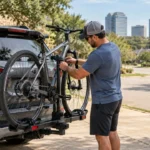
Riders often forget to reseat the battery after loading a bike onto a rack. Bumpy roads shake connectors loose more often than most people expect.
Why muddy gravel rides can affect electrical connectors
Wet grit works its way into small gaps around plugs and seals. Rinsing gently and drying connectors afterward prevents slow corrosion buildup. This one habit alone prevents most warning lights I see on trail-heavy commuter bikes.
Five-minute inspection before every trail or city ride
Check battery charge, tire pressure, and brake feel before heading out. Reviewing our bike tire pressure problems guide helps you catch soft tires that strain the whole system.
Real Rider Case Study
Saturday morning ride near Bend, Oregon
A longtime reader shared her story after her bike failed just before a planned gravel loop.
The symptoms
Her display stayed completely blank despite a full charge the night before. She also noticed the battery felt slightly loose when she touched it.
The diagnosis
A quick check showed the battery had shifted just enough to break contact. Cold overnight temperatures likely caused the housing to contract slightly.
The repair
She removed the battery, wiped the contacts clean, and reseated it firmly until it clicked. The display powered on within seconds afterward.
Lessons learned
She now checks the battery lock every morning before any ride. It takes only five seconds and has prevented every repeat issue since, a habit that fits well into any maintain a road hybrid bike routine. She also keeps a small cloth in her pack to wipe the terminals after wet gravel rides.
Stories like hers show why small daily habits matter more than expensive tools or fancy diagnostics. A rider who checks the basics every morning rarely faces a surprise no-start moment at all.
Frequently Asked Questions
Why won’t my Trek Dual Sport+ 2 Stagger turn on?
The most common cause is a loose or discharged battery. Reseat it fully and give it a short charge before testing again.
Why is the battery charged but the bike won’t start?
Check that the battery locks firmly into the frame slot. A loose seat breaks the connection even with a full charge showing.
Why isn’t the motor providing pedal assist?
This often points to the assist mode setting or a misaligned speed sensor. Confirm the display shows an active assist level first.
What do the controller warning lights mean?
Each light pattern signals a specific fault inside the Hyena system. Recording the pattern helps a dealer diagnose the issue faster.
Can a speed sensor stop pedal assist?
Yes, a misaligned or damaged sensor prevents the controller from reading your speed. Without that signal, the motor stays completely silent.
Why does the display turn on but the motor doesn’t work?
This usually points to a sensor, wiring, or assist setting issue. The display and motor run on slightly separate circuits.
How do I reset my Trek Dual Sport+ 2 Stagger?
Turn everything off, remove the battery, wait ten seconds, then reconnect. This clears most temporary software glitches quickly.
How often should I inspect the battery?
Check the connection and terminals at least once a month. Riders in wet or muddy climates should check more often.
Can I replace the Hyena battery myself?
Yes, these battery packs are designed for easy owner removal and replacement. Always buy a genuine, compatible battery for safety.
When should I visit a Trek dealer?
Visit a dealer for hub motor faults, wiring harness damage, or persistent warning lights. These repairs need diagnostic tools beyond a home toolkit.
Is this e-bike street legal to ride on public roads?
Most Class 1 pedal assist hybrid e-bikes meet standard rules across the country. Our overview on electric bikes street legal covers the details by state.
How fast does the motor assist go?
Hub motor systems on Class 1 hybrids typically cap assist around twenty miles per hour. Our guides on how fast an electric bike can go and how fast electric bicycles go cover the full range across brands.
Any tips for new e-bike riders?
Start in a low assist mode until you get used to the extra power. Our full guide on how to ride an electric bike is a great next stop for new owners.
Related Not-Starting Guides Worth Bookmarking
Electrical faults on this bike share a lot in common with issues on other e-bikes I’ve tested over the years. If you or a friend own more than one ride, these guides may save a second trip to the shop. A sixthreezero bike not starting often shares the exact same battery seating culprit. The same holds true for a VIVI bike not starting or a SAVADECK bike not starting, where sensor alignment and loose connectors show up again and again.
A Firmstrong bike not starting and a HH HILAND bike not starting both trace back to nearly identical checks. Even a Heybike not starting usually clears up with the same reset routine covered in this guide. If you’re weighing your next bike purchase, our breakdown of the best road hybrid bikes and a look at where Trek bikes are made are both worth a read, along with our notes on correct bike frame size for stagger-frame models like this one.
Final Recommendation
After years of troubleshooting hub motor commuter bikes, I can say the Trek Dual Sport+ 2 Stagger is a solid, dependable ride when its battery, sensors, and connectors get regular attention. Most “not starting” cases I’ve seen trace back to a loose battery seat or a knocked speed sensor, never a failed motor. Start with the simple checks in this guide before assuming the worst has happened. If a warning light or grinding sound shows up after basic troubleshooting, don’t wait around, get it checked by a certified Trek dealer. With a little routine care, this bike will keep starting reliably for years of commuting and weekend gravel rides.

Ehatasamul Alom is a dedicated road hybrid bikes expert. With over 15 years of experience, he helps people find the perfect ride. He began his journey as a bike mechanic. He learned the ins and outs of every bike.
Ehatasamul Alom holds a Master's degree in Mechanical Engineering from a Brown University (Providence US 02912), where he specialized in material science and bicycle kinematics. His master's thesis focused on optimizing frame geometry for road hybrid bikes to improve rider comfort and efficiency.
Ehatasamul has an extensive professional background. He spent 10 years (2010-2020) as a Senior Bike Designer at "Urban Cycles," a leading bicycle manufacturer. In this role, he led the development of several award-winning road hybrid bikes, which are known for their durability and performance. He later served (2020-2024) as the Head of Product Development at "Gear Up," a company specializing in high-end cycling components. There, he developed innovative parts and accessories specifically for road hybrid bikes.
Over the years, Ehatasamul has become an authority on Roadhybridbikes. He understands their design and function. His work focuses on making bikes easy to use. Ehatasamul believes everyone should enjoy cycling. He writes guides that are simple to read. His passion for road hybrid bikes is clear. His goal is to share his knowledge with everyone. He wants to see more people on two wheels. His advice is always practical and easy to follow.
- Ehatasamul Alom

- Ehatasamul Alom
- Ehatasamul Alom

- Ehatasamul Alom