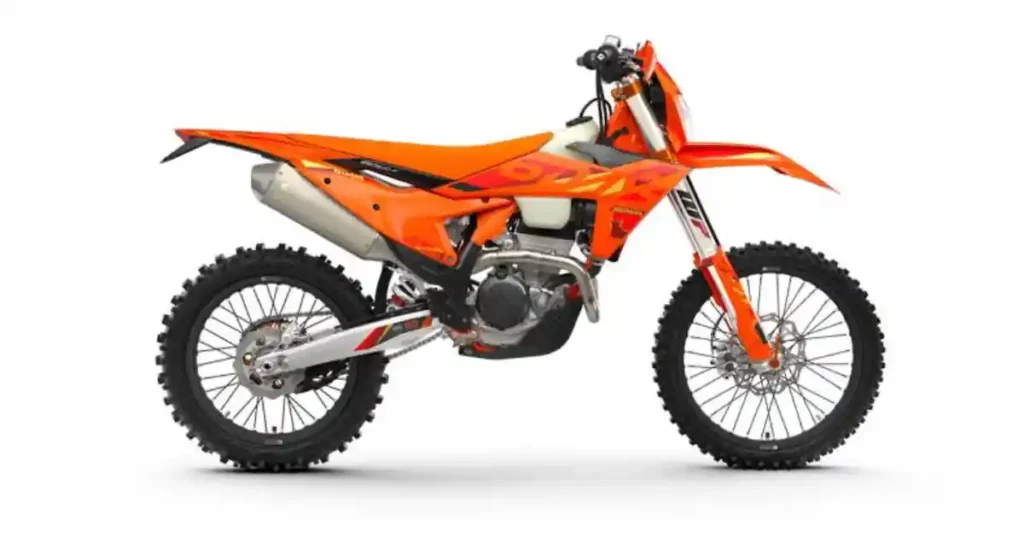
Few things feel worse than a dead dirt bike when you are ready to ride. I remember standing in a muddy forest near Denver with a group of friends. My bike just would not kick into life. That frustrating morning taught me exactly how much a systematic check can save your day. Facing a KTM 250 EXC not starting issue can ruin your weekend plans. However, most causes are things you can find and fix in your own garage. This absolute diagnostic guide will walk you through every common fault, simple switch, and fuel issue. Let us look at what makes your two stroke machine sit silent and how to fix it fast.
KTM 250 EXC Not Starting? Check These Simple Things First
Sometimes the fix is embarrassingly simple. I once spent twenty minutes checking wiring on a muddy Sunday trail ride in Colorado before realizing the kill switch had been bumped with my glove.
What Happens When You Try to Start It?
Your dirt bike speaks to you through its sounds and movements. Listen closely to how it behaves when you try to get it running.
- No crank at all: Pressing the electric start button results in total silence.
- Starter clicks once: A solid metallic click sounds, but the motor does not turn over.
- Rapid clicking: The relay chatters quickly like a small machine gun.
- Engine cranks but won’t fire: The piston cycles fast, but it never catches or runs.
- Starts then stalls: The bike fires for a brief moment and then dies out immediately.
- Hard to kick over (kick-start models): The kick lever feels incredibly stiff or locked solid.
Five-Minute Quick Inspection Checklist
Run through these very basic checks before you grab any heavy workshop tools.
- Fuel level: Look directly into the tank to see if you have fresh gas.
- Fuel tap (older models): Check that your petcock valve points straight down to the on position.
- Engine kill switch: Verify the button is not stuck in the stop position.
- Side stand position: Fold the kickstand up completely away from the frame rail.
- Neutral light: Ensure your gear box sits in neutral before you try to start.
- Battery terminals: Wiggle the heavy leads to make sure they are bolted tight.
- Main fuse: Pull the primary fuse to see if the metal link inside broke.
- Spark plug cap: Push down hard on the rubber boot to verify it clicks onto the plug.
Warning Signs You Shouldn’t Ignore
Some symptoms tell you to stop trying to start the machine to protect it from damage.
- Burning smell: Strong chemical odors mean your electrical wires are melting.
- Fuel leaking: Puddles of raw gas mean a stuck float or torn fuel line.
- Smoke from wiring: White smoke means a direct short circuit is happening now.
- Metallic knocking: Hard mechanical clattering points to severe internal damage.
- Repeated blown fuses: If a fresh fuse pops right away, do not insert a bigger one.
How the KTM 250 EXC Starting System Works
Understanding the starting sequence makes troubleshooting much easier. The engine needs power, spark, fuel, air, and compression to start.
Main Starting Components
These individual parts must work together perfectly to fire up your two stroke machine.
- Battery: Supplies the initial 12 volt power to wake up the system.
- Starter motor: Spins the flywheel to move the piston up and down.
- Starter relay: Bridges high current power from the battery to the starter motor.
- CDI/ECU: The ignition brain unit that times when the engine should fire.
- Ignition coil: Multiplies low battery voltage into a massive electrical arc.
- Spark plug: Receives high voltage to ignite the air and fuel mixture.
- Fuel injector or carburetor (depending on year): Atomizes the gasoline into fine droplets.
- Fuel pump (TPI models): Pressurizes the line on Transfer Port Injection dirt bikes.
- Crankshaft position sensor: Tracks the exact location of the moving piston.
What Happens When You Press Start?
A highly detailed chain of events occurs within a fraction of a second when you hit the button.
- Safety switches are checked: The system confirms the bike is ready to safely run.
- Fuel system primes: The pump or carburetor bowl fills up with fresh gas.
- Starter turns the engine: The electric motor rotates the crank to build speed.
- Spark is generated: The coil sends power down to the clean plug tip.
- Fuel enters the cylinder: Gasoline mixes with incoming fresh air.
- Combustion begins: The mixture ignites, and the bike bursts into life under its own power.
Most Common Reasons a KTM 250 EXC Won’t Start
Most no start problems fall into a handful of categories. Working through them one at a time keeps troubleshooting logical and prevents replacing good parts.
Weak or Dead Battery
Modern bikes rely heavily on stable electrical voltage to activate their ignition computers.
Symptoms
Your instrument panel will look very dim, or it will reset completely when you press start. The starter motor will groan slowly or just make a faint clicking sound.
Voltage Test
Touch a digital multimeter to your battery terminals with the key turned on. A good battery must show 12.6 volts resting and stay above 10 volts while cranking.
Recharge vs Replace
If the unit is low, connect it to a dedicated smart motorcycle battery charger overnight. If the cells will not hold a charge, buy a new lithium or AGM battery.
Loose or Corroded Battery Terminals
Dirty or loose connections block the massive amount of current your starter motor demands.
Common Symptoms
The bike may have intermittent power where the display cuts out completely when you hit a bump. You will see white powdery corrosion built up on the metal leads.
Cleaning Procedure
Unbolt the negative cable first, then the positive lead to prevent dangerous electrical sparks. Scrub the metal clean with a small wire brush and a paste of baking soda.
Faulty Starter Relay
The relay is an electromagnetic switch that connects your small handlebar button circuit to the heavy battery power line.
Single Clicking Noise
A loud single click means the internal switch is trying to move but power is not jumping across the heavy copper terminals inside the housing.
Relay Testing
Set your multimeter to DC volts and check the output stud on the relay while pushing the starter button. If no power passes through, the unit is bad.
Bad Starter Motor
The electric starter motor can fail internally after hours of exposure to deep mud and water.
Symptoms
Your battery will test perfectly fine, and the relay will click loudly, but the motor refuses to spin. The starter body might feel incredibly hot to the touch.
Inspection Steps
Tap the metal starter housing gently with a tool while holding down the starter button. If it suddenly spins, the internal carbon brushes are worn out and done.
Fouled Spark Plug
Two stroke engines can easily foul a spark plug if they get too much oil or fuel.
Wet Plug
A wet spark plug means raw fuel has coated the ceramic insulator tip completely. This liquid gas allows the spark to bleed off to ground without firing.
Carbon Fouled Plug
A dry, black soot coating means your air and fuel mixture is far too rich. The thick carbon layer shorts out the voltage before it can jump the gap.
Replacement Interval
Change your spark plug every 15 to 30 hours of hard trail riding. Keeping a fresh plug in the cylinder head ensures fast, predictable cold starts.
Fuel Delivery Problems
If your engine is turning over beautifully but will not pop, gasoline is not reaching the chamber.
TPI Fuel Pump Failure
On modern fuel injected models, listen for a faint hum from the gas tank when you wake the system. Silence means a dead pump or broken wire.
Clogged Injector
Tiny dirt particles can bypass the filters and block the micro holes in your fuel injector. This stops the fine mist needed for crisp combustion.
Dirty Fuel Filter
The small inline fuel filters on TPI models can clog up with fine trail dust. A blocked filter drops fuel pressure, starving the bike of gas.
Carburetor Issues (Older EXC Models)
Older versions of the EXC rely on mechanical jets that are easily blocked by stale fuel.
Blocked Pilot Jet
The pilot jet has a tiny passage that controls fuel delivery at idle speeds. If it clogs with gummy residue, the bike will not start without choke.
Float Valve Problems
A stuck needle valve can prevent fuel from entering the carburetor bowl entirely. Alternatively, it can stick open and cause raw gas to dump out the overflow tubes.
Flooded Engine
A flooded engine has far too much liquid gasoline sitting inside the crankcase area.
Signs the Engine Is Flooded
You will smell strong raw fuel odors, and the spark plug will come out dripping wet. The engine might pop once but will refuse to catch.
How to Clear It
Turn off your fuel tap, remove the plug, and hold the kill switch down. Kick the engine over ten times to pump the excess raw gas out.
Low Compression
Two stroke top ends wear down over time and lose the ability to squeeze the fuel mix tightly.
Worn Piston Rings
As the rings wear thin, compression escapes past the piston into the bottom end. The bike will become progressively harder to start when the engine is warm.
Cylinder Wear
Deep scratches or score marks in the cylinder wall break the vital ring seal. This loss of sealing pressure stops the engine from drawing fuel in.
Compression Test
Thread a physical compression gauge tightly into the spark plug hole on the head. Kick the motor hard with wide open throttle; you need 120 PSI minimum.
Crankshaft Seal Failure
Two stroke engines rely on tight crankcase seals to pump fuel up into the cylinder.
Hard Starting
A leaking seal draws outside air or transmission oil directly into the lower crank area. This completely ruins the delicate primary compression needed to run.
Lean Running Symptoms
The bike will start hard, idle high on its own, and run very hot. This dangerous air leak can cause your engine to seize up fast.
Faulty Kill Switch or Safety Switch
A shorted out handlebar switch will ground your ignition circuit continuously, preventing any spark.
ECU or Sensor Problems (TPI Models)
Electronic fuel injection relies on a network of sensors to calculate fuel delivery.
Crank Position Sensor
This sensor tells the computer exactly when to fire the injector and spark plug. If it fails, the ECU will sit completely blind and silent.
Tip Over Sensor
The rollover safety switch shuts off the motor if you crash on the trail. A stuck sensor will trick the computer into thinking the bike is upside down.
TPS Sensor
The throttle position sensor measures how far you open the throttle grip. If it goes out of spec, the ECU injects the wrong amount of fuel.
KTM 250 EXC Won’t Start After Sitting for Months
This is one of the most common scenarios for trail bikes that spend winter in the garage.
Old Fuel
Modern fuel begins to degrade and attract water moisture within a few weeks. The highly volatile chemicals evaporate, leaving behind a stale liquid that will not ignite.
Injector Deposits
Stale gasoline leaves behind a sticky varnish layer inside the tiny fuel injector nozzles. This residue blocks the fuel flow, leading to a lean no start condition.
Carburetor Gumming
On older machines, stale fuel turns into a thick green jelly inside the carburetor bowl. This jelly plugs up the tiny pilot and main jets completely.
Battery Self Discharge
Motorcycle batteries lose their charge naturally over weeks of sitting idle in a cold garage. The constant parasitic draw from the clock drains the cells flat.
Moisture in Electrical Connectors
Damp air creates invisible corrosion inside the plastic wire plugs along the main frame rail. This green crust blocks the low voltage signals from the sensors.
KTM 250 EXC Cranks But Won’t Start
If the engine turns over normally but never fires, focus on spark, fuel, and compression.
Check for Spark
Pull your spark plug out, ground the metal threads against the cylinder head, and crank the engine. Look for a bright, snapping blue spark across the electrode.
Listen for Fuel Pump Priming
Turn on the bike and place your ear close to the fuel tank shroud. You must hear a distinct two second whirring sound from the pump.
Verify Fuel Flow
Disconnect the quick release fuel line coupling under the left side of the gas tank. Cycle the starter briefly to ensure gas pumps out with strong force.
Inspect Air Filter
Remove your left airbox cover panel and check the foam air filter element. A filter choked with thick mud or dust will starve the engine of oxygen.
Perform a Compression Test
Use a mechanical compression tester to check the health of your piston and rings. Low compression means the fuel mixture cannot build enough heat to ignite.
KTM 250 EXC Starts Then Dies
Starting and stalling immediately often points to fuel delivery or sensor issues.
Fuel Pump Failure
The pump might have enough strength to prime the line initially but fails under a running load. The engine dies the moment it burns the small primed charge.
Blocked Pilot Jet
On carbureted models, the bike might start on the rich choke circuit but die immediately when you turn the choke knob off because the pilot jet is plugged.
Side Stand Switch Fault
If your model has a kickstand safety switch, vibrations can cause it to drop slightly. This minor movement cuts the ignition circuit instantly while running.
Air Leak
A cracked rubber intake boot or leaking crank seal lets unmetered air enter the engine. This thins out the mixture, causing the motor to stall right away.
Step-by-Step KTM 250 EXC Troubleshooting Process
When I troubleshoot a no-start dirt bike, I always follow the same order. It keeps the process calm and prevents chasing random theories.
- Check battery voltage: Use your multimeter to verify the battery has over 12.6 volts resting.
- Inspect battery connections: Ensure both metal terminal bolts are clean and torqued down snug.
- Check fuses: Examine the main 10 amp and 20 amp fuses under the seat panel.
- Test for spark: Ground the spark plug to the engine block to check for a blue arc.
- Listen for fuel pump: Confirm the fuel system primes on modern TPI and TBI models.
- Inspect spark plug: Look at the plug color to see if it is fouled or wet.
- Check compression: Use a gauge to ensure the top end has healthy sealing pressure.
- Inspect crank seals: Look for oil wetness behind the stator cover area.
- Scan ECU codes (TPI models): Use a diagnostic tool to read active trouble codes.
KTM 250 EXC No-Start Diagnosis Table
Using a symptom matrix is the fastest way to narrow down an engine issue. This simple diagnostic table pairs common bike behaviors with their most likely mechanical or electrical faults.
| Symptom | Most Likely Cause | DIY Difficulty | Usually Fixable at Home |
| No crank | Dead battery | Easy | Yes |
| Single click | Starter relay | Easy | Yes |
| Rapid clicking | Weak battery | Easy | Yes |
| Cranks but won’t fire | Spark or fuel issue | Medium | Yes |
| Starts then dies | Fuel delivery problem | Medium | Yes |
| Hard to kick | Compression issue | Medium | No |
Battery Voltage Reference Table
Never guess about the state of charge on your modern motorcycle electrical system. Use these precise voltage numbers to determine if your battery needs a quick charge or a total replacement.
| Voltage | Condition | Action |
| 12.8V+ | Excellent | Ride |
| 12.5–12.7V | Good | Monitor |
| 12.3–12.4V | Low | Recharge |
| Below 12.2V | Weak | Test battery |
| Below 10V while cranking | Failing | Replace likely |
Spark Plug Reading Table
Your spark plug tip acts like a window into your two stroke engine combustion chamber. Inspect the color of the ceramic insulator to understand exactly how your fuel mixture is performing.
| Plug Color | Meaning | Action |
| Light brown | Normal | No action |
| Black and wet | Flooded | Clean or replace |
| Dry black | Rich mixture | Adjust fueling |
| White | Lean | Inspect fuel system |
| Oily | Engine wear | Compression check |
Essential Tools for Diagnosing a KTM 250 EXC
You don’t need a race shop full of equipment. A few basic tools handle most no-start problems at home.
Basic Diagnostic Tools
- Digital multimeter: Measures electrical volts, circuit ohms, and wire continuity.
- Compression tester: Measures the physical squeezing pressure of your top end piston.
- Spark plug wrench: A deep metric socket to remove the spark plug safely.
- Socket set: Standard metric sockets to remove bodywork, shrouds, and seats.
- Carb cleaner: Aerosol spray to dissolve varnish inside old fuel jets.
- Contact cleaner: Special spray to clean mud and grit out of electric plugs.
- Flashlight: A bright light to look deep inside the dark airbox and frame.
- Fuel line pliers: Special pliers to release the factory quick connect fuel lines.
Common Mistakes Riders Make
We’ve all been there. After a long muddy ride, it’s easy to overlook the obvious.
Replacing Parts Without Testing
Buying an expensive new CDI box or fuel pump before checking basic wires is a huge mistake. Always test the electrical components first using your multimeter to save money.
Ignoring Old Fuel
Pouring fresh gas on top of sour, old winter fuel will not fix a starting issue. You must drain the tank completely to get the volatile chemicals out of the system.
Over-Choking the Engine
Pulling the choke knob out and kicking the bike thirty times will flood the engine with raw gas. Use the choke sparingly on cold mornings and turn it off if it does not fire quickly.
Forgetting the Fuel Tap
Riders often forget to turn their mechanical fuel petcock valve back on after transporting the bike. Always double check your fuel line tap before you run your battery completely dead.
Cleaning Only the Main Jet
When clearing a dirty carburetor, riders often spray the large main jet and skip the tiny pilot passage. The pilot jet controls starting performance and must be completely clear to run.
Expert Advice From a U.S. Enduro Technician
Professional mechanics often solve no-start problems by following a consistent testing routine instead of jumping to expensive components.
“On KTM 250 EXC models, I start with battery voltage, spark, and fuel delivery. Those three checks solve the majority of trail-side no-start problems before major repairs are ever needed.” — Mike Reynolds, AMA Enduro Technician, Colorado
Real Trail-Side Example
During a Sunday group ride near Moab, Utah, a rider parked his bike for three weeks before the trip. The machine refused to fire up, and the owner suspected a failed factory ECU unit. I pulled off the seat panel and found the main fuel pump wire connector was loose from trail vibrations. We clicked the plastic plug back together in five minutes, and he was back on the trail riding all afternoon.
How to Prevent KTM 250 EXC Starting Problems
- Keep the battery charged: Connect a smart tender whenever the bike sits for a week.
- Use fresh fuel: Buy high octane pump gas from stations that sell a lot of fuel.
- Clean the air filter regularly: Wash and oil your foam filter after every dusty trail ride.
- Replace spark plugs on schedule: Put a fresh spark plug in every twenty hours of runtime.
- Inspect fuel lines: Check the rubber hoses for small cracks or dry rot lines.
- Use a battery tender during storage: Keep the cells healthy through the long winter months.
When It’s Time to Visit a KTM Dealer
- Very low compression: Internal cylinder wear requires special boring and matching parts.
- Crankshaft seal failure: Splitting the central engine cases requires factory press tools.
- ECU communication errors: Electronic issues require the special factory computer tool to reset.
- Internal engine damage: Mechanical failure of the crank rod requires professional repair.
- Repeated no-start problems after repairs: Ongoing electrical gremlins need expert diagnostic scopes.
KTM 250 EXC vs Other KTM Models With Starting Issues
Understanding the differences across the model lineup helps pinpoint model-specific quirks.
KTM 250 EXC vs 300 EXC
The larger 300 EXC model features a heavier piston assembly that creates more physical resistance when cranking. This higher starting load drains small or weak batteries much faster than the lighter 250 motor configuration.
KTM 250 EXC vs 250 SX
The 250 SX is a pure motocross racer that lacks a heavy battery, lighting stator, or charging circuit. It relies entirely on a simple kick-starter mechanism and a basic lightweight CDI ignition layout.
KTM 250 EXC vs 250 XC-W
These two models are almost identical under the plastic body panels and share the same core engine block. The EXC version features additional street legal wiring circuits for turn signals that add complexity to the harness.
Which Problems Are Shared?
All these two stroke machines share identical vulnerabilities to carbon fouled spark plugs from rich fuel mixtures. They also suffer from the same carburetor clogging or inline fuel filter blockages after using low quality gas.
Frequently Asked Questions
Why is my KTM 250 EXC not starting even with a new battery?
Your new battery might be perfect, but a fouled spark plug or dirty fuel injector will still keep the engine silent. Check for a strong blue spark next.
Why does my KTM 250 EXC click but not start?
A rapid chattering click means your battery voltage is too low to spin the electric starter motor. Check for a loose or dirty negative ground cable connection.
Can a bad fuel pump stop a KTM 250 EXC from starting?
Yes, modern TPI models require high fuel pressure to spray gasoline through the injectors. A dead pump means zero fuel reaches the moving piston.
How do I know if my starter relay is bad?
If you hear a single solid click from the relay but the starter motor remains dead, the internal contacts have burned out.
Why won’t my KTM 250 EXC start after winter storage?
The fuel inside your carburetor or injection lines has degraded into a sticky varnish. Your battery has also lost its charge from cold temperatures.
Can a faulty side stand switch prevent starting?
Yes, a shorted out safety switch tells the engine computer that the stand is down, cutting off all ignition spark.
What compression should a healthy KTM 250 EXC have?
A healthy cylinder should show between 130 and 150 PSI of pressure on a mechanical gauge. Anything under 110 PSI needs a top end rebuild.
Is it safe to bump-start a KTM 250 EXC?
Yes, you can safely bump-start the bike by rolling down a hill in second gear and letting out the clutch lever smoothly.
Final Recommendation
Fixing a two stroke dirt bike that refuses to run requires a calm mind and a clear plan. Throughout my years of riding and turning wrenches on these high performance machines, I have learned that jumping to conclusions only wastes time. Always verify your basic battery voltage and spark plug condition before you blame expensive electronic components. Keep your fuel clean, look after your electrical grounds, and you will spend much more time on the trail than working on the garage floor.

Ehatasamul Alom is a dedicated road hybrid bikes expert. With over 15 years of experience, he helps people find the perfect ride. He began his journey as a bike mechanic. He learned the ins and outs of every bike.
Ehatasamul Alom holds a Master's degree in Mechanical Engineering from a Brown University (Providence US 02912), where he specialized in material science and bicycle kinematics. His master's thesis focused on optimizing frame geometry for road hybrid bikes to improve rider comfort and efficiency.
Ehatasamul has an extensive professional background. He spent 10 years (2010-2020) as a Senior Bike Designer at "Urban Cycles," a leading bicycle manufacturer. In this role, he led the development of several award-winning road hybrid bikes, which are known for their durability and performance. He later served (2020-2024) as the Head of Product Development at "Gear Up," a company specializing in high-end cycling components. There, he developed innovative parts and accessories specifically for road hybrid bikes.
Over the years, Ehatasamul has become an authority on Roadhybridbikes. He understands their design and function. His work focuses on making bikes easy to use. Ehatasamul believes everyone should enjoy cycling. He writes guides that are simple to read. His passion for road hybrid bikes is clear. His goal is to share his knowledge with everyone. He wants to see more people on two wheels. His advice is always practical and easy to follow.
- Ehatasamul Alom

- Ehatasamul Alom
- Ehatasamul Alom

- Ehatasamul Alom