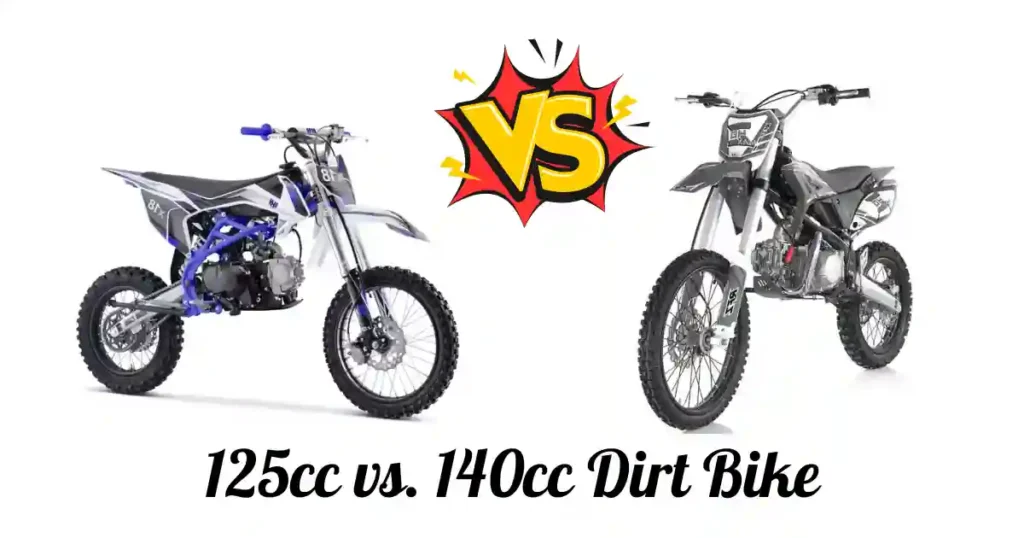
When a rider is ready to move from an automatic bike to a manual-clutch dirt bike, the first question is often:
Should I choose a 125cc or a 140cc?
That question matters, but it should not come first.
A better way to choose is to separate the decision into two parts:
- What size bike fits the rider?
- What type of engine fits the way the bike will be used?
Wheel size, seat height and riding position determine whether the rider can control the bike comfortably. Engine size, torque and cooling determine how the bike performs on hills, in hot weather and during longer riding sessions.
FRP Moto’s manual-clutch dirt bike lineup makes this distinction especially clear. The FX125 is available in two wheel sizes, while the big-wheel FX125 and FX140 share the same listed seat height, wheelbase and wheel sizes.
This allows riders to choose the physical fit first, then decide how much engine performance they actually need.
Choose the rider’s fit first. Then choose the engine.
Start With the Rider, Not the CC Number
The cc number describes the engine. It does not tell you how tall or large the complete dirt bike will feel.
Two 125cc bikes can fit completely different riders if they have different wheel sizes and seat heights. A 125cc and a 140cc bike can also share similar dimensions and feel almost the same when the rider first sits on them.
For a first manual-clutch dirt bike, the rider should be able to:
- reach the ground securely;
- hold the bike upright at low speed;
- reach the clutch and brake levers comfortably;
- restart after a stall without feeling overwhelmed;
- pick the bike up after a minor tip-over.
A rider who is struggling just to balance the bike will find clutch control much harder to learn. A rider who feels stable can focus on starting smoothly, shifting gears and looking ahead.
That is why the correct fit matters more than choosing the larger engine number.
Choose the Wheel Size Before the Engine
Wheel size is often the biggest difference between a youth-sized dirt bike and one designed for taller teenagers or adults.
The FRP FX125 dirt bike is offered in two wheel configurations:
- a 14-inch front and 12-inch rear version with a listed 28.1-inch seat height;
- a 17-inch front and 14-inch rear version with a listed 33.9-inch seat height.
Both use a 125cc engine, but they are intended for different riders.
The smaller-wheel FX125 is easier for shorter riders to mount, balance and control. The big-wheel version gives taller riders more legroom and rolls more easily over ruts, rocks and uneven trail surfaces.
This is an important distinction because many entry-level dirt bikes are available in only one physical size. When that happens, the rider has to adapt to the bike, even if the seat is too tall or the riding position feels cramped.
Offering the same engine in two wheel sizes allows the rider to choose around height, inseam and confidence before deciding whether more engine performance is necessary.
In many cases, the difference between 14″/12″ and 17″/14″ wheels will affect the rider more than the difference between 125cc and 140cc.
How to Check Whether a Dirt Bike Fits
Whenever possible, have the rider sit on the bike while wearing riding boots.
For a new manual-clutch rider, both feet should reach the ground securely. That does not always mean both feet must be completely flat, but the rider should be able to steady the bike without leaning heavily to one side.
The rider should also be able to:
- turn the handlebars without locking the arms;
- pull the clutch lever without stretching the fingers;
- reach the gear shifter and rear brake naturally;
- stand on the foot pegs without feeling crowded;
- move between sitting and standing without losing balance.
Age can provide a rough starting point, but it should not make the final decision.
Two riders of the same age may have different heights, inseams, strength and riding experience. A bike that fits the rider now is usually a better learning tool than a bike bought mainly for “room to grow.”
The Clutch Is the Real Step Up
Moving from an automatic bike to a four-speed manual is a genuine skill change.
The rider must learn how to:
- find the clutch’s engagement point;
- add throttle without spinning the rear wheel;
- release the clutch without stalling;
- shift while moving;
- stop and restart on uneven ground.
For a first manual dirt bike, smooth and predictable power is usually more useful than maximum power.
A manageable engine gives the rider time to correct small mistakes. A bike that is too tall or too aggressive can make every start, stall and low-speed turn more stressful.
The goal of the first season should be to build control and confidence, not simply to own the largest engine available.
Once the Bike Fits, Compare the 125cc and 140cc Engines
After choosing the correct wheel size and seat height, the rider can compare the engine options.
FRP Moto’s big-wheel FX125 and FX140 show why engine size and bike size should be treated separately.
According to the company’s listed specifications, both models use:
- 17-inch front and 14-inch rear wheels;
- a 33.9-inch seat height;
- a 49.2-inch wheelbase;
- a maximum load rating of 265 pounds.
This means the big-wheel FX125 is not physically a smaller bike than the FX140.
The main difference is how much power and torque the engine provides, and how well it manages heat during more demanding use.
| Specification | FX125 Big Wheel | FX140 |
|---|---|---|
| Cooling | Air-cooled | Oil-cooled |
| Listed power | 8.7 hp | 11.0 hp |
| Listed torque | 8.8 N·m | 10.2 N·m |
| Manufacturer climbing rating | 28 degrees | 30 degrees |
| Best suited to | Learning, moderate terrain, and shorter sessions | Hills, heavier riders, heat, and longer sessions |
These are manufacturer specifications. Actual performance will depend on rider weight, terrain, traction, temperature and maintenance.
When the FX125 Makes More Sense
The FX125 is often the better match when the rider is:
- learning clutch control for the first time;
- riding mainly on flat or moderately rolling terrain;
- taking shorter recreational rides;
- lighter in body weight;
- more focused on confidence than additional power.
Its listed 8.7 hp and 8.8 N·m provide enough power for starts, gear changes, basic trail riding and normal off-road use.
More importantly, the rider can concentrate on learning the clutch without having to manage more power than necessary.
FRP’s two FX125 wheel-size options also solve two different fit problems.
The 14″/12″ version gives shorter riders a lower seat and easier ground reach. The 17″/14″ version gives taller teenagers and adults more room without immediately moving them to a stronger 140cc engine.
That allows a taller beginner to choose an adult-sized riding position while still learning on more manageable power.

When the FX140 Is the Better Match
TheFRP FX140 dirt bike becomes more useful when the bike will regularly faces greater demands.
That may include:
- repeated hill climbs;
- longer trail sessions;
- hot summer riding;
- softer or rougher terrain;
- a heavier rider;
- a rider who already understands basic clutch and throttle control.
The FX140’s higher listed power and torque provide more reserve when starting on a slope, accelerating out of a slow turn or carrying a larger rider uphill.
Its oil-cooling system can also help the engine manage heat during longer or harder riding.
In practical terms, the FX140 is not simply the faster or more expensive version of the FX125. It is the model better suited to hills, heavier riders, hot weather and longer sessions.
The FX125 remains the more manageable choice for many first-time manual riders. The FX140 makes more sense when the rider or the terrain will regularly place a higher load on the engine.

Air-Cooled or Oil-Cooled?
Cooling systems sound technical, but the buying decision is fairly simple.
An air-cooled engine releases heat through the air moving around the engine. It is simple and well-suited to normal recreational riding, moderate terrain, and shorter sessions.
An oil-cooled engine uses circulating oil to dissipate heat from hotter parts of the engine. This can improve heat management when the bike is ridden for longer periods or under heavier loads.
For the rider, the practical difference is:
- choose air-cooled for learning, moderate terrain, and shorter sessions;
- Consider oil-cooled for hot weather, repeated climbing, longer rides, or a heavier rider.
Cooling is not about which model sounds more advanced. It is about how hard the engine will regularly have to work.
Why the Engine Brand Matters
At the affordable end of the dirt bike market, horsepower is not always the biggest ownership concern.
The bigger problem can be identifying the engine and finding the correct part when something eventually needs maintenance or replacement.
Before buying any 125cc or 140cc dirt bike, ask:
- Who makes the engine?
- Can the engine model be identified later?
- Are replacement parts available in the United States?
- Is there a written warranty?
- Are manuals and parts diagrams available?
- Can the seller help match the correct replacement part?
The FX125 uses a Zongshen four-stroke engine, giving owners a recognizable engine platform when they need maintenance information or replacement parts.
FRP Moto also states that it provides U.S.-stocked replacement parts and a published warranty.
For a first-time owner, that can be the difference between replacing a small part and getting back to riding, or leaving the entire bike parked because the correct component cannot be identified or sourced.
The real value of an entry-level dirt bike is not only its purchase price. It is also whether the owner can maintain it and continue riding after the first season.
Which FRP Model Fits Which Rider?
The three configurations are easier to understand when they are matched to real rider needs.
FX125 14″/12″
Best suited to:
- shorter or younger riders;
- first-time manual-clutch riders;
- riders who need easier ground reach;
- backyard riding and moderate trails.
Its listed 28.1-inch seat height makes starts, stops, and low-speed balance less intimidating.
FX125 17″/14″
Best suited to:
- taller teenagers and adults;
- riders who need more legroom;
- first-time manual riders who still want manageable power;
- riders using moderately rough terrain.
It provides the larger riding position of the FX140 while keeping the more moderate 125cc engine.
FX140 17″/14″
Best suited to:
- larger or heavier riders;
- riders with basic clutch experience;
- longer trail sessions;
- Repeated hills;
- hot weather;
- more demanding terrain.
Because the big-wheel FX125 and FX140 share the same listed seat height, wheelbase and wheel sizes, the choice between them is mainly about how much work the engine will be asked to do.
A Simple 125cc vs. 140cc Decision Guide
Choose a 125cc when:
- The rider is new to a manual clutch;
- The terrain is mostly flat or moderate;
- Riding sessions are relatively short;
- easy control matters more than extra power;
- The rider is lighter or is still building confidence.
Choose a 140cc when:
- The rider already understands basic clutch control;
- The rider is larger or heavier;
- The bike will regularly be used on hills;
- riding sessions are longer;
- hot weather and sustained engine load are common.
Before choosing either engine, confirm that the wheel size and seat height fit the rider.
Can These Dirt Bikes Be Used on Public Roads?
No.
Dirt bikes in this category are intended for off-road areas, trails and private property. They are not street legal unless they meet applicable local requirements for modification, inspection and registration, which may not be possible in every state or area.
Always check local off-highway vehicle rules before riding.
New and younger riders should wear appropriate protective equipment, including:
- a certified helmet;
- eye protection;
- gloves;
- riding boots;
- long sleeves and riding pants.
Adult supervision is especially important while a rider is learning starts, stops, shifting and clutch control.
Common Questions
Is a 125cc dirt bike enough for a teenager?
For many teenagers learning a manual clutch, yes.
The more important question is whether the bike fits. A properly sized 125cc dirt bike normally provides enough power for learning and recreational trail riding without making clutch practice unnecessarily difficult.
A 125cc bike the rider can control is a better choice than a 140cc bike chosen only because the engine number is larger.
Is a 140cc dirt bike physically larger than a 125cc?
Not necessarily.
Engine displacement and physical bike dimensions are separate specifications.
FRP Moto lists the big-wheel FX125 and FX140 with the same seat height, wheelbase and wheel sizes. The FX140 mainly adds engine output, torque and oil cooling.
Is oil cooling necessary?
Not for every rider.
Air cooling is normally sufficient for moderate recreational use. Oil cooling becomes more useful during long sessions, hot weather, repeated climbing or riding with a heavier load.
Should I buy a taller bike so the rider can grow into it?
Usually not if the bike is currently difficult to balance or control.
A first manual-clutch dirt bike should help the rider build skills. Too much height can make starts, stops and stalls more difficult and may reduce confidence.
The Bottom Line
Do not treat “125cc or 140cc” as one decision.
First, choose the wheel size and seat height that fit the rider. Then choose the engine based on rider weight, terrain, temperature and session length.
Within FRP Moto’s lineup:
- The 14″/12″ FX125 suits shorter riders who need a lower seat;
- The 17″/14″ FX125 suits taller beginners who want a larger riding position with manageable power;
- The FX140 suits larger riders and more demanding conditions such as hills, heat, and longer rides.
This lineup allows riders to choose around their height, confidence, and riding conditions rather than selecting a dirt bike by engine size alone.
The use of a recognizable Zongshen engine, U.S.-stocked replacement parts and a published warranty also gives owners a clearer path when maintenance or repairs are eventually needed.
The best first manual-clutch dirt bike is not the one with the biggest number. It is the one the rider can control, learn on, and continue riding after the first season.

Ehatasamul Alom is a dedicated road hybrid bikes expert. With over 15 years of experience, he helps people find the perfect ride. He began his journey as a bike mechanic. He learned the ins and outs of every bike.
Ehatasamul Alom holds a Master's degree in Mechanical Engineering from a Brown University (Providence US 02912), where he specialized in material science and bicycle kinematics. His master's thesis focused on optimizing frame geometry for road hybrid bikes to improve rider comfort and efficiency.
Ehatasamul has an extensive professional background. He spent 10 years (2010-2020) as a Senior Bike Designer at "Urban Cycles," a leading bicycle manufacturer. In this role, he led the development of several award-winning road hybrid bikes, which are known for their durability and performance. He later served (2020-2024) as the Head of Product Development at "Gear Up," a company specializing in high-end cycling components. There, he developed innovative parts and accessories specifically for road hybrid bikes.
Over the years, Ehatasamul has become an authority on Roadhybridbikes. He understands their design and function. His work focuses on making bikes easy to use. Ehatasamul believes everyone should enjoy cycling. He writes guides that are simple to read. His passion for road hybrid bikes is clear. His goal is to share his knowledge with everyone. He wants to see more people on two wheels. His advice is always practical and easy to follow.
- Ehatasamul Alom

- Ehatasamul Alom
- Ehatasamul Alom

- Ehatasamul Alom