
Saturday morning in New York City starts cool, quiet, and full of good intentions, right up until the first hill makes your legs feel unexpectedly heavy three minutes into a thirty-minute ride. You don’t need a race bike to get a genuinely useful workout out of that moment. A road-oriented hybrid, sometimes called a fitness bike, brings flat handlebars, 700C wheels, road-focused tyres, efficient geometry, and a relatively upright position together in one practical package.
The real question worth answering is simple: can a road hybrid bike for fitness riding actually deliver enough speed and resistance for meaningful training? This guide covers the fitness benefits, the specs that matter, and how to turn ordinary rides into real progress.
Is a Road Hybrid Bike Good for Fitness Riding?
A fitness bike is built for exactly the kind of riding most people actually want: paved roads, bike paths, recreation, and exercise. REI describes fitness bikes as lightweight, flat-bar bikes suited to paved paths, street riding, and getting exercise.
Why a road hybrid works for exercise
Efficient 700C wheels, fast-rolling tyres, flat handlebars, a moderate riding position, multiple gears, and lower weight than many comfort hybrids all combine into easy, confident handling that doesn’t get in the way of a good workout, a foundation covered further in our road hybrid bike buying guide.
Can a hybrid bike give you a hard workout?
Increasing distance, riding faster, climbing hills, raising cadence, pushing into a headwind, running structured intervals, and stretching out endurance rides all turn an ordinary hybrid into a genuinely demanding training tool.
Is it good for beginners?
Easier control, familiar flat bars, a less intimidating feel than a drop-bar road bike, and comfortable handling in traffic and on paths all make hybrids a smart entry point for new riders.
Is it good for experienced riders?
Fitness riding, tempo rides, recovery rides, base training, commuting combined with exercise, and longer recreational rides all suit a hybrid well, even for riders who already know their way around a bike.
The important distinction: comfort hybrid vs fitness hybrid
Not all hybrids are equally performance-focused, and mixing up the two categories is one of the fastest ways to end up disappointed with your purchase.
Road Hybrid vs Fitness Bike vs Traditional Hybrid
The names overlap, which can make shopping genuinely confusing. In practice, the geometry, tyres, and intended use tell you far more than the label on the shop floor.
What is a road-oriented hybrid?
Flat bars, road-focused tyres, faster geometry, a rigid fork, 700C wheels, and an efficient pedalling position define this category.
What is a traditional hybrid?
A more upright position, wider tyres, a comfort-oriented feel, often heavier construction, and more versatility on mixed surfaces set this apart from a road-focused build.
What is a fitness bike?
The term fitness bike is often used interchangeably for sporty, road-focused hybrids. Current REI guidance explicitly groups fitness bikes with hybrid bikes, while Cyclingnews notes that the categories can overlap heavily.
Which one is best for fitness?
A fitness or road hybrid tends to offer the best balance for most beginners, a traditional hybrid suits comfort-first exercise, and a road bike suits speed and performance-first training.
Road Hybrid vs Road Bike for Fitness
This is one of the most important comparisons for anyone genuinely serious about training. A hybrid can be excellent for fitness, but it does have limits once speed becomes the main goal.
Road hybrid advantages
Easier flat-bar control, a more upright position, wider tyres, comfortable handling, practicality for daily use, and confidence on mixed paved routes all favor the hybrid for most riders.
Road bike advantages
A lower aerodynamic position, drop bars, multiple hand positions, lower weight on many models, and better high-speed efficiency all favor a dedicated road bike once training gets serious. Cyclingnews notes that hybrids generally favour comfort and control, while road bikes favour speed and aerodynamics.
When should you move to a road bike?
Regular rides above 30 to 40 miles, group road rides, racing ambitions, a strong focus on average speed, long climbs, and frequent high-speed riding all signal it might be time to consider a road bike.
Comparison table
| Feature | Road hybrid | Road bike |
|---|---|---|
| Handlebar | Flat | Drop |
| Position | Upright to semi-upright | Lower |
| Control | Very easy | Requires adaptation |
| Tyres | Usually wider | Usually narrower |
| Comfort | High | Depends on fit |
| Aerodynamics | Moderate | Better |
| Fitness use | Excellent | Excellent |
| Beginner-friendly | Very | Moderate |
What Makes a Road Hybrid Good for Fitness Riding?
Don’t buy based on the word sport printed somewhere on a frame. Look closely at the actual parts instead.
Lightweight frame
Aluminium, carbon, and steel each affect carrying weight, climbing ease, and acceleration differently, a distinction worth weighing against our road hybrid bike buying guide.
Rigid fork
A rigid fork often makes sense for road fitness because it saves weight, improves pedalling efficiency, needs less maintenance, and delivers more direct steering feedback.
Sporty geometry
A slightly forward position, efficient reach, stable handling, and enough comfort for longer rides together define a genuinely sporty fitness geometry.
Flat handlebars
Easy control, simple braking, a familiar position, and good visibility make flat bars a comfortable everyday choice.
Do flat bars limit fitness performance?
Not for normal recreational fitness, though they can become limiting for long-distance or high-speed riding, since you only get one primary hand position and less aerodynamic efficiency than drop bars offer.
Choose the Right Tyres for Fitness Riding
Tyres can completely change how a hybrid feels. A bike with slow, heavy tyres can make a perfectly good frame feel like it has an invisible anchor attached, a topic explored further in our tire pressure guide.
28 to 32 mm tyres
Best suited to smooth roads, faster riding, road-focused fitness, and longer paved routes.
35 to 40 mm tyres
The best all-round option for rough city roads, general fitness riding, bike paths, light gravel, and everyday comfort.
Slick vs semi-slick tyres
Rolling resistance, grip, road noise, wet-condition performance, and light gravel capability all differ meaningfully between these two tread styles.
Puncture protection
Extra protection adds a small weight penalty in exchange for real confidence on daily rides and longer-distance efforts alike.
Does a wider tyre make you slower?
Width alone doesn’t determine speed. Tyre construction, pressure, road surface, rider weight, and tread pattern all play a role in overall rolling resistance, a balance detailed in our tire pressure guide.
How Gearing Affects Fitness Training
Gears aren’t only there for hills. They let you directly control how hard your legs have to work, a topic covered further in how to shift gears smoothly.
Low gears for climbing
Easier cadence, longer sustainable climbs, lower fatigue, and manageable hill repeats all depend on having a genuinely usable low gear.
Higher gears for speed
Flat roads, descents, sprint efforts, and fast group riding all call for higher gearing when the legs are ready for it.
1x vs 2x drivetrains
A single chainring keeps things simple, easy to shift, and light on maintenance, though the jumps between gears run wider. A double chainring offers a wider overall range and smaller gear steps at the cost of more components and shifting complexity.
Why gear range matters more than gear count
Eight well-chosen gears can genuinely beat twelve badly matched ones. Looking closely at the actual cassette and chainring range tells you far more than the number printed on the box.
Best gearing for beginner fitness riders
An easy climbing gear, comfortable middle gears, enough top-end speed, and simple shifting should top the priority list.
How to Set Up a Road Hybrid for Fitness Riding
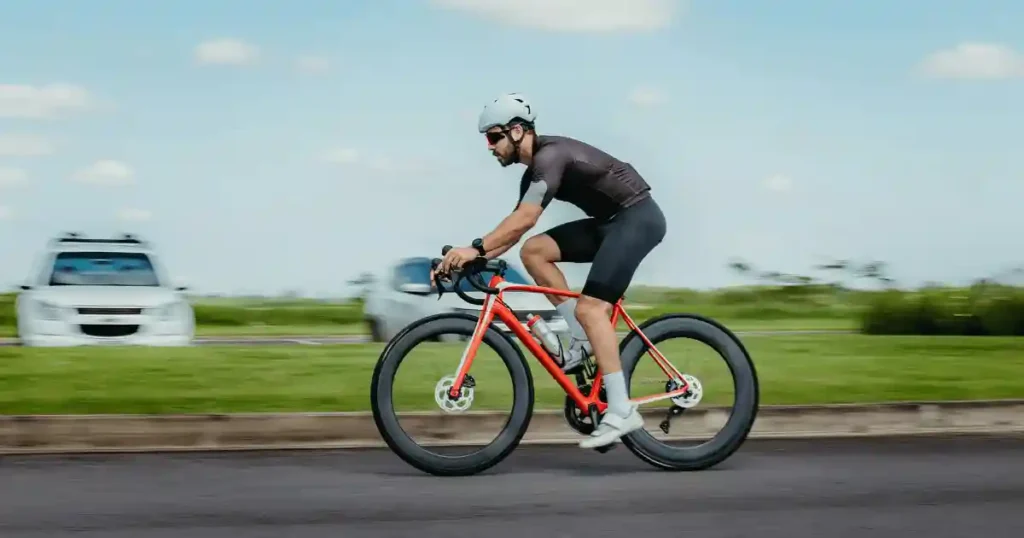
A good setup can make a 700 dollar bike feel much better than a badly adjusted 1,500 dollar bike, following the same principles in our road hybrid bike sizing guide.
Set the saddle height
Look for a slight knee bend, stable hips, a smooth pedal stroke, and no locking at the bottom of the stroke.
Set saddle position
Reach, hip position, and overall pedalling comfort all deserve a careful check once height is dialed in.
Set handlebar height
A more upright position suits beginners, feels more comfortable, and offers better visibility, while a lower position adds aerodynamics and a more aggressive feel at the cost of extra hand pressure.
Check reach
Watch for locked elbows, rounded shoulders, excessive wrist pressure, or a generally stretched feeling in your normal riding position.
Five-minute fit test
During a test ride, pedal slowly, ride harder, stand briefly, brake, turn, and pay attention to hand pressure and saddle comfort throughout.
How to Use a Road Hybrid for Better Fitness
The bike is only half the equation. The other half is what you actually do with it.
Start with easy aerobic rides
Twenty to thirty minutes at a comfortable, conversational pace, two to three times a week, builds the base every fitness plan needs.
Build endurance
Progressing toward 45 minutes, then 60, then 90, with longer weekend rides mixed in, steadily grows real endurance over time.
Add interval training
A simple beginner structure looks like a five to ten minute warm-up, one minute hard, two minutes easy, repeated five times, followed by a proper cool down.
Add hill workouts
Find a moderate hill, ride up at a controlled effort, recover on the way down, and repeat three to six times.
Add tempo riding
Faster than easy pace, sustainable, with controlled breathing, tempo riding sits well short of an all-out sprint but still builds real fitness.
Don’t make every ride hard
Recovery matters just as much as effort, and constant maximal riding can quietly wreck the consistency that actually builds fitness.
Use Cycling Metrics to Track Fitness Progress
You can turn ordinary rides into measurable training sessions without buying a laboratory full of equipment, and a simple cycling computer makes tracking effortless.
Distance
Weekly mileage, your longest ride, and monthly totals all paint a clear picture of overall progress.
Average speed
Useful and easy to understand, though it’s heavily affected by wind, hills, and traffic on any given day.
Ride time
Simple, consistent, and less affected by route changes, which makes it a genuinely reliable metric for beginners.
Cadence
Revolutions per minute reveal your pedalling rhythm, and understanding it explains why grinding a huge gear isn’t always the useful choice it seems.
Heart rate
Easy-zone rides, tempo efforts, intervals, and recovery tracking all become far more precise once you’re watching heart rate, something a basic heart rate monitor makes simple to track.
Power
Watts offer a more precise training measurement than speed or heart rate alone, typically through a power meter or a smart trainer.
Which metric should beginners use?
A sensible progression runs from time, to distance, to average speed, to heart rate, to cadence, and finally to power once you’re ready for that level of detail.
Fitness Metrics Table: What Should You Track?
You don’t need to stare at six numbers while riding. Pick one or two metrics first. The goal is to understand your progress, not turn Saturday morning into an accounting meeting.
| Metric | What it tells you | Beginner value |
|---|---|---|
| Time | How long you ride | Very high |
| Distance | Total work | High |
| Speed | Pace | Medium |
| Heart rate | Effort | High |
| Cadence | Pedalling rhythm | Medium |
| Power | Output | Advanced |
| Elevation | Climbing load | Medium |
Use trends instead of one perfect ride
Comparing the same route, the same time of day, similar weather, and similar effort tells you far more than judging any single ride in isolation.
Don’t panic over slow rides
Wind, heat, traffic, hills, poor sleep, and general fatigue all affect a single ride’s numbers. A slower ride can still be a very good workout underneath the surface.
USA Expert Advice for Fitness Riding
Lily Krass, a freelance writer whose REI fitness-bike guide covers paved recreational riding, city riding, gravel paths, and general exercise, offers a genuinely useful perspective for anyone shopping in this category.
Lily Krass’s fitness-bike perspective
Her published REI guidance describes fitness bikes as affordable, durable, and ideal for recreational rides on paved paths, typically featuring flat handlebars and lighter builds than a mountain bike. That guidance frames fitness bikes as accessible across a wide range of rider levels, whether you’re spinning around the neighbourhood, commuting, cruising rail trails, or simply looking to get some exercise.
Expert advice to include
The core principle worth carrying into any buying decision is this: choose the bike around how you actually plan to ride, rather than buying the most specialised bike you can afford.
Real-world USA example
Picture a Sunday morning in Seattle, an eight to twelve mile paved loop with a few hills, a stretch of bike path, and a coffee stop planned halfway through. The rider wants real exercise, not racing. A fast, well-set-up hybrid handles that exact scenario better than either a heavy comfort cruiser or an aggressive race bike would.
Road Hybrid Fitness Riding by Goal
Different riders need genuinely different setups depending on what they’re actually training for.
Goal: Lose weight
Consistent riding, longer easy rides, sustainable training, and overall energy balance matter more than any single hard workout. Cycling alone doesn’t guarantee weight loss on its own.
Goal: Improve cardio fitness
Aerobic rides, intervals, gradual progression, and proper recovery together build cardiovascular fitness steadily over weeks and months.
Goal: Build leg endurance
Longer rides, hill work, moderate cadence, and progressive distance all contribute to genuine leg endurance over time.
Goal: Ride faster
Intervals, aerodynamics, tyre choice, riding position, cadence work, and above all training consistency drive real speed gains.
Goal: Prepare for a charity ride
Weekly distance, a genuine long ride, proper recovery, solid nutrition, and bike comfort all deserve attention well before event day.
Fitness Riding Setup by Rider Type
There is no magic specification sheet. A 25-year-old beginner, a returning cyclist, and a serious road rider can all use a hybrid, but they shouldn’t set it up in exactly the same way.
| Rider | Bike priority | Tyre choice | Training focus |
|---|---|---|---|
| Beginner | Comfort plus control | 35 to 40 mm | Easy endurance |
| Returning rider | Efficiency | 32 to 40 mm | Time plus distance |
| Fitness-focused | Low weight plus speed | 28 to 35 mm | Tempo plus intervals |
| Hill rider | Gear range | 32 to 40 mm | Climbing |
| Mixed-surface rider | Stability | 38 to 45 mm | Endurance |
| Long-distance rider | Fit plus comfort | 32 to 40 mm | Base mileage |
Road Hybrid vs Gravel Bike for Fitness Riding
A gravel bike becomes attractive the moment your road ride occasionally disappears onto dirt.
Choose the hybrid if you mainly ride
Asphalt, bike paths, city roads, smooth trails, and the occasional stretch of light gravel.
Choose gravel if you regularly ride
Loose gravel, rough tracks, long mixed-surface routes, and genuine dirt roads on a regular basis.
Why the hybrid may still be more comfortable
Flat bars, familiar controls, an upright position, and simple handling often make a hybrid the more comfortable everyday choice even when gravel occasionally enters the picture.
Don’t buy a gravel bike just because gravel sounds adventurous
Let your actual route decide, not the appeal of a bigger adventure that may only happen a few times a year.
Do You Need Suspension for Fitness Riding?
Suspension sounds comfortable. It isn’t automatically better for road-focused fitness riding.
Why rigid forks often work better
Lighter weight, more pedalling efficiency, less maintenance, and better road feel all favor a rigid fork for paved fitness riding.
When suspension can make sense
Rough paths, broken surfaces, and light off-road riding are the situations where suspension genuinely earns its keep.
Why cheap suspension can be a poor trade
Added weight, wasted pedalling movement, extra maintenance, and added cost rarely pay off on a road-focused fitness bike.
Common Road Hybrid Fitness Riding Mistakes
Riding too hard every time
Constant maximal effort burns out motivation and consistency faster than it builds fitness.
Ignoring bike fit
A poor fit limits training long before your legs or lungs ever do, a problem our road hybrid bike sizing guide addresses directly.
Choosing tyres for appearance
Looks fade fast once slow, heavy tyres start dragging down every single ride.
Using a huge gear at low cadence
Grinding a big gear at a low cadence stresses the knees and rarely builds the fitness riders expect from it.
Increasing mileage too quickly
Sudden jumps in weekly distance invite injury and burnout far more often than steady progression does.
Comparing every ride by average speed
Wind, hills, and traffic all skew average speed, making it a poor single measure of a good or bad ride.
Ignoring hills and wind when comparing rides
The same route rarely rides the same way twice, so context matters as much as the raw numbers.
Buying a heavy comfort hybrid for speed-focused riding
A comfort-first bike will always feel sluggish next to a properly road-focused fitness build.
Buying a race-oriented flat-bar bike when comfort matters more
An overly aggressive setup can just as easily backfire for a rider who genuinely values comfort over outright speed.
Daily and Weekly Road Hybrid Maintenance
Fitness riding adds mileage, and mileage adds wear, following the same routine outlined in our road hybrid bike maintenance checklist.
Before every ride
Tyre pressure, brake function, chain condition, wheel security, and quick-release or thru-axle tightness all deserve a quick check.
Weekly
Cleaning the drivetrain, lubricating the chain, checking tyre wear, checking brake pads, and inspecting cables keep small issues from growing, a habit detailed in how to clean a road hybrid bike.
Monthly
Checking chain wear, inspecting the cassette, checking the headset, watching for bottom bracket symptoms, and inspecting overall wheel condition round out a solid monthly routine.
Basic fitness-rider tool kit
A mini pump, a spare tube, tyre levers, a multi-tool, a patch kit, and a chain quick link cover most situations you’ll encounter on a ride.
Road Hybrid Fitness Bike Buying Checklist
Before you spend money, turn the bike into a checklist. It keeps flashy components from distracting you from the things you will actually feel every week.
| Buying factor | Good target for fitness riding |
|---|---|
| Frame | Lightweight aluminium or carbon |
| Fork | Rigid |
| Wheels | 700C |
| Tyres | 32 to 40 mm |
| Gearing | Wide enough for local hills |
| Brakes | Quality disc or reliable rim |
| Handlebar | Flat |
| Geometry | Sporty but comfortable |
| Mounts | Optional unless commuting |
| Fit | Essential |
Prioritise these five things
Correct size, good tyres, useful gearing, comfortable geometry, and reliable brakes matter more than any single flashy spec.
Don’t overpay for these
Huge gear counts, cosmetic carbon parts, race-style branding, and features you’ll genuinely never use rarely justify their added cost.
How Much Should You Spend?
Entry-level fitness riding
A reliable aluminium frame, a basic drivetrain, good tyres, a rigid fork, and reliable brakes cover the essentials without overspending.
Mid-range
Lower overall weight, a better drivetrain, hydraulic disc brakes, better wheels, and improved contact points all become worthwhile at this level.
Premium
A carbon frame, carbon fork, premium wheels, a high-end drivetrain, and advanced fit options define the top end of this category.
Spend on what you can feel
The smartest upgrade order runs fit, then tyres, then saddle, then contact points, then wheels, then drivetrain, and a quality saddle is often one of the best-value upgrades available.
Road Hybrid Fitness Riding FAQ
Is a road hybrid bike good for fitness?
Yes, its efficient wheels, fast tyres, and comfortable position make it well suited to genuine fitness training.
Can I lose weight riding a hybrid bike?
Yes, when paired with consistent riding and overall energy balance, though cycling alone doesn’t guarantee weight loss.
Is a hybrid bike good for cardio?
Yes, aerobic rides, intervals, and hill work all build cardiovascular fitness effectively on a hybrid.
Can a hybrid bike be used for long rides?
Yes, especially with the right tyres, fit, and gearing dialed in for the distance.
Is a road hybrid faster than a normal hybrid?
Generally yes, thanks to narrower tyres, a more efficient frame, and a sportier riding position.
Is a road bike better than a hybrid for fitness?
It depends on your goals, since road bikes favor speed while hybrids favor comfort and easier control.
What tyre width is best for fitness riding?
Most fitness riders do well with 28 to 38 mm tyres depending on road surface and personal comfort preference.
How many gears should a fitness hybrid have?
Eight to eighteen gears can work well, with usable range mattering far more than the total count.
Do I need a heart-rate monitor for cycling fitness?
Not required, but a heart rate monitor makes structured training noticeably more precise.
Is cadence important for beginners?
Yes, understanding cadence helps beginners avoid grinding large gears at an inefficient pace.
Can I train for a cycling event on a hybrid bike?
Yes, many riders successfully train for charity rides and fondos on a well-set-up hybrid.
When should I upgrade from a hybrid to a road bike?
Once you’re regularly riding 30 to 40 miles, joining group road rides, or chasing serious average speed, a road bike starts to make more sense.
A Simple 4-Week Road Hybrid Fitness Plan
Week 1: Get comfortable
Three rides of 20 to 30 minutes each at an easy pace, focused purely on smooth, relaxed pedalling.
Week 2: Add time
Three rides of 30 to 40 minutes, including one slightly longer ride to start building endurance.
Week 3: Add intensity
Two easy rides, one interval session, and a longer 40 to 50 minute ride round out the week.
Week 4: Build endurance
One easy ride, one interval ride, and one longer 60 to 75 minute ride push endurance forward meaningfully.
How to progress after four weeks
Increase only one main variable at a time, whether that’s time, distance, intensity, or hills, rather than pushing all of them at once.
The Best Road Hybrid Setup for Fitness Riding
For most riders, the sweet spot isn’t an extreme race setup. It’s a light, efficient bike that feels good enough to make you want to ride again tomorrow.
Recommended all-round setup
A lightweight aluminium frame, a rigid fork, 700C wheels, 32 to 38 mm fast tyres, a wide-range drivetrain, reliable disc brakes, flat handlebars, a comfortable saddle, and correct bike fit cover most fitness riders well.
Speed-focused setup
28 to 32 mm slick tyres, lower overall weight, sportier geometry, higher gearing, and a more aerodynamic position suit riders chasing speed specifically.
Comfort-focused fitness setup
35 to 40 mm tyres, a slightly more upright fit, ergonomic grips, a comfortable saddle, and lower gearing suit riders who value comfort just as much as fitness.
Final Road Hybrid Fitness Riding Checklist
Before buying
Correct size, suitable geometry, fast enough tyres, useful gearing, reliable brakes, a rigid fork, and a suitable riding position.
Before every workout
Check tyre pressure, check brakes, check the chain, charge your bike computer, bring water, and choose your route.
Track over time
Weekly riding time, distance, average speed, heart rate, longest ride, and climbing all paint a fuller picture of progress than any single number alone.
Final Recommendation
After years spent helping riders figure out whether a hybrid can genuinely handle real fitness training, my honest answer is yes, provided you set it up with intention rather than grabbing whatever looks fastest on the showroom floor. A road hybrid bike for fitness riding rewards riders who prioritize fit, tyres, and useful gearing over gear counts and cosmetic carbon parts.
I always tell beginners to start with time and distance before worrying about cadence or power numbers, since consistency beats intensity every single week. If your rides start regularly stretching past thirty or forty miles, that’s the honest signal to start considering a dedicated road bike instead. Until then, a well-fitted hybrid with fast tyres and a comfortable position will get you fitter than almost any spec sheet upgrade ever could.

Ehatasamul Alom is a dedicated road hybrid bikes expert. With over 15 years of experience, he helps people find the perfect ride. He began his journey as a bike mechanic. He learned the ins and outs of every bike.
Ehatasamul Alom holds a Master's degree in Mechanical Engineering from a Brown University (Providence US 02912), where he specialized in material science and bicycle kinematics. His master's thesis focused on optimizing frame geometry for road hybrid bikes to improve rider comfort and efficiency.
Ehatasamul has an extensive professional background. He spent 10 years (2010-2020) as a Senior Bike Designer at "Urban Cycles," a leading bicycle manufacturer. In this role, he led the development of several award-winning road hybrid bikes, which are known for their durability and performance. He later served (2020-2024) as the Head of Product Development at "Gear Up," a company specializing in high-end cycling components. There, he developed innovative parts and accessories specifically for road hybrid bikes.
Over the years, Ehatasamul has become an authority on Roadhybridbikes. He understands their design and function. His work focuses on making bikes easy to use. Ehatasamul believes everyone should enjoy cycling. He writes guides that are simple to read. His passion for road hybrid bikes is clear. His goal is to share his knowledge with everyone. He wants to see more people on two wheels. His advice is always practical and easy to follow.
- Ehatasamul Alom

- Ehatasamul Alom
- Ehatasamul Alom

- Ehatasamul Alom