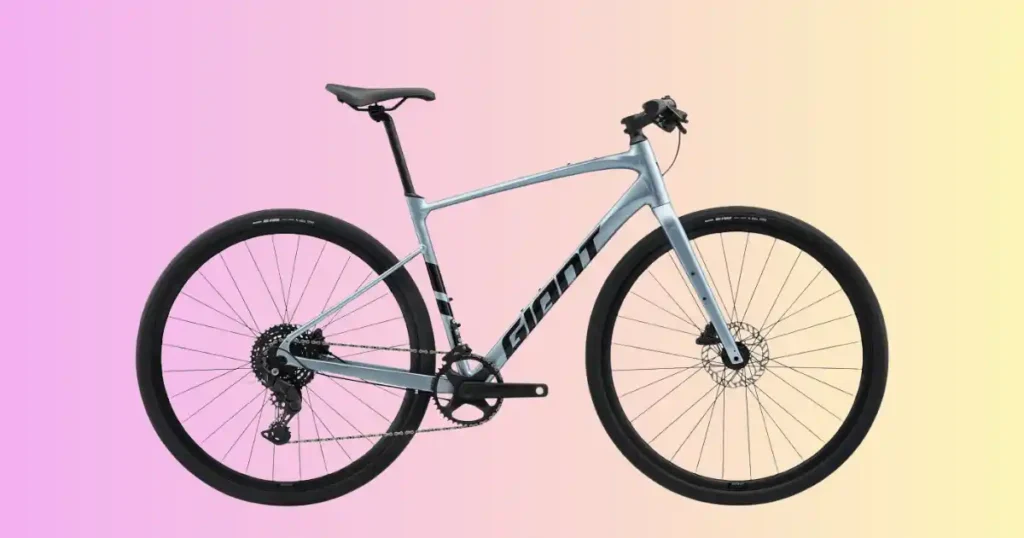
Wheeling your bike out for a ride in Seattle, Washington, only to find it won’t cooperate, is a frustrating way to start any morning. Riders search “Giant FastRoad AR 2 not starting” constantly, even though this fitness all-road bicycle has no ignition, no starter motor, and no battery-start system anywhere on the frame. If the bike “won’t start,” what riders usually mean is that it won’t move, pedal, roll freely, or transfer pedal power to the rear wheel. Diagnosing the exact symptom matters more than reaching for tools right away. This guide walks through every likely mechanical cause in the same order a shop technician would check them, so you can get back on the road with confidence.
What Does “Giant FastRoad AR 2 Not Starting” Mean?
The wording sounds simple, but it can describe several different mechanical problems. Finding out exactly what the bike refuses to do comes first.
The bike will not move at all
Check for a locked front wheel, a locked rear wheel, brake drag, a flat tyre, a wheel obstruction, a chain jam, or severe drivetrain resistance.
The pedals will not turn
Possible causes include a jammed chain, a chain trapped around the cassette, a derailleur obstruction, a crank problem, a bottom bracket problem, or a foreign object caught in the drivetrain.
The pedals turn but the bike does not move
Investigate a broken chain, a chain off the chainring, the freehub, the cassette, and overall rear-wheel engagement, a pattern also covered in our hybrid bike gears skipping guide.
The bike moves but feels very hard to pedal
Look for brake rub, low tyre pressure, a bent wheel, hub resistance, a dirty drivetrain, or chain problems, similar to symptoms detailed in why bikes feel heavy.
The bike rolls but makes a scraping or grinding noise
Possible sources include the disc rotor, brake pads, brake caliper, wheel hub, chain, derailleur jockey wheels, and bottom bracket.
Check These 7 Things Before Using Tools
Don’t grab every tool in the box yet. A short visual and hands-on check often locates the fault before any adjustment is even needed.
1. Check for a lock or physical obstruction
Inspect for a cable lock, a wheel lock, mud, stones, twigs, clothing, loose accessories, or kickstand interference.
2. Spin the front wheel
Check whether it spins freely, stops quickly, scrapes, grinds, or clicks with rotation.
3. Spin the rear wheel
Compare the rear wheel directly with the front. If it feels much harder to turn, investigate the rear brake, rotor, hub, wheel installation, and thru-axle.
4. Turn the crank by hand
Watch the chain, chainring, rear derailleur, and cassette closely for movement.
5. Squeeze both brake levers
Check for a firm lever feel, excessive lever travel, sponginess, a sticky lever, or a brake that stays partly engaged, a symptom covered in our bike brake problems guide.
6. Check the tyres
Look for low pressure, a puncture, sidewall damage, a valve leak, or a tyre and rim problem. The 2025 FastRoad AR 2 uses 700x40c Maxxis Re-Fuse tyres and is tubeless-ready. A tyre pressure gauge makes this check accurate every time.
7. Listen before touching anything
Ask where the sound comes from, whether it happens when rolling, when pedalling, while braking, or once per crank rotation.
Check the FastRoad AR 2 Disc Brakes
A dragging disc brake can make the bike feel strangely heavy, almost as if someone is quietly holding the rear wheel. The current FastRoad AR 2 uses Tektro HD-R280 hydraulic disc brakes with 160 mm front and rear rotors.
Spin the wheel and watch the rotor
Look for constant rubbing, periodic rubbing, rotor wobble, pad contact, or heavy wheel resistance.
Check whether the brake releases
Inspect the brake lever, caliper, rotor, pads, and hydraulic hose for signs of trouble.
Look for a bent rotor
Understand the difference between very light occasional rub, noticeable rotor wobble, and heavy continuous contact.
When brake drag becomes a safety issue
Stop riding if brake power feels poor, the lever pulls unusually far, hydraulic fluid is leaking, the wheel stays locked, or the rotor is badly damaged.
Keep lubricant away from disc brakes
Never spray chain lubricant, grease, WD-40 type products, or silicone spray onto the rotor or pads.
Inspect the FastRoad AR 2 Chain and Drivetrain
The 2025 FastRoad AR 2 uses a 1×9 Shimano CUES drivetrain, paired with a 42T FSA Omega AGX+ crank and an 11 to 41 Shimano cassette. That means there’s no front derailleur to troubleshoot on this version.
Look for a jammed chain
Check whether the chain is behind the cassette, wrapped around the chainring, trapped in the rear derailleur, twisted, broken, or completely off the chainring, an issue explored further in our road hybrid bike chain care guide.
Inspect the rear derailleur
Look for a bent derailleur, a damaged derailleur hanger, stuck jockey wheels, mud, stones, or a chain wrapped around the derailleur cage.
Check the cassette
Inspect for a damaged sprocket, dirt buildup, chain wedging, or excessive cassette movement.
Test the shifter
Check whether it clicks properly, whether the derailleur moves, whether the chain moves cleanly, and whether the chain skips.
Do not force a stuck shifter
Forcing it can damage the shift cable, the shifter itself, the rear derailleur, or the derailleur hanger.
Check the FastRoad AR 2 Tyres and Wheels
The current model uses Giant S-X2 Disc wheels with Giant alloy 12 mm thru-axle hubs and 700x40c tubeless-ready Maxxis Re-Fuse tyres. Giant lists 42 mm maximum tyre clearance on this frame.
Check for a flat tyre
Look for a puncture, a soft sidewall, a valve leak, a cut, or a bead problem, a topic covered further in our tire pressure guide.
Check tyre pressure with a gauge
Squeezing the tyre by hand isn’t precise enough for an accurate reading. Both tyres should be checked separately, since pressure depends on rider weight and riding conditions. Tubeless tyres still need regular pressure checks even without a tube inside. A quality floor pump with a gauge removes the guesswork entirely.
Check whether the tyre rubs the frame or fork
Inspect for mud, a misaligned wheel, a damaged tyre, incorrect installation, or foreign material caught nearby.
Check the thru-axles
The current FastRoad AR 2 uses 12×100 mm front and 12×142 mm rear thru-axles. Check that the wheel is seated correctly, the axle is secure, and there’s no obvious side play.
Check for wheel-bearing play
Grip the wheel gently and rock it side to side to feel for looseness in the bearings.
Could the Crank or Bottom Bracket Be Stuck?
If the wheels spin normally but the pedals refuse to turn, shift the diagnosis toward the crank and bottom bracket.
Check the crank arm
Look for a loose crank, side to side movement, visible damage, or a pedal obstruction.
Rotate the crank slowly
Feel closely for grinding, roughness, tight spots, clicking, or sudden resistance.
Inspect the bottom bracket
The current FastRoad AR 2 uses a threaded bottom bracket. Look for persistent grinding, crank play, rough rotation, or noise that follows crank movement directly.
When bottom-bracket work needs specialist tools
Professional service is the better choice for bearing replacement, crank removal, bottom-bracket removal, thread problems, or persistent bearing noise.
Giant FastRoad AR 2 Not Starting After Rain or Storage
A bike can work perfectly on Friday and feel awful by Monday. Moisture, dirt, and low tyre pressure create a surprisingly convincing “something is broken” moment, a challenge covered in our wet weather riding hybrid bike guide.
After riding in heavy rain
Inspect the chain, cassette, brake rotor, brake pads, rear derailleur, and wheel bearings for contamination.
After several weeks of storage
Check tyre pressure, chain corrosion, brake operation, wheel rotation, and drivetrain movement, following the same routine outlined in how to store a hybrid bike.
After storing the bike outside
Look for rust, corrosion, contaminated brakes, stiff drivetrain components, hydraulic hose damage, or a dirty chain.
Why moisture can create resistance
Corrosion, dried lubricant, contamination, brake component issues, and bearing problems all stem from the same root cause: moisture sitting where it shouldn’t.
FastRoad AR 2 Troubleshooting Table
This should be the article’s main quick-reference tool. Stand beside the bike, glance at the table, and know exactly what to inspect next, following the same logic used in our road hybrid bike maintenance checklist.
| Symptom | Likely cause | First check | Difficulty |
|---|---|---|---|
| Front wheel won’t spin | Brake or hub | Spin wheel | Easy |
| Rear wheel won’t spin | Brake or hub | Check rotor | Easy |
| Pedals won’t turn | Chain or crank | Inspect drivetrain | Easy to Moderate |
| Pedals turn but bike won’t move | Chain or freehub | Check rear wheel | Moderate |
| Bike is hard to pedal | Brake or tyre | Spin wheel | Easy |
| Grinding noise | Bearing or drivetrain | Rotate components | Moderate |
| Gears won’t shift | Cable or derailleur | Test shifter | Easy to Moderate |
| Brake stays engaged | Hydraulic brake | Check caliper | Professional |
How to Fix a FastRoad AR 2 That Will Not Move
Once the cause is clear, use the smallest safe repair first. There’s no prize for dismantling half the bike on a sunny Saturday afternoon.
Inflate the tyres
Inspect the tyre, check the recommended pressure, use a gauge, inflate gradually, and check whether the pressure holds afterward using a dependable floor pump.
Clean and lubricate the chain
Wipe away dirt, clean the chain thoroughly, let it dry, apply a quality bicycle chain lubricant, then wipe off the excess.
Remove drivetrain debris
Check the chain, chainring, cassette, rear derailleur, and jockey wheels for trapped grime.
Deal with minor brake rubbing
Keep this to safe inspection and basic adjustments only. Don’t encourage yourself to open a hydraulic brake system without proper training.
When hydraulic brake bleeding is not a beginner repair
Refer to a qualified mechanic for a spongy brake lever, a hydraulic leak, air in the system, contaminated brake pads, or persistent piston problems.
Tools You Need to Troubleshoot a FastRoad AR 2
A focused toolkit turns most home diagnostics into a quick job, and our full breakdown of essential bike tools expands on each item below.
Basic tools
A floor pump, a tyre pressure gauge, a hex-key set, a bicycle multi-tool, tyre levers, clean rags, a soft brush, and chain lubricant cover most repairs at home.
Useful home-mechanic tools
A bicycle work stand, a torque wrench, a chain checker, a rotor inspection tool, cassette tools, and drivetrain cleaning brushes round out a more complete kit.
Specialist tools
Only buy a hydraulic brake bleeding kit, bottom-bracket tools, a bearing press, or cassette removal tools once diagnosis actually requires them.
Match the tool to the fault
| Problem | Useful tool |
|---|---|
| Low tyre pressure | Floor pump plus gauge |
| Chain contamination | Brush plus chain cleaner |
| Chain lubrication | Bicycle chain lubricant |
| Wheel installation | Correct axle tool |
| Brake service | Brake-specific tools |
| Bearing service | Specialist tools |
When Should You Take the FastRoad AR 2 to a Bike Shop?
Some faults are easy DIY jobs. Others affect braking, steering, or wheel security, and knowing when to stop is part of good bike maintenance.
Stop riding if you find
A cracked frame, a damaged fork, a loose wheel, severe brake failure, a hydraulic leak, a badly damaged rotor, major hub play, or a broken derailleur hanger.
Get professional brake service when needed
Especially for hydraulic bleeding, fluid leaks, persistent piston problems, or severe pad contamination.
Get professional bearing service
This covers hub bearings, the bottom bracket, and the headset, all explored further in our road hybrid bike tire replacement and bearing care resources.
Contact the dealer if the bike is new
A new bike with a serious fault deserves assessment from the retailer or Giant dealer before you start replacing parts yourself.
USA Expert Advice for Diagnosing a Bicycle That Won’t Move
Calvin Jones spent 28 years as Director of Education at Park Tool, where he built one of the most trusted bicycle repair education programs in the country before retiring from the role.
Calvin Jones’s “use your senses” approach
His teaching consistently centers on looking, listening, feeling, and spinning components before deciding on a repair. Bringing as much sensory information as possible into a diagnosis, rather than guessing at a fix, sits at the core of that approach.
A mechanic-style diagnostic order
A practical sequence to follow is look, then spin, then squeeze, then pedal, then shift, then listen, then repair. Each step narrows the possibilities before you commit to any actual fix.
Real-life riding context
Picture leaving work in Minneapolis on a chilly Tuesday afternoon. The bike was fine yesterday. Today the rear wheel feels heavy, and there’s a faint shh-shh sound with every rotation. Start with the wheel and brake, not the derailleur, since that combination explains this exact scenario more often than anything else.
Common Mistakes When Fixing a FastRoad AR 2
Mistake 1: Treating the bike like an e-bike
There’s no ignition, no starter motor, and no battery-start problem anywhere on this frame, a distinction worth understanding if you’ve also researched a Heybike bike not starting.
Mistake 2: Adjusting the gears first
Wheel and brake checks should always come before touching the derailleur, since brake drag mimics shifting problems constantly.
Mistake 3: Ignoring tyre pressure
A soft tyre can make the bike feel sluggish and difficult to pedal long before riders suspect the tyres themselves.
Mistake 4: Spraying oil near the rotor
Even light overspray contaminates the pads and quietly ruins braking performance.
Mistake 5: Forcing a stuck chain
Forcing a jammed chain risks bending the derailleur or snapping a link entirely.
Mistake 6: Riding with weak brakes
Weak brakes only get worse with continued use, and the risk grows every ride.
Mistake 7: Assuming every FastRoad AR 2 has identical parts
This is an important accuracy point. The 2024 FastRoad AR 2 used Giant Gavia Fondo AR 700x40c tyres and Giant SR-2 wheels, while the 2025 specification uses Maxxis Re-Fuse tyres and Giant S-X2 wheels. Always check your model year and market specification before buying replacement parts.
Giant FastRoad AR 2 Not Starting FAQ
Why is my Giant FastRoad AR 2 not moving?
Brake drag, a flat tyre, or a jammed chain explain most cases, similar to causes covered in our VIRIBUS bike not starting guide.
Why won’t the rear wheel spin on my FastRoad AR 2?
A rubbing brake or a hub problem is the most likely explanation.
Why are the pedals stuck on my FastRoad AR 2?
A jammed chain or a bottom bracket issue usually causes this exact symptom.
Why is my FastRoad AR 2 hard to pedal?
Brake rubbing or low tyre pressure are the two most common culprits.
Can brake rub stop a FastRoad AR 2?
Yes, a rotor pressing against the pad creates enough drag to stop the bike from rolling freely.
Why is my FastRoad AR 2 chain stuck?
A twisted link, trapped debris, or a derailleur jam typically explains a stuck chain.
Why does my FastRoad AR 2 make a grinding noise?
Worn bearings or drivetrain debris are the most likely sources of grinding.
Why won’t my FastRoad AR 2 shift gears?
Cable tension or a bent derailleur hanger usually explains poor shifting, a pattern similar to hybrid bike gears skipping.
Can a bad bottom bracket stop the bike?
Yes, a seized bottom bracket can make pedaling feel nearly impossible.
Should I take my FastRoad AR 2 to a bike shop?
Frame damage, hydraulic bleeding, and bearing replacement are best left to a certified shop, similar to the specialist repairs covered in our Tommaso bike not starting and Mongoose bike not starting guides.
Is the Giant FastRoad AR 2 an electric bike?
No. It’s a conventional pedal-powered fitness and all-road bike, so “not starting” normally means a mechanical movement, drivetrain, wheel, or brake issue.
FastRoad AR 2 Safety Check Before Riding
Use this as the final actionable checklist rather than another generic summary.
Wheel checklist
Front wheel spins freely, rear wheel spins freely, wheels are properly secured, no major wobble, no grinding, and no tyre rubbing.
Brake checklist
Front brake works, rear brake works, levers feel normal, no hydraulic leak, and the rotor isn’t badly damaged.
Drivetrain checklist
Chain is seated, crank turns smoothly, rear derailleur moves, gears shift, and there’s no severe chain skipping.
Tyre checklist
Both tyres have adequate pressure, no major cuts are visible, no puncture is present, and the wheels are secure.
Final Recommendation
After years spent walking riders through this exact “won’t move” panic on road and fitness hybrids, my honest recommendation is simple: work through the wheel, brake, tyre, chain, and derailleur before assuming anything expensive has failed. The Giant FastRoad AR 2 has no engine, so nothing about it truly starts or stops working the way people fear.
Most riders solve the problem within minutes using tools they already own, especially a floor pump, a hex-key set, and some fresh chain lubricant. Build a light weekly habit around cleaning and lubrication, and this bike will reward you with thousands of dependable miles across pavement and gravel alike. If you ever spot a hydraulic leak, a bent rotor, or suspected frame damage, stop riding and visit a certified shop right away. Trust the fundamentals first, and your FastRoad AR 2 will keep rolling exactly the way it should.

Ehatasamul Alom is a dedicated road hybrid bikes expert. With over 15 years of experience, he helps people find the perfect ride. He began his journey as a bike mechanic. He learned the ins and outs of every bike.
Ehatasamul Alom holds a Master's degree in Mechanical Engineering from a Brown University (Providence US 02912), where he specialized in material science and bicycle kinematics. His master's thesis focused on optimizing frame geometry for road hybrid bikes to improve rider comfort and efficiency.
Ehatasamul has an extensive professional background. He spent 10 years (2010-2020) as a Senior Bike Designer at "Urban Cycles," a leading bicycle manufacturer. In this role, he led the development of several award-winning road hybrid bikes, which are known for their durability and performance. He later served (2020-2024) as the Head of Product Development at "Gear Up," a company specializing in high-end cycling components. There, he developed innovative parts and accessories specifically for road hybrid bikes.
Over the years, Ehatasamul has become an authority on Roadhybridbikes. He understands their design and function. His work focuses on making bikes easy to use. Ehatasamul believes everyone should enjoy cycling. He writes guides that are simple to read. His passion for road hybrid bikes is clear. His goal is to share his knowledge with everyone. He wants to see more people on two wheels. His advice is always practical and easy to follow.
- Ehatasamul Alom

- Ehatasamul Alom
- Ehatasamul Alom

- Ehatasamul Alom