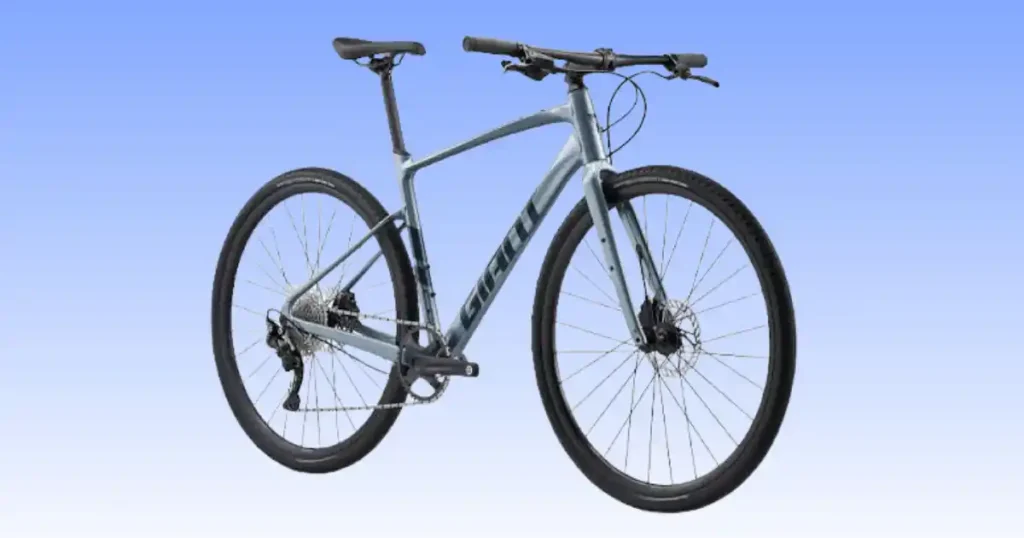
Stepping outside for a quick ride in Minneapolis, Minnesota, only to find your bike won’t budge, is enough to ruin anyone’s morning. Riders type “Giant FastRoad AR 1 not starting” into Google constantly, even though this fitness road bike has no ignition, no starter, and no power button anywhere on the frame. If it “won’t start,” the real issue is almost always that it will not roll, pedal, shift, or drive the rear wheel the way it should. Don’t panic and don’t reach for a wrench just yet. Start with the wheel, brakes, tyres, chain, and drivetrain first, then move toward bearings or the bottom bracket only if those simple checks come up empty. This guide walks through every likely cause in the exact order a shop mechanic would check them.
What Does “Giant FastRoad AR 1 Not Starting” Mean?
The phrase covers several different situations, and pinning down the exact symptom matters. A locked wheel needs a completely different fix than a stuck chain.
The bike will not move at all
Check for a locked front wheel, a locked rear wheel, brake drag, a flat tyre, a wheel obstruction, a chain jam, or severe drivetrain resistance.
The pedals will not turn
Investigate a jammed chain, a rear derailleur obstruction, a chain trapped in the cassette, a bottom bracket problem, a crank problem, or a foreign object caught in the drivetrain.
The pedals turn but the bike does not move
Look at the chain, the rear cassette, the freehub, the rear wheel, and overall drivetrain engagement, a pattern also covered in our broader guide on hybrid bike gears skipping.
The bike moves but feels extremely hard to pedal
Possible causes include brake rubbing, low tyre pressure, wheel bearing resistance, a dirty drivetrain, a bent wheel, or a chain problem, similar to the symptoms explained in why bikes feel heavy.
The bike rolls but makes a grinding or scraping noise
Check the disc rotor, the brake caliper, the hub, the bottom bracket, the chain, and the derailleur jockey wheels.
Check These Things Before Touching Any Tools
Start with the easy stuff first. A two minute inspection can save an entire hour of unnecessary adjustment later.
Make sure the wheels are not physically blocked
Inspect for a bike lock, a cable lock, mud, stones, twigs, loose clothing, accessories, or kickstand interference.
Spin the front wheel
Listen closely for scraping, grinding, repeated clicking, or heavy resistance.
Spin the rear wheel
Compare it directly with the front wheel. If the rear wheel stops almost immediately, investigate the brake, rotor, hub, axle, and overall wheel alignment.
Rotate the pedals by hand
Watch the chain, chainring, rear derailleur, and cassette closely for movement.
Squeeze both brake levers
Check whether the levers feel firm, return normally, pull too far, feel spongy, or stay partly engaged, a common symptom detailed in our bike brake problems guide.
Check the FastRoad AR 1 Disc Brakes
Brake drag is one of the first mechanical causes worth checking when a bike suddenly feels locked or very hard to pedal. FastRoad AR 1 specifications include Tektro hydraulic disc brakes with 160 mm rotors on several model years. A good floor pump and basic hex-key set like this reliable bike tool kit makes these checks far easier to perform at home.
Look for disc rotor rubbing
Lift the wheel safely, spin it, and watch the rotor closely while listening for contact. Note whether the rubbing happens once per rotation or continuously throughout.
Check whether the brake caliper releases
Look for constant pad contact, sticky braking, slow lever return, a damaged hose, or visible fluid leakage.
Check for a bent rotor
Understand the difference between a light occasional rub, a rotor visibly wobbling, and heavy continuous rubbing against the pad.
Do not ride with a serious brake fault
Stop riding immediately if brake power feels weak, the lever pulls to the bar, hydraulic fluid is leaking, the rotor is badly damaged, or the wheel remains locked.
Inspect the FastRoad AR 1 Chain and Drivetrain
The drivetrain is another major suspect worth close attention. The 2023 FastRoad AR 1 used a Shimano Deore 1×11 setup with a 42T chainring and 11 to 42 cassette, while the 2025 model uses Shimano CUES 11 speed with an 11 to 45 cassette.
Look for a jammed chain
Check whether the chain is trapped behind the cassette, wrapped around the chainring, stuck in the derailleur, twisted, broken, or simply off the chainring entirely, an issue explored further in our road hybrid bike chain care guide.
Inspect the rear derailleur
Look for a bent derailleur, a damaged hanger, a stuck jockey wheel, mud or debris buildup, or a chain caught around the derailleur cage.
Check the cassette
Look for a damaged sprocket, trapped debris, chain wedging, or excessive lateral movement.
Test the shifter
Check whether it clicks properly, whether the derailleur actually moves, whether the chain shifts cleanly, and whether the chain skips under load.
Never force a stuck shifter
Forcing the lever can quickly turn a small cable or derailleur issue into a far more expensive repair down the road.
Check the FastRoad AR 1 Tyres and Wheels
The FastRoad AR 1 is designed around relatively wide tyres for a road bike. Giant lists 700x40c tyres on both the 2023 and 2025 versions, with frame clearance up to 42 mm.
Check for a completely flat tyre
Look for a soft sidewall, a puncture, a valve leak, a sealant issue, or general tyre damage, a topic covered further in our tire pressure guide.
Check tyre pressure
A very low tyre can make a fast fitness bike feel sluggish and unusually heavy. The correct pressure depends on rider weight, tyre width, rim width, road surface, and whether you’re running a tubeless setup. There isn’t one perfect PSI number that fits every FastRoad AR 1 owner, so a quality tyre pressure gauge helps you dial in your own ideal number.
Check whether the wheel is rubbing
Inspect the tyre against the frame, the tyre against the fork, the rotor against the caliper, and general wheel alignment.
Check the thru-axles
The FastRoad AR 1 uses 12 mm thru-axles at both the front and rear on the referenced specifications. Check that the axle is fully seated, the wheel is properly secured, and nothing looks bent or loose.
Could the Bottom Bracket or Crank Be Stuck?
If both wheels spin normally but the pedals refuse to turn, shift your attention toward the crank and bottom bracket area.
Check the crank arms
Look for a loose crank, side to side movement, visible damage, or any physical obstruction nearby.
Rotate the crank slowly
Feel closely for roughness, grinding, tight spots, clicking, or sudden resistance anywhere in the rotation.
Listen near the bottom bracket
Noise felt under hand rotation tells you far more than guessing based on appearance alone.
When bottom bracket repair needs a shop
Professional service becomes the smarter choice when the problem involves bearing replacement, bottom bracket removal, crank removal, damaged threads, or persistent grinding that won’t clear up.
FastRoad AR 1 Not Starting After Rain or Storage
A bike that worked perfectly last month can feel completely different after weeks sitting in a damp garage. Moisture, dirt, and dried lubricant create resistance in places that looked fine at first glance, a challenge covered in our wet weather riding hybrid bike guide.
After riding in heavy rain
Inspect the chain, brake rotor, brake caliper, cassette, jockey wheels, and wheel bearings for contamination.
After several weeks of storage
Check tyre pressure, chain corrosion, brake operation, wheel rotation, drivetrain movement, and tubeless sealant condition, following the same routine outlined in how to store a hybrid bike.
If the bike was stored outside
Look more closely for rust, corrosion, contaminated brake components, stiff drivetrain parts, or damaged cables and hoses.
Do not spray lubricant on the brake rotor
Never let chain oil, grease, WD-40 type products, or silicone sprays land on disc brake rotors or pads, since contamination ruins braking performance quickly.
FastRoad AR 1 Troubleshooting Table
This should be the article’s main quick reference table. Glance at it while standing beside the bike and immediately choose your next check, following the same logic used in our road hybrid bike maintenance checklist.
| What happens? | Likely cause | First check | Difficulty |
|---|---|---|---|
| Front wheel will not spin | Brake, axle or hub | Spin wheel | Easy |
| Rear wheel will not spin | Brake or hub | Check rotor | Easy |
| Pedals will not turn | Chain or crank | Inspect drivetrain | Easy to Moderate |
| Pedals turn but bike will not drive | Chain or freehub | Check rear wheel | Moderate |
| Bike is hard to pedal | Brake or tyre | Spin wheel or check pressure | Easy |
| Grinding noise | Bearing or drivetrain | Rotate components | Moderate |
| Gears will not shift | Cable or derailleur | Test shifter | Easy to Moderate |
| Brake stays engaged | Hydraulic brake | Check caliper or lever | Professional |
How to Fix a Giant FastRoad AR 1 That Will Not Move
Once you’ve identified the cause, start with the smallest safe repair first. Don’t dismantle the whole bike just because you own a hex key set and a free afternoon.
Inflate the tyres
Check the sidewall guidance printed on the tyre, use a proper pump such as this compact floor pump, check pressure before every longer ride, and check again after any tubeless repair.
Clean and lubricate the chain
Wipe off surface dirt, clean the chain thoroughly, allow it to dry completely, apply a quality bicycle chain lubricant, then wipe away the excess.
Remove debris from the drivetrain
Check the chainring, cassette, jockey wheels, and full chain length for trapped debris.
Deal with light brake rubbing
A basic visual inspection is fine for light rubbing, but don’t attempt to open or bleed a hydraulic brake system without the correct equipment and training.
When hydraulic brake service is not a beginner repair
Call a qualified mechanic if the brake needs bleeding, hydraulic fluid is leaking, lever feel seems abnormal, pads are contaminated, or caliper alignment can’t be safely corrected at home.
Tools You Need to Diagnose the Problem
This section keeps things practical while staying rooted in the tools every rider should own.
Basic bicycle tools
A floor pump, a tyre pressure gauge, a hex key set, a bicycle multi-tool, clean rags, a soft brush, chain lubricant, and tyre levers cover most home repairs, and our full breakdown of essential bike tools expands on each one.
Useful diagnostic tools
A torque wrench, a chain wear checker, a work stand, a rotor alignment tool, cleaning brushes, and an inspection light round out a more complete home toolkit.
Tools you probably do not need immediately
Beginners shouldn’t rush to buy hydraulic brake bleeding kits, bearing presses, advanced cassette tools, or bottom bracket tools unless the actual diagnosis requires them.
When to Stop DIY Repairing Your FastRoad AR 1
Some faults simply aren’t worth gambling with. If the problem touches braking, steering, or wheel security, safety matters more than saving a repair fee.
Stop riding if you find
A cracked frame, a damaged fork, a loose thru-axle, severe brake failure, a hydraulic leak, a badly bent rotor, serious wheel bearing play, or a broken derailleur hanger.
Take hydraulic brake problems seriously
Brake fluid, bleeding procedures, and caliper work deserve extra caution because mistakes here directly affect stopping power.
Visit a bike shop for bearing problems
This includes hub bearings, the bottom bracket, and headset bearings, all covered further in our road hybrid bike tire replacement and bearing care resources.
Contact the dealer if the bike is new
If the FastRoad AR 1 is a newer purchase and already shows a major mechanical problem, contact your Giant dealer before taking the bike apart yourself.
USA Expert Advice for a FastRoad AR 1 That Won’t Move
Shop mechanics across the country tend to follow the same diagnostic order when a road bike suddenly won’t move, and that consistency is worth learning from.
The mechanic’s first diagnostic order
The typical shop workflow moves through wheel, brake, tyre, chain, derailleur, crank, hub, then bottom bracket. This order works because it starts with the most visible problems, requires the fewest tools, avoids unnecessary adjustments, and finds safety critical faults early in the process.
Real-world rider context
Picture leaving work in Chicago, Illinois, on a Tuesday evening. You push off, pedal twice, and the FastRoad suddenly feels like someone grabbed the rear wheel. Don’t immediately blame the gears. Lift the wheel and check the brake first, since that single step solves this exact scenario more often than any other fix.
Real owner experience
A useful community signal is that owners report using the FastRoad AR 1 for city riding, paved bike paths, and light gravel, including one 2023 owner who reported thousands of miles of use without major issues. Treat these as anecdotal owner experiences rather than technical evidence, similar to the mileage patterns discussed in how long hybrid bikes last.
Common FastRoad AR 1 Troubleshooting Mistakes
Mistake 1: Treating it like an e-bike
There’s no ignition, no starter motor, no battery start problem, and no power button anywhere on this frame, a distinction also worth understanding if you’ve researched a Heybike bike not starting.
Mistake 2: Adjusting gears before checking the brakes
Brake drag mimics drivetrain problems constantly, so checking gears first often wastes valuable time.
Mistake 3: Ignoring tyre pressure
Low pressure quietly makes the whole bike feel sluggish long before riders suspect the tyres.
Mistake 4: Spraying oil near the disc rotor
Even a small amount of overspray can contaminate the pads and ruin braking performance.
Mistake 5: Forcing a stuck chain
Forcing a jammed chain risks bending the derailleur or snapping a link entirely.
Mistake 6: Continuing to ride with weak brakes
Weak brakes only get worse with continued use and put rider safety at real risk.
Mistake 7: Assuming every FastRoad AR 1 has identical parts
This matters for accuracy since the drivetrain differs between model years. The 2023 specification lists Shimano Deore 1×11, while the 2025 specification lists Shimano CUES 11 speed.
Giant FastRoad AR 1 Not Starting FAQ
Why is my Giant FastRoad AR 1 not moving?
Brake drag, a flat tyre, or a jammed chain explain most cases, similar to the causes covered in our VIRIBUS bike not starting guide.
Why won’t the rear wheel spin on my FastRoad AR 1?
A rubbing brake or a hub problem is the most likely explanation.
Why are the pedals stuck on my Giant FastRoad AR 1?
A jammed chain or a bottom bracket issue usually causes this exact symptom.
Why is my FastRoad AR 1 suddenly hard to pedal?
Brake rubbing or low tyre pressure are the two most common culprits.
Can brake rub stop a FastRoad AR 1 from moving?
Yes, a rotor pressing against the pad creates enough drag to stop the bike from rolling freely.
Why is the FastRoad AR 1 chain stuck?
A twisted link, trapped debris, or a derailleur jam typically explains a stuck chain.
Why is my FastRoad AR 1 making a grinding noise?
Worn bearings or drivetrain debris are the most likely sources of grinding.
Why will my FastRoad AR 1 not shift gears?
Cable tension or a bent derailleur hanger usually explains poor shifting, a pattern similar to hybrid bike gears skipping.
Can a bad bottom bracket stop the bike?
Yes, a seized bottom bracket can make pedaling feel nearly impossible.
Should I take my FastRoad AR 1 to a bike shop?
Frame damage, hydraulic bleeding, and bearing replacement are best left to a certified shop, similar to the specialist repairs covered in our Tommaso bike not starting and Mongoose bike not starting guides.
Is the Giant FastRoad AR 1 an electric bike?
No. It is a pedal powered fitness and all road bicycle, so “not starting” normally means a mechanical movement or drivetrain problem rather than anything electrical.
FastRoad AR 1 Safety Checklist Before Riding Again
Keep this as a practical final checklist rather than another generic summary.
Wheel check
Front wheel spins freely, rear wheel spins freely, wheels are properly secured, no major wobble, and no grinding sound.
Brake check
Front brake works, rear brake works, levers feel normal, no hydraulic leak, and the rotor isn’t badly damaged.
Drivetrain check
Chain is seated properly, crank rotates smoothly, gears shift cleanly, derailleur moves normally, and no chain skipping under load.
Tyre check
Both tyres are properly inflated, no major cuts are visible, no puncture is present, and the tubeless system holds pressure steadily.
Final Recommendation
After years spent diagnosing road and fitness hybrids for riders facing this exact “won’t move” panic, my honest recommendation is simple: work through the wheel, brake, tyre, chain, and derailleur before assuming anything expensive has failed. The Giant FastRoad AR 1 has no engine, so nothing about it truly “starts” or “stops working” in the way people fear.
Most riders solve their problem within minutes using tools they already own, especially a basic pump, hex key set, and some fresh chain lubricant. Build a light weekly habit around cleaning and lubrication, and this bike will reward you with thousands of reliable miles. If you ever spot a hydraulic leak, a bent rotor, or suspected frame damage, stop riding and visit a certified shop right away. Trust the fundamentals first, and your FastRoad AR 1 will keep rolling exactly the way it should.

Ehatasamul Alom is a dedicated road hybrid bikes expert. With over 15 years of experience, he helps people find the perfect ride. He began his journey as a bike mechanic. He learned the ins and outs of every bike.
Ehatasamul Alom holds a Master's degree in Mechanical Engineering from a Brown University (Providence US 02912), where he specialized in material science and bicycle kinematics. His master's thesis focused on optimizing frame geometry for road hybrid bikes to improve rider comfort and efficiency.
Ehatasamul has an extensive professional background. He spent 10 years (2010-2020) as a Senior Bike Designer at "Urban Cycles," a leading bicycle manufacturer. In this role, he led the development of several award-winning road hybrid bikes, which are known for their durability and performance. He later served (2020-2024) as the Head of Product Development at "Gear Up," a company specializing in high-end cycling components. There, he developed innovative parts and accessories specifically for road hybrid bikes.
Over the years, Ehatasamul has become an authority on Roadhybridbikes. He understands their design and function. His work focuses on making bikes easy to use. Ehatasamul believes everyone should enjoy cycling. He writes guides that are simple to read. His passion for road hybrid bikes is clear. His goal is to share his knowledge with everyone. He wants to see more people on two wheels. His advice is always practical and easy to follow.
- Ehatasamul Alom

- Ehatasamul Alom
- Ehatasamul Alom

- Ehatasamul Alom