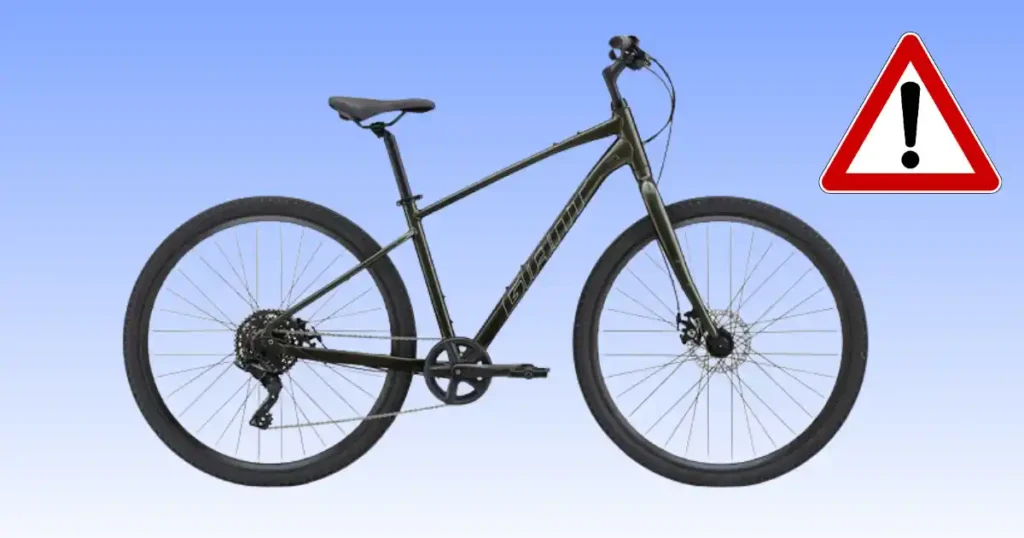
A stubborn bike can ruin a sunny morning faster than a sudden downpour. Last week in Portland, a neighbor rolled up with a Giant Cypress 3 that refused to budge off the sidewalk. Your Cypress 3 does not have an ignition switch, of course. So when someone says it is “not starting,” they usually mean the bike will not move, the pedals will not turn, or the drivetrain is not transferring power. Start with the simple checks before grabbing every wrench in the garage.
What Does “Giant Cypress 3 Not Starting” Mean?
The phrase can describe several different bicycle problems. Identifying the exact symptom first keeps you from adjusting the wrong component.
The Giant Cypress 3 will not move
- Locked brake
- Jammed chain
- Wheel problem
- Drivetrain fault
- Crank problem
- Severe tire issue
The pedals will not turn
- Brake lockup
- Chain jam
- Crankset issue
- Bottom bracket bind
- Foreign object in drivetrain
The pedals turn but the bike does not move
- Chain slip
- Cassette loose
- Rear wheel out of dropouts
- Freehub failure
- Drivetrain engagement loss
The bike moves but feels very hard to pedal
- Brake rub
- Low tire pressure
- Wheel bearing resistance
- Drivetrain friction
- Damaged component
The gears will not shift
The Cypress 3 specification researched here uses microSHIFT Acolyte 1×8 shifting and a microSHIFT Acolyte rear derailleur.
- Shifter lever sticky
- Shift cable loose or frayed
- Cable housing kinked
- Rear derailleur misaligned
- Cassette teeth worn
- Chain worn or dry

Do This 2-Minute Check Before Using Tools
Before turning a screw, simply look, listen, and feel. A quick diagnosis can save you from creating three new problems while trying to fix one.
Put the bike somewhere safe
- Flat floor
- Good lighting
- Stable position
- Repair stand if available
Check the wheels
- Spin the front wheel
- Spin the rear wheel
- Look for brake rubbing
- Check for wobble
Check the crank
- Turn the pedals by hand
- Feel for resistance
- Listen for grinding
- Check for side-to-side movement
Look at the chain
- Is it installed correctly?
- Is it jammed?
- Is it broken?
- Is it badly twisted?
Think about what happened before the problem
- Did the bike fall over?
- Did you hit a pothole?
- Did the chain fall off?
- Did it sit unused for months?
- Did the problem start after shifting?
- Did you hear a loud click?
Common Giant Cypress 3 Problems by Symptom
Standing by your bike with grease on your hands requires quick answers. This reference table matches your symptom directly to the right component, initial check, and difficulty level.
| Symptom | Likely Area | First Check | Difficulty |
| Pedals will not turn | Brake/crank/drivetrain | Spin wheels and crank | Easy–Medium |
| Pedals turn but bike does not move | Freehub/drivetrain | Watch rear wheel | Medium |
| Rear wheel barely spins | Brake/wheel | Check rotor rub | Easy |
| Chain falls off | Drivetrain | Inspect derailleur | Medium |
| Gears will not shift | Cable/derailleur | Test shifting | Easy–Medium |
| Grinding while pedaling | Bearings/drivetrain | Rotate crank | Medium |
| Problem after crash | Multiple parts | Inspect frame/wheels | Professional |
Check the Brakes First
A brake that is stuck or rubbing hard can make the Cypress 3 feel as if the entire drivetrain has failed. The Cypress 3 specification lists Tektro mechanical disc brakes with 160 mm front and rear rotors.
Spin the front wheel
- Rotor rubbing against pads
- Scraping noise under rotation
- Wheel resistance slowing rotation fast
- Bent rotor wobbling in slot
Spin the rear wheel
- Look at brake rotor alignment
- Inspect mechanical caliper position
- Check rear wheel alignment in dropouts
- Verify rear axle security
Check the brake lever
- Look for excessive lever travel to grip
- Check for loose feeling in cable
- Confirm brake releases when lever lets go
- Inspect cable pinch bolt and housing
Why brake rub matters
A small occasional tick from a slightly true rotor differs from a locked caliper. Constant heavy rubbing creates friction that robs pedaling force. A damaged rotor can slice pads, while a lever that does not return leaves the bike dragged down continuously.
Check the Chain and Drivetrain
If the brakes release normally, move to the drivetrain. On the researched Cypress 3 specification, Giant lists a microSHIFT Acolyte 1×8 drivetrain, 12–42 cassette, KMC Z8.3 chain, and 38T crankset.
Check whether the chain is on
- Front chainring tooth engagement
- Rear cassette cog seating
- Rear derailleur pulley routing
- Chainstay frame gap clearance
Look for a jammed chain
- Chain caught between cassette and spokes
- Damaged outer link plate catching cage
- Debris wedged in chain links
- Derailleur cage twisted out of line
- Chain routed incorrectly through pulleys
Check for a broken chain
- Open chain lying off sprockets
- Missing pin or broken quick link
- Bent link binding on teeth
- Chain hanging loose from frame
Check the chain for stiff links
- Skipping over rear cassette teeth
- Poor shifting between cogs
- Clicking noise once per chain loop
- Uneven chain movement through cage
Do not assume a dirty chain is the whole problem
A dirty chain can hurt shifting and increase friction. But a bike that suddenly becomes completely immobile needs a broader diagnosis.
Check the Crank and Bottom Bracket
If the pedals refuse to rotate, the crank area deserves attention. The Cypress 3 uses a sealed-cartridge bottom bracket according to Giant’s published specification.
Turn the crank by hand
- Rotates smoothly without catch
- Feels gritty under palm pressure
- Has tight spots in circle
- Stops suddenly without warning
- Moves sideways inside frame shell
Inspect the crankset
- Loose crank arm on spindle
- Bent chainring or spider
- Damage after a side crash
- Unusual movement under weight
Check the pedals
- Loose pedal spindle in arm
- Damaged pedal body or cage
- Pedal bearing resistance to spin
- Object caught around pedal axle
What bottom-bracket failure feels like
Mild bearing noise usually signals dry grease. Rough rotation feels like gravel inside the shell. Excessive play lets the crank arms wiggle side to side. Severe binding freezes the spindle, making the bike impossible to pedal.
When bottom-bracket work becomes a shop job
Pulling crank arms and unthreading a sealed bottom bracket takes specific splined tools. If bearings fail or spindle threads seize, let a local shop handle it rather than stripping frame threads.
Pedals Turn but the Giant Cypress 3 Does Not Move
This is one of the most important search-intent sections because it describes a very specific failure. The key question is simple: is your pedaling force reaching the rear wheel?
Watch the rear wheel while turning the crank
- Check chain movement across teeth
- Inspect cassette rotation on hub
- Verify rear-wheel rotation with cassette
Check the freehub
- What a freehub does: holds internal ratchet pawls
- How it transfers power: catches teeth to drive wheel
- Why it coasts: lets wheel spin while pedals rest
Signs of a freehub problem
- Pedals spin freely without driving wheel
- Intermittent engagement under force
- Sudden loss of drive on hills
- Unusual rapid clicking or silence
Check the rear wheel installation
- Confirm wheel is seated deep in dropouts
- Check axle nuts or quick release tension
- Verify no internal hub spindle break
When freehub repair should go to a mechanic
Servicing internal hub pawls requires delicate springs and specific light oil. Taking apart a cassette body without proper chain whips and lockring sockets often leaves home mechanics stuck.
Check the Giant Cypress 3 Gears
The Cypress 3’s microSHIFT Acolyte 1×8 system has one front chainring and eight rear gears. That makes the setup fairly simple to understand for a beginner.
Test every gear slowly
- Delayed shifts after clicking lever
- Chain skipping under light pressure
- Persistent clicking noise on cogs
- Chain falling off inner or outer cogs
- Gears that will not engage at all
Inspect the rear derailleur
- Bent cage pointing toward spokes
- Damage from drops or impacts
- Loose mounting bolt on dropout
- Chain routing errors through pulleys
Check the shift cable
- Fraying near pinch bolt anchor
- Corrosion along steel inner wire
- Damaged outer housing ferrule ends
- Excessive slack in wire tension
Do not immediately turn the limit screws
Turning derailleur limit screws randomly is a common mistake. Limit screws only set stop points for high and low gears. If your shifting breaks overnight, cable tension or hanger alignment is almost always the cause.
Check the Wheels, Tires, and Hubs
The Cypress 3 uses 700C wheels with 700×45c Innova Multi Purpose Hybrid tires in the researched specification.
Check tire pressure
- Low pressure increases rolling resistance fast
- A flat tire can make normal riding impossible
- Tire pressure should follow sidewall markings carefully
Inspect the tires
- Glass or wire punctures in tread
- Sidewall cuts from sharp curbs
- Rubber bulges along bead line
- Embedded debris in tread blocks
- Severe wear exposing inner casing
Spin each wheel
- Wobble between brake pads
- Grinding inside axle bearings
- Brake pad rubbing rotor surface
- Bearing play when wiggling rim
Check wheel security
- Confirm wheel sits square in frame
- Check axle nut or skewer tightness
- Look for obvious hub play
Giant Cypress 3 Not Starting After Sitting for Months
A Cypress 3 that has spent a long winter in the garage may simply need a careful inspection. Dust is boring. Rust is not.
Inspect the chain
- Surface rust binding link plates
- Stiff links frozen in position
- Heavy dirt caked in rollers
- Dry metal squeaking under load
Inspect the brakes
- Rotor surface rust or oxidation
- Caliper arm pivot sticky movement
- Inner cable binding inside housing
- Brake pads releasing from rotor
Check the tires
- Low pressure from slow leakage
- Rubber dry rot or cracking
- Bead seating errors on rim
- Punctures from stored debris
Test the drivetrain
- Smooth crank spin by hand
- Chain flex across all cogs
- Rear derailleur pivot return spring
- Cassette cog alignment and rust
Real-life garage scenario
It is Saturday morning in Ohio. You planned a quick coffee ride, pull the Cypress 3 from the garage, and discover the rear wheel barely turns. A quick check shows the mechanical brake cable rusted inside its housing, locking the brake pads hard against the rotor.
Giant Cypress 3 Not Starting After a Crash
A crash changes the troubleshooting priority. A bicycle that stopped working after an impact should not be treated like a simple shifting problem.
Inspect the ALUXX aluminum frame
Giant lists the Cypress 3 frame as ALUXX-Grade Aluminum.
- Cracks near tube welds or bottom bracket
- Deep dents from hard impacts
- Major paint scratches down to bare metal
- Bends along chainstays or down tube
Inspect the fork
The researched model uses a high-tensile steel fork.
- Legs bent backward or sideways
- Structural cracks at fork crown
- Headset loose or binding on turn
- Steering binding when turning bars
Inspect the derailleur
A drive-side fall often forces the rear derailleur into the wheel. This bends the aluminum hanger, warps the cage, or jams the chain into the spokes.
Inspect the wheels and brakes
- Bent rim wobbling against frame
- Rotor bent from side impact
- Tire popped off bead line
- Axle shifted out of dropout alignment
When not to ride after a crash
Stop riding if you spot frame cracks, bent fork legs, binding steering, soft brakes, or a severely bent wheel rim.
DIY vs Professional Repair
Knowing which repairs match your comfort level keeps you safe and prevents costly mistakes. Use this guide to decide when to pick up a tool or head to the shop.
| Problem | DIY Level | Suggested Action |
| Low tire pressure | Easy | Inflate and inspect |
| Chain lubrication | Easy | Clean and lubricate |
| Dropped chain | Easy | Reinstall and test |
| Basic wheel inspection | Easy | Spin and inspect |
| Brake-rub diagnosis | Easy–Medium | Inspect carefully |
| Shift adjustment | Medium | Adjust if experienced |
| Freehub repair | Advanced | Bike shop recommended |
| Major brake repair | Advanced | Professional service |
| Frame/fork damage | Professional | Do not ride |
Easy Giant Cypress 3 Fixes You Can Try at Home
Simple maintenance fixes most bike issues. Tackle these straightforward steps right in your driveway.
Reinstall a dropped chain
- Stop pedaling immediately to protect frame paint
- Place chain onto front 38T chainring teeth
- Guide lower loop onto smallest cassette cog
- Rotate crank slowly forward by hand
- Test shifter through all eight gears
Clean and lubricate the chain
- Apply degreaser to chain rollers with rag
- Wipe off dirt and grit until metal shines
- Dry chain completely with clean cloth
- Apply drop of bike lube to each roller
- Wipe off excess lubricant from outer plates
Correct low tire pressure
- Check pressure range printed on tire sidewall
- Attach floor pump head securely to valve
- Inflate gradually while watching pump gauge
- Inspect tire bead seating as pressure rises
Address obvious brake rub carefully
If your Tektro mechanical disc brake rubs continuously, check cable tension first. Loosen the cable anchor bolt slightly to release excess pull, realign the caliper over the rotor, and retighten the bolt.
What not to spray near disc brakes
Never spray chain lube, WD-40, or degreaser near disc rotors or brake pads. Oil contamination ruins brake pads instantly and causes terrible squealing.
Tools You Need to Troubleshoot a Cypress 3
Basic home repairs require only a few simple items. Keep these core tools in your kit to handle routine maintenance.
Basic tools
- Bicycle floor pump with gauge
- Digital tire-pressure gauge
- Metric hex key set (4mm, 5mm, 6mm)
- Clean cotton rags
- Bicycle-specific chain lube
- Repair stand or wall hook
Useful advanced tools
- Click-style torque wrench
- Chain wear checker tool
- Cable and housing cutters
- Rotor truing fork
- Cassette lockring tool and chain whip
Why using the correct tool matters
Rounded hex keys strip aluminum bolt heads easily. Over-tightening bolts can crush delicate components or ruin frame threads. Always use metric tools that fit snugly.
When to Stop DIY Repairing Your Giant Cypress 3
Recognizing when a job exceeds home tools protects your bike and wallet. Know the signs that mean it is time to visit a professional mechanic.
Take it to a bike shop if
- Frame shows cracks, bends, or severe dents
- Fork legs appear bent or headset binds
- Axle bearings feel gritty, loose, or broken
- Freehub slips continuously under power
- Derailleur hanger is visibly twisted
- Brake calipers or levers are damaged
- You cannot pinpoint cause of binding
Get professional help after a serious crash
- Steering feels notched or stiff when turning
- Rear wheel sits crooked in frame dropouts
- Brake lever pulls all the way to grip
- Frame tube shows structural creases
What to tell the mechanic
- Exact symptom you noticed while riding
- When the problem first started occurring
- What happened right before failure
- Any clicking, grinding, or popping sounds heard
- List of recent repairs or part changes
- History of crashes or bike rack transport
Expert Advice for Diagnosing a Bike That Will Not Move
Systematic troubleshooting saves hours of frustration. Relying on proven mechanics helps narrow down issues fast.
Use Calvin Jones as the expert reference
Calvin Jones spent 28 years as Park Tool’s Director of Education. He built industry-standard training guides used by mechanics worldwide, focusing on structured diagnosis over random adjustments.
His “five senses” diagnostic approach
Jones highlights using your senses to catch bicycle faults early:
- Look: Find visible misalignment, cracks, or dropped chains
- Listen: Trace clicking, scraping, or grinding noises to components
- Feel: Check for bearing play, sticky cables, or lever drag
- Smell: Catch burning rubber or oily brake pad contamination
- Test carefully: Spin wheels and cranks by hand before riding
Expert Callout
Expert tip — Calvin Jones: Use your eyes, ears, and hands before reaching for a wrench. Locate the exact source of friction, test one component at a time, and never turn adjustment screws until you verify component alignment.
Giant Cypress 3 Model-Year Differences Matter
Component specs change across model years. Verifying your exact setup ensures replacement parts fit correctly.
The researched Cypress 3 specification
- ALUXX-Grade Aluminum frame tubing
- High-tensile steel rigid fork
- microSHIFT Acolyte 1×8 drivetrain setup
- KMC Z8.3 8-speed drive chain
- Tektro mechanical disc brake calipers
- 160 mm front and rear steel rotors
- Sealed-cartridge bottom bracket unit
- 700C aluminum double-wall wheels
- 700×45c Innova Multi Purpose Hybrid tires
Other Cypress generations can differ
Giant’s Cypress lineup has evolved over the years. Older models often feature front suspension forks, multi-chainring front derailleurs, or rim brakes instead of modern 1x setups and disc rotors.
Why this matters for troubleshooting
- Mechanical disc brakes tune differently than hydraulic systems
- 8-speed chains differ in width from 10-speed setups
- Single front chainrings eliminate front derailleur issues
- Rigid forks require different inspection than suspension forks
- Replacement parts must match model specs exactly
How to identify your exact Cypress 3
- Check decals on top tube and down tube
- Read brand names stamped on derailleur cage
- Inspect brake calipers for model numbers
- Match frame serial number on Giant website
- Review original bike shop sales receipts
Giant Cypress 3 Troubleshooting Checklist
Keep this checklist handy on your phone for a fast diagnostic routine right beside your bike.
60-second inspection
- Front wheel spins freely without brake drag
- Rear wheel spins freely without brake drag
- Tires inflated to recommended sidewall PSI
- Brakes grab and release cleanly
- Chain sits correctly on chainring and cogs
- Crank turns smoothly by hand
- Rear wheel engages when crank turns forward
- Rear derailleur shifts across all cogs
- Gears operate without loud clicking
- Frame and fork show no visible damage
Before riding again
- Test front and rear brakes at walking speed
- Check handlebar steering for smooth travel
- Verify axle nuts or quick-release skewers are tight
- Pedals turn cleanly under light foot pressure
- Listen for unusual grinding or popping noises
- Take a short, slow test ride nearby
Frequently Asked Questions About Giant Cypress 3 Not Starting
Why is my Giant Cypress 3 not moving?
A bike usually stops moving because a disc brake pad is locked against the rotor, the chain dropped and wedged in the frame, or the rear hub bearings bound up. Spin each wheel by hand to isolate the friction.
Why do the pedals turn but my Cypress 3 does not move?
If pedaling turns the chain and cassette but the rear wheel does not move forward, the internal freehub pawls have failed. Dirt or worn springs keep the pawls from catching the hub shell.
Why won’t the pedals turn on my Giant Cypress 3?
Pedals freeze when the chain jams tightly between cogs and frame, a mechanical brake caliper locks down, or bottom bracket bearings seize inside the shell.
Why is my Giant Cypress 3 so hard to pedal?
Excessive pedaling drag typically stems from heavy brake rub, flat tires, dry chain links, or tight axle cone bearings.
Why won’t my Giant Cypress 3 change gears?
Shifting breaks when the microSHIFT Acolyte cable loses tension, housing ends collapse, inner wire rusts, or the derailleur hanger gets bent in a fall.
Can I fix a Giant Cypress 3 myself?
Basic tasks like inflating tires, lubricating chains, resetting dropped chains, and adjusting cable tension are simple at home. Freehub overhauls, wheel truing, and bottom bracket changes are best left to a shop.
Should I ride my Giant Cypress 3 if it suddenly stops?
No. Riding a bike with jammed components or failing brakes risks crashing and causing severe damage to your frame or drivetrain.
Final Pre-Ride Safety Check
Run through this quick final checklist before heading out on your ride:
- Both wheels secure in dropouts
- Tires properly inflated to PSI
- Brakes work smoothly
- Chain installed correctly on teeth
- Crank rotates smoothly without play
- Gears shift through all cogs
- Rear wheel engages promptly
- Steering feels normal and smooth
- No frame or fork damage visible
- No serious grinding or scraping noises
Final Recommendation
Getting your Giant Cypress 3 rolling again comes down to simple, step-by-step checks. In my years wrenching on urban hybrids, I have seen simple fixes like unsticking a Tektro brake cable or resetting a KMC chain fix problems that looked like total mechanical breakdown. Always inspect your bike carefully, work on one component at a time, and test your adjustments at slow speeds. If you run into frame cracks, damaged freehubs, or bent forks, bring your bike to a certified Giant shop to stay safe on every ride.

Ehatasamul Alom is a dedicated road hybrid bikes expert. With over 15 years of experience, he helps people find the perfect ride. He began his journey as a bike mechanic. He learned the ins and outs of every bike.
Ehatasamul Alom holds a Master's degree in Mechanical Engineering from a Brown University (Providence US 02912), where he specialized in material science and bicycle kinematics. His master's thesis focused on optimizing frame geometry for road hybrid bikes to improve rider comfort and efficiency.
Ehatasamul has an extensive professional background. He spent 10 years (2010-2020) as a Senior Bike Designer at "Urban Cycles," a leading bicycle manufacturer. In this role, he led the development of several award-winning road hybrid bikes, which are known for their durability and performance. He later served (2020-2024) as the Head of Product Development at "Gear Up," a company specializing in high-end cycling components. There, he developed innovative parts and accessories specifically for road hybrid bikes.
Over the years, Ehatasamul has become an authority on Roadhybridbikes. He understands their design and function. His work focuses on making bikes easy to use. Ehatasamul believes everyone should enjoy cycling. He writes guides that are simple to read. His passion for road hybrid bikes is clear. His goal is to share his knowledge with everyone. He wants to see more people on two wheels. His advice is always practical and easy to follow.
- Ehatasamul Alom

- Ehatasamul Alom
- Ehatasamul Alom

- Ehatasamul Alom