
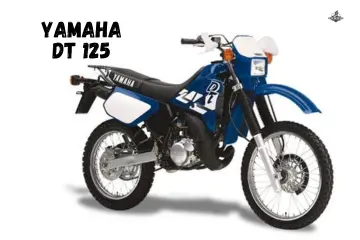
My Yamaha DT 125 left me stuck on a trail outside Boise last summer. The sun was hot. The dust was thick. I kicked the lever hard five times and got nothing but a weak sputter. I’ve owned this bike for four years now. I’ve learned that when your Yamaha DT 125 not starting, the problem usually comes from a few simple causes. Most you can fix yourself in 20 minutes with basic tools.
When Your Old-School DT 125 Just Won’t Fire Up
Late afternoon. Dusty trail. I kicked the lever three times—nothing but silence and a faint fuel smell. Let’s walk through it calmly, tool by tool.
Quick “no-tool” sanity checks
Before you grab tools or start taking things apart, check these basics first. Sometimes it’s the simple stuff. Sometimes… not.
- Ignition ON: Turn the key all the way. Make sure it’s fully on.
- Kill switch set to RUN: Red switch on the right bar. Must be in RUN position.
- Choke position correct: Cold engine needs choke on. Warm engine needs choke off.
- Fuel tap ON: Yep… I’ve forgotten this. More than once. Check it’s turned to ON or RES.
- Check neutral light and side stand: Some models have safety switches. Bike must be in neutral or clutch pulled in.
I once kicked for 10 minutes. My friend watched. Then he pointed at the fuel tap. It was off. Still hear about it.
Common Causes: Yamaha DT 125 Not Starting (2-Stroke Reality)
A short overview before we dive into fixes—so you don’t chase the wrong problem.
Empty or stale fuel
This is more common than you think. Two-stroke premix fuel doesn’t last long. It goes bad fast.
What happens:
- Old premix turns gummy and sticky
- Sour smell comes from the tank
- Engine won’t fire or runs rough then dies
Why it matters: The DT 125 is a two-stroke. It needs oil mixed with gas. That mix doesn’t store well. After 30 days, it starts breaking down. After 60 days, it’s basically varnish.
Wrong fuel mix ratio: The DT 125 needs the right oil-to-gas ratio. Usually 1:50 or 1:40 depending on year and model. Too much oil fouls the plug. Too little oil destroys the engine.
Check your manual. Mix exactly right. Don’t guess.
What I do: I never store premix longer than two weeks. If I won’t ride for a while, I drain the tank. Fresh fuel only.
Drain + refill safely: Turn the fuel tap to OFF. Remove the tank. Pour old fuel into a container. Dispose of it properly—don’t dump it. Rinse the tank with fresh gas. Refill with fresh premix at the correct ratio.
Takes 15 minutes. Solves most starting problems.
Battery weak (even kick-start bikes need it)
People think kick-start bikes don’t need batteries. Wrong. The DT 125 needs battery power for the ignition system.
What you’ll see:
- Dim dashboard lights
- Weak or no spark at the plug
- Hard starting even when kicking
Why it happens: The CDI (capacitor discharge ignition) needs power. A weak battery means weak spark. Weak spark means no combustion.
What I do: Pull out my multimeter. Red probe on positive. Black on negative. A good battery shows 12.6 volts or more. Below 12 volts? It’s weak. Below 11.5? It’s dead.
Tools: multimeter, charger: Charge the battery overnight with a trickle charger. Don’t fast charge. It damages the plates inside.
If the battery won’t hold a charge, replace it. They’re cheap. About $30-40.
Pro tip: Even if you only kick-start, check the battery every month. Keep it charged.
Spark plug & ignition issues
This is the most common problem with two-strokes. Plugs foul easily.
What you’ll notice:
- Engine turns over but won’t fire
- Strong fuel smell from exhaust
- Black smoke before it quit
Fouled plug (oily, black): Remove the plug. Look at the tip. If it’s black, wet, or oily, it’s fouled. Won’t spark properly.
Two-stroke engines run rich. They foul plugs faster than four-strokes. Especially if you idle a lot or use too much oil in the mix.
Loose plug cap: The rubber cap on top of the plug can work loose. No connection means no spark.
Pull it off. Press it back on firmly. You should hear a click.
Weak spark from coil / CDI: Remove the plug. Reconnect it to the cap. Ground the plug threads on the engine. Kick the engine. Watch for spark.
Good spark is bright blue. Weak spark is orange or yellow. No spark? You have a coil or CDI problem.
Clean vs replace—when each makes sense:
You can clean fouled plugs. Wire brush the electrode. Blow out carbon with compressed air. But new plugs work better.
I replace plugs every 5,000 kilometers or every six months. They cost $5-8. Worth it for reliable starting.
Keep a spare plug in your tool kit. Saved me more than once on the trail.
Clogged carburetor (DT classic problem)
The DT 125 has a carburetor. No fuel injection. Carbs get dirty easily.
What happens:
- Won’t idle smoothly
- Flooding smell—too much fuel
- Hard starting hot or cold
Why it clogs: Old fuel leaves deposits. Dirt gets past the filter. Jets get blocked. Then fuel flow is wrong.
Dirty pilot jet: The pilot jet controls idle and low-speed running. It’s tiny. Clogs easily. When blocked, the bike won’t start or idle.
Basic cleaning steps—without stripping everything:
Turn off the fuel tap. Remove the float bowl—four screws on the bottom of the carb. Drain the old fuel.
Remove the main jet and pilot jet. They unscrew easily. Spray carb cleaner through them. Blow them out with compressed air. Make sure you can see light through the tiny holes.
Reassemble. Takes 20 minutes if you’re careful.
What not to do: Don’t use wire to poke through jets. You’ll scratch and enlarge the hole. Then the mixture is wrong permanently.
Don’t take apart the whole carb unless you know what you’re doing. There are springs, gaskets, and tiny parts everywhere.
Getting Slightly Technical (Still DIY If You’re Patient)
This is where I roll up sleeves, sit on a crate, and talk to the bike like it can hear me.
Air intake & reeds
Your DT 125 breathes through the air filter and reed valves. Block either one and it won’t run.
Blocked air filter: Remove the side cover. Pull out the foam filter. Hold it to light. Can you see through it? No? It’s too dirty.
Wash foam filters in warm soapy water. Rinse well. Let dry completely—24 hours. Oil lightly with air filter oil. Reinstall.
Takes 10 minutes plus drying time. Do this every month if you ride dusty trails.
Torn or damaged reed valves: Reed valves are thin metal or carbon fiber petals. They control air flow into the engine. When torn or bent, the engine loses power and won’t start easily.
How to spot obvious issues: Remove the reed valve cover—usually on the side of the cylinder. Look at the petals. They should sit flat and smooth. No chips. No cracks. Also, No gaps.
If damaged, replace them. Don’t try to repair reeds. New reed valve sets cost $30-50.
Exhaust blockage (2-stroke thing)
Two-strokes burn oil. Oil creates carbon. Carbon blocks exhausts over time.
What happens:
- Loss of power
- Hard starting
- Won’t rev properly
Carbon buildup: Carbon accumulates in the expansion chamber and silencer. Eventually it chokes the exhaust flow. Engine can’t breathe out.
Choked expansion chamber: The expansion chamber is that big bulge in the exhaust pipe. It’s critical for two-stroke power. When blocked, nothing works right.
When decarbonizing helps: Remove the exhaust. Look inside with a flashlight. See thick black buildup? Time to clean it.
Soak the pipe in diesel fuel overnight. Scrape out loose carbon with a screwdriver. Rinse with degreaser. Let dry. Reinstall.
Or take it to a shop. They have special tools and chemicals. Costs about $40-60.
I decarb my exhaust every 10,000 kilometers. Keeps the bike running strong.
Compression problems
Compression is pressure inside the cylinder. No compression means no power and no starting.
Kicks easily… too easily: If the kick lever goes down with almost no resistance, you have low compression. The engine won’t build enough pressure to fire.
Suspect piston rings or cylinder wear: Piston rings seal the piston against the cylinder wall. When worn, they leak. Compression drops.
Cylinder walls can wear or get scratched. Same result—low compression.
Compression tester—what numbers matter:
Buy or borrow a compression tester. Screw it into the plug hole. Kick the engine several times. Read the gauge.
A healthy DT 125 should show 120-150 psi (8-10 bar). Below 100 psi? You have problems.
Below 80 psi? The engine needs a rebuild. New piston, rings, maybe cylinder boring.
Don’t ignore low compression. Riding with it damages the engine more.
Tools That Actually Help With A DT 125
Mine live in a box that smells like premix and wet soil. Still reliable.
Must-have tools
- Spark plug wrench: Deep socket, usually 18mm or 21mm for the DT. Get the right size.
- Multimeter: For checking battery and electrical. Digital is easiest. $15-30.
- Screwdriver set: Phillips and flathead. Various sizes. For carb, panels, everything.
- Small socket set: 8mm, 10mm, 12mm, 14mm, 17mm. Covers most bolts.
- Flashlight: LED headlamp is better. Frees both hands for working.
Helpful extras
- Carb cleaner: Spray can. For jets and passages. Keep one in the garage.
- Fuel line clamps: For stopping fuel flow when working on carb. $3 for a pack.
- Compression tester: If you’re serious about the bike, buy one. $25-40.
- Nitrile gloves: Premix smell sticks forever. Gloves save your hands.
I also keep zip ties, duct tape, spare plug, and a clean rag. Simple stuff that solves problems.
My DT 125 Stalled Near A Forest Gate
Cool breeze. Slight smell of pine. My friend laughed while I kicked like a maniac.
What went wrong
We were riding trails outside Boise. Beautiful day. Sun through the trees. I’d been riding hard for about an hour.
Stopped at a forest gate to open it. Engine idling rough. Then it just died.
Tried to kick-start it. Nothing. Then a weak cough. Then silence again.
Fuel smell strong. Plug was flooding. My friend sat on his bike watching. Making helpful comments. Laughing.
Mild frustration built up. Then I had to laugh too. Classic two-stroke moment.
The fix
Pulled the spark plug. It was black. Soaked with fuel and oil. Completely fouled.
I had a spare plug in my tool pouch. Always carry one now because of moments like this.
Swapped the plug. Took two minutes.
Also realized my fuel was about three weeks old. Not terrible, but not fresh either.
One kick—and the old 2-stroke sang again. That beautiful ring-ding sound. Pure relief.
My friend clapped. We rode on.
Moments like this teach more than manuals.
When To Stop DIY And Call A Mechanic
Because guessing gets expensive—fast.
Call for help if:
Loud metallic knocking: Internal engine damage. Bearing failure. Broken piston. Don’t run it. You’ll destroy the whole engine.
Strong fuel leaks: Fire hazard. Especially with two-stroke mix. Don’t mess around. Get it fixed properly.
Electrical burning smell: Wiring melting. CDI overheating. Disconnect the battery. Get professional help.
Zero compression: If your compression tester shows almost nothing, the engine needs a rebuild. Don’t attempt this without experience.
You’re frustrated and just “trying stuff”: When you start randomly replacing parts, you waste money. I’ve been there. Replaced a CDI when the problem was just a bad plug wire. Cost me $80 for nothing.
Knowing when to pause is a skill.
A good mechanic diagnoses most DT problems in 30 minutes. Saves you time and money.
Prevent Future “Yamaha DT 125 Not Starting” Issues
Small habits make rides way smoother.
Simple maintenance rhythm
Mix fresh fuel—don’t store: Make small batches. Use it within two weeks. Don’t store premix for months. It goes bad.
Use good quality two-stroke oil. Cheap oil fouls plugs and damages engines.
Clean carb regularly: Every 5,000 kilometers or once a year, remove and clean the carb. Even if it’s running fine. Prevents problems before they start.
Keep plug and air filter fresh: Replace the plug every six months. Clean the air filter monthly. These are cheap and easy. They prevent most starting problems.
Check battery every few weeks: Even kick-start bikes need good batteries. Check voltage. Keep it charged. Replace when weak.
Follow service intervals: Change transmission oil every 3,000 kilometers. Check reed valves yearly. Decarb exhaust every 10,000 kilometers.
I keep a notebook. Write down every service. Date and kilometers. Helps me remember what’s due.
Listen. Smell. Feel. A DT 125 warns you before it quits.
New rattle? Check it now.
Funny smell? Find the source.
Runs different? Figure out why.
Most big problems start small. Catch them early.
Final Recommendation
Here’s what I’ve learned after four years and about 18,000 kilometers on my Yamaha DT 125:
Most cases of a Yamaha DT 125 not starting come from simple causes. Fouled plug. Old fuel. Dirty carb. Weak battery. You can fix these yourself with basic tools in under 30 minutes.
The DT 125 is reliable when maintained.
Yamaha built this bike to be tough and simple. It’s a classic two-stroke trail bike. No computers. No sensors. Just mechanical simplicity.
But two-strokes need different care than four-strokes. They foul plugs faster. They need fresh premix. Also, They need clean carbs.
My maintenance approach: Prevent problems before they happen. Spend 20 minutes every weekend checking basics.
Fresh fuel mixed correctly. Clean air filter. Good spark plug. Charged battery. Clean carb.
Not exciting. But it works.
I haven’t been stranded in over a year. That weekly routine is worth it.
When problems happen, stay calm.
Don’t kick frantically. Don’t curse. Take a breath. Think through the basics.
Fuel getting through? Spark at the plug? Air flowing clean? Compression present?
Work through it step by step. Most problems are simple.
Know your limits.
I’m comfortable with plugs, carbs, filters, and basic electrical. But I don’t rebuild engines. I don’t bore cylinders. I don’t split cases.
When something needs major work, I take it to a mechanic who specializes in two-strokes. That’s smart, not weak.
The Boise trail incident taught me lessons:
Always carry a spare plug. They’re small. They’re cheap. They save rides.
Always use fresh fuel. Don’t push it past three weeks. Old premix causes more problems than anything else.
Also, laugh when things go wrong. Getting mad doesn’t fix bikes. A good attitude does.
My honest assessment:
The Yamaha DT 125 is a great bike. Simple. Fun. Capable off-road and on-road. Most starting problems come from neglect or old fuel.
Take care of it properly—fresh fuel, clean carb, good plug—and it starts first or second kick every time.
Ignore it for months, use old fuel, skip maintenance, and you’ll be kicking until your leg hurts while friends laugh.
Your choice.
I choose the weekly checks and fresh fuel. Less frustration. More riding. More fun.
And fewer moments standing at forest gates while friends make helpful suggestions and take videos.
FAQs
A weak battery or dirty spark plug is a common cause of Yamaha DT 125 not starting. Old fuel or a blocked carburetor can also stop ignition.
If it cranks but will not start, fuel may not reach the engine. A clogged carb jet or bad fuel tap is often the reason.
Yes, old or dirty fuel can block the carburetor. Draining and cleaning the system often helps.
Cold weather affects fuel flow and battery power. The choke may also not work properly.
Yes, a bad kill switch or loose wire can cut spark. This is common on older DT 125 models.
Yes, a worn or fouled plug can stop ignition. Replacing it is quick and low cost.
If basic checks fail, see a mechanic. Ongoing problems may mean carb or ignition faults.

Co-Founder, Owner, and CEO of RoadHybridBike.
Ehatasamul Alom is a dedicated road hybrid bikes expert. With over 15 years of experience, he helps people find the perfect ride. He began his journey as a bike mechanic. He learned the ins and outs of every bike.
Ehatasamul Alom holds a Master’s degree in Mechanical Engineering from a top university, where he specialized in material science and bicycle kinematics. His master’s thesis focused on optimizing frame geometry for road hybrid bikes to improve rider comfort and efficiency.
Ehatasamul has an extensive professional background. He spent 10 years as a Senior Bike Designer at “Urban Cycles,” a leading bicycle manufacturer. In this role, he led the development of several award-winning road hybrid bikes, which are known for their durability and performance. He later served as the Head of Product Development at “Gear Up,” a company specializing in high-end cycling components. There, he developed innovative parts and accessories specifically for road hybrid bikes.
Over the years, Ehatasamul has become an authority on road hybrid bikes. He understands their design and function. His work focuses on making bikes easy to use. Ehatasamul believes everyone should enjoy cycling. He writes guides that are simple to read. His passion for road hybrid bikes is clear. His goal is to share his knowledge with everyone. He wants to see more people on two wheels. His advice is always practical and easy to follow.
Leave a Reply
You must be logged in to post a comment.