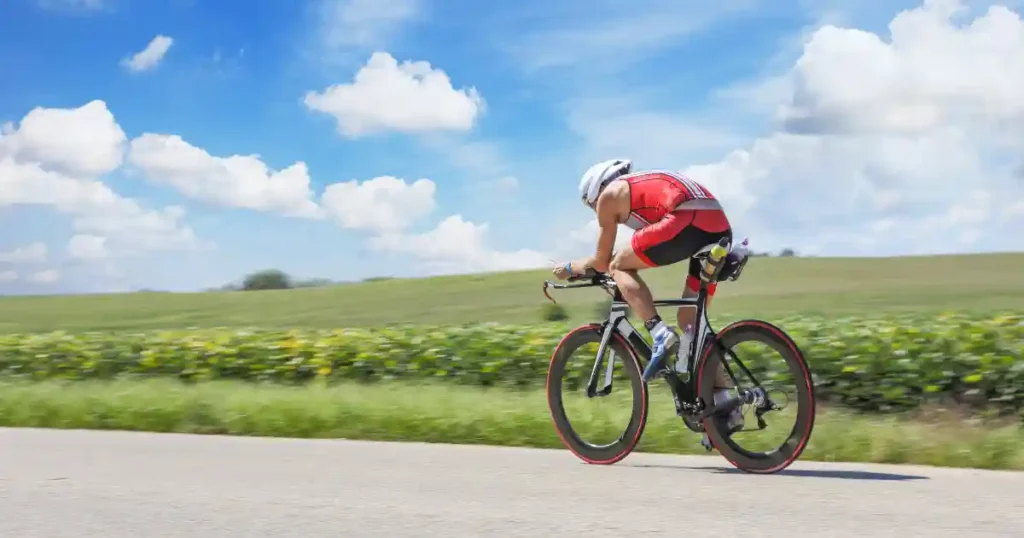
Stronger legs help. But cutting drag helps more than most riders ever realize. Cycling aerodynamics is the reason a rider can hold the same power output and gain several minutes over a long ride simply by changing how they sit on the bike. Living in Boulder, Colorado, where fast descents and long open stretches make wind your constant riding partner, I learned early that fighting air is the most expensive thing you can do on a bike. Understand cycling aerodynamics, and you start finding speed you never knew was hiding in your position, your clothes, and the way you move through the air.
What Is Cycling Aerodynamics and Why It Matters
Air resistance is quiet, invisible, and relentless. Learning to work with it changes everything about how you ride.
Simple Definition (No Complicated Physics)
Cycling aerodynamics is the study of how air flows around you and your bike while you ride. The goal is simple: reduce the force the air pushes back against you. That force is called drag. Less drag means more of your power actually moves you forward instead of just pushing through air.
Think of it this way. Every watt you produce on the bike goes somewhere. Some goes into rolling resistance between your tires and the road. A small amount goes into drivetrain friction. But the vast majority, especially at speeds above 20 miles per hour, goes directly into overcoming aerodynamic drag.
Research confirms that at 25 miles per hour, roughly two-thirds of your total power output is spent fighting air resistance. By the time you reach 30 miles per hour, that figure climbs even higher. Reducing drag even slightly at those speeds produces meaningful gains without requiring any extra fitness.
Why Aerodynamics Matters More Than You Think
Position changes that are free. Clothing choices that cost very little. Simple riding habits that anyone can adopt on their next outing. These are the things that move the needle most in cycling aerodynamics, and most riders overlook all of them.
Research from wind tunnel testing consistently shows that more than 80 percent of a cyclist’s aerodynamic drag comes from the rider’s body, not the bike. The bike frame, wheels, and components contribute the remaining portion. That means the biggest opportunity for improvement sits in how you position your body, not in your next equipment purchase.
A drop in riding position that reduces your frontal area by 20 percent can lower drag by a similar margin. That kind of saving translates to real time over a long ride. Several minutes over a 40-kilometer effort, without touching your fitness, your training plan, or your gear.
Real Ride Context
One windy afternoon in Boulder, I was riding into a stiff headwind on a flat section I know well. Same gear. Same legs. But the effort felt brutal. I was grinding to hold my usual pace and going nowhere fast.
Out of habit more than intention, I lowered my torso a few inches, tucked my elbows in, and dropped my chin slightly. The change in resistance was immediate. Not dramatic. Not like a switch flipped. But the effort dropped noticeably, and my speed crept back up to where it belonged.
Same power. Less struggle. That is cycling aerodynamics in one real-world moment.
Understanding Drag (The Force Slowing You Down)
Before you can reduce drag, you need to understand what it actually is and where it comes from.
What Is Aerodynamic Drag?
Aerodynamic drag is the force the air exerts on you as you push through it. It acts directly against your direction of travel. The faster you go, the harder the air pushes back. The larger your frontal profile is, the more air you have to displace with every meter you cover.
Two components make up drag for a moving cyclist. The first is pressure drag, which is caused by the low-pressure wake that forms behind you as you ride. Air separates around your body and struggles to rejoin cleanly behind you. That separation zone creates a kind of aerodynamic shadow that pulls you backward. The second is skin friction drag, which comes from air moving across the surface of your clothing, skin, and equipment. Both matter, but pressure drag dominates.
The fundamental equation tells you everything you need to know intuitively: drag force increases with the square of your velocity. Double your speed, and drag quadruples. That relationship is why aerodynamic improvements deliver much larger returns at higher speeds than at lower speeds.
Types of Drag in Cycling
Form drag comes from your overall body shape and frontal area. A wider, more upright rider presents more surface to the wind and creates more form drag. A narrow, low rider presents less. Form drag accounts for the majority of total aerodynamic resistance in cycling.
Skin friction drag comes from air passing over surfaces. Smooth, tight-fitting materials create less friction than loose, flapping fabric. This is why professional cyclists wear skin-tight suits rather than loose jerseys during time trials. Every wrinkle and loose panel adds friction drag that accumulates over a full ride.
Pressure drag, also called form drag in some contexts, comes from the turbulent wake trailing behind you. A streamlined shape allows air to reattach smoothly after passing your body. A poorly shaped profile creates a large, turbulent wake and significant rearward drag.
Why Speed Changes Everything
This is the part that surprises most riders. Drag does not scale evenly with speed. It scales with the square of speed, which means the power required to overcome it scales with the cube of speed.
To put that in concrete terms: at 10 miles per hour, only about 10 percent of your power goes into overcoming air resistance. At 25 miles per hour, that figure exceeds 80 percent. At 30 miles per hour, the air is consuming nearly everything your legs produce.
This cubic relationship explains why even very small aerodynamic improvements produce large time savings at race speeds. A 10 percent reduction in drag does not feel like much. But at 25 miles per hour, it can save several minutes over a 25-mile effort. That is speed you get for free, just by understanding the physics and making some adjustments.
Rider Position: The Biggest Aero Gain
No piece of equipment comes close to the gains available through position. This is where every rider should start.
Upright vs Aero Position
An upright riding position is comfortable. Your back is relaxed, your neck is not strained, and your lungs feel open. It is also the worst aerodynamic position you can be in on a bike.
Riding upright presents your full torso to the wind. Your frontal area is maximized. Your wake is large. Every watt your legs produce has to push that wide profile through the air.
An aero position flattens your torso toward the handlebars, narrows your profile, and dramatically reduces the surface you present to the wind. Wind tunnel testing at SimScale demonstrated that a rider in the dropped position showed 14 percent less drag than the same rider sitting upright, and a rider in a low tuck showed 32 percent less drag. Same person. Same bike. Completely different aerodynamic profile.
The tradeoff is comfort and power output. Extreme aero positions can reduce how much power you can sustain, particularly if they compress your hip angle significantly. Research published in Sports Engineering found that optimizing aerodynamic position must account for the physiological cost of that position. The fastest position is not always the most aero position. It is the most aero position you can hold comfortably at your target effort for the full duration of your ride.
Small Adjustments That Make a Big Difference
You do not need to contort yourself into a professional time trial position to get meaningful aerodynamic gains. Small, practical changes deliver real results.
Bending your elbows slightly narrows your shoulders and reduces your frontal profile. Peter Schep, Head of Performance at EF Pro Cycling, puts it simply in the team’s rider guidance: the easiest way to decrease drag is to decrease frontal area, and that means head down and elbows in. Dropping your head slightly lowers the tallest point of your profile. Keeping your back flat rather than rounded improves the flow of air over your torso and reduces the turbulent wake behind you.
Even your hand position matters. Research noted in the University of Utah cycling biomechanics work led by Dr. James Martin found that riding with hands on the brake hoods compared to the tops of the handlebars can improve time trial performance by five to seven minutes over a standard distance. Hands in the drops improved results by another two to three minutes. These are not marginal gains. They are substantial improvements available to any rider who practices and holds better positions.
Comfort vs Speed Trade-Off
Here is the honest version of the position conversation. An aero position that causes pain, limits breathing, or forces you to sit up repeatedly during a ride is not actually faster. It is just uncomfortable.
The best aero position for any individual is the lowest, narrowest position they can hold productively across the full duration of their target ride. That position is different for every rider. It depends on hip flexibility, torso length, core strength, and riding history.
Build your aero position gradually. Hold a slightly lower position for short intervals, maybe 5 to 10 minutes at a time. Let your body adapt over weeks of consistent practice. The position that feels awkward on your first ride often becomes natural and sustainable within a few training blocks.
Riding Position vs Aerodynamic Impact
I have spent time in wind tunnels and on the road testing positions with power meters. This table reflects what consistent research and real-world testing show across positions. The gains from going lower are not theoretical. They show up in your data every single time.
| Position | Drag Level | Comfort | Best Use Case |
|---|---|---|---|
| Upright (hands on tops) | Very High | Very High | Casual or recovery rides |
| Hoods (normal road position) | Medium | High | Training and group rides |
| Drops (low road position) | Low | Medium | Fast riding and headwind sections |
| Aero tuck (torso flat) | Very Low | Low | Descents, time trials, racing |
Cycling Equipment That Improves Aerodynamics
Once your position is dialed in, the right equipment extends those gains further. Not before. Position always comes first.
Aero Helmets (Worth It?)
An aero helmet reduces turbulence around your head and smooths the airflow over your torso. Testing conducted at the Wales National Velodrome found that switching from a standard vented helmet to an aero version at 25 miles per hour saved around 4 watts continuously. Over a one-hour ride, that translates to roughly 2 minutes of saved time.
For riders doing time trials, charity rides with a target finish time, or any event where speed matters, an aero helmet is a worthwhile investment after position has been addressed. For everyday training rides, a standard helmet is perfectly fine.
Tight-Fit Clothing vs Loose Clothes
Loose clothing is one of the most common and easiest-to-fix sources of drag on a recreational cyclist. Fabric that flaps in the wind creates turbulence and friction drag that accumulates over an entire ride.
EF Pro Cycling’s performance team guidance notes that loose clothing that flaps at speed undoes other aerodynamic gains. Tight, smooth jerseys and bib shorts allow air to pass over your body more cleanly. Aero socks, which might seem like a minor detail, have shown measurable drag reductions in controlled testing because they smooth the airflow around the foot and lower leg as they move through the air.
For long road rides in mixed conditions, a balance between aerodynamics and breathability is reasonable. On descents and flat sections at speed, zipping up your jersey and keeping clothing snug makes a real difference. Open it up on hot, slow climbs where cooling matters more than drag.
Deep Section Wheels
Deep-section carbon wheels reduce aerodynamic drag by allowing air to flow around the rim profile more cleanly than a standard box-section wheel. Zipp, Enve, and similar manufacturers design their rims specifically to minimize turbulent wake and pressure drag at typical riding speeds.
The gains from deep section wheels are real. Testing by various cycling research groups shows savings of several watts compared to standard wheels at race speeds. However, those savings only matter after position and clothing have already been addressed. Spending money on wheels while riding upright in a loose jacket is poor prioritization of aerodynamic gains.
How Speed and Wind Affect Aerodynamics
Wind changes your effective speed through the air, and that changes everything about how hard you work.
Headwind vs Tailwind
A headwind adds to your effective air speed. If you are riding at 20 miles per hour into a 10-mile-per-hour headwind, your body experiences 30 miles per hour of airflow. Drag scales with the square of that effective air speed, so a moderate headwind dramatically increases the power required to maintain pace.
A tailwind reduces your effective air speed. Riding 20 miles per hour with a 10-mile-per-hour tailwind means your body only faces 10 miles per hour of airflow. Drag drops significantly. The ride feels easy. You make better time than your legs alone would produce.
The asymmetry is important and often underestimated. Research by Dr. James Martin and colleagues showed that on an out-and-back course with equal headwind and tailwind, you always come back slower on average than a calm-air ride at the same effort. You spend more time fighting the headwind than you gain from the tailwind, so the net result is a slower overall ride. That insight reframes how you should think about pacing in windy conditions.
Crosswinds (The Tricky One)
Crosswinds are more complex than headwinds or tailwinds. A crosswind hits your body and bike from the side, creating lateral force that affects your balance and steering. It also changes your effective drag profile because air is no longer hitting you head-on.
Crosswinds are where deep-section wheels can become a liability. Very deep rims in a strong crosswind act like a sail, catching lateral gusts and making the bike unstable. Most experienced riders choose shallower rim depths on very windy days for exactly this reason.
Riding in a crosswind requires active balancing and a slightly firmer grip on the bars. Reducing your speed slightly rather than fighting the instability produces a safer and more efficient result.
Why Group Riding Saves Energy
Drafting is the most powerful aerodynamic tool available to any rider who is not in a solo time trial. Riding directly behind another cyclist puts you in their slipstream, where much of the air resistance has already been displaced. The rider behind does significantly less work to hold the same speed.
Research consistently shows that drafting reduces energy expenditure by around 25 to 30 percent compared to riding alone at the same speed. In a larger group or peloton, savings can be even greater depending on position within the group.
This is why professional road races are won in the final kilometers, not across the whole distance. The peloton neutralizes aerodynamic drag for everyone inside it, holding speeds that would be unsustainable for a lone rider at the same effort level.
Wind Conditions and Riding Feel
After years of riding in varied wind conditions, I built a mental table that captures how different wind types actually feel. This is not theoretical. It reflects what most riders experience once they start paying attention to wind direction and their own effort levels.
| Wind Type | Effort Level | Feeling on the Bike | Best Strategy |
|---|---|---|---|
| Headwind | Very High | Legs heavy, pace drops fast | Stay low, steady power, smaller gear |
| Tailwind | Low | Smooth, fast, deceptively easy | Maintain cadence, extend efforts |
| Crosswind | Medium | Slight instability, odd power feel | Stay balanced, firm grip, moderate depth wheels |
| Calm air | Baseline | Accurate representation of fitness | Best conditions for testing position |
How to Reduce Drag Without Expensive Gear
The best aero gains cost nothing. Seriously. Start here before spending a dollar on equipment.
Body Position First
Lower your torso. That single change does more for your aerodynamic profile than any piece of equipment you can buy. Drop your shoulders. Relax tension that pulls them up toward your ears. Tuck your elbows in toward your body to narrow your shoulder width.
These adjustments reduce your frontal area, which is the primary driver of aerodynamic drag. A narrower, flatter profile pushes through the air with far less resistance. The gains are immediate and they are free. Practice holding this position on every training ride, even for short intervals during longer easy sessions.
Clothing Choices Matter
Look through your kit and identify anything loose. Loose outer layers, oversized jerseys, baggy shorts, untucked pockets. All of it adds drag. Switch to a well-fitting cycling jersey that sits smooth across your back and shoulders. Use bib shorts that stay in place rather than riding up.
If you ride in cold weather, choose a windproof layer that fits your torso closely rather than a bulky jacket with extra room. The aerodynamic cost of extra fabric at speed is measurable, and it adds up across a full ride.
Smooth Riding Technique
Sudden movements create turbulence. Weaving, standing frequently, or bobbing your upper body all disrupt the clean airflow around your profile and add drag in ways that are harder to quantify but very real.
Maintain a steady cadence. Smooth power application keeps your body still and your profile consistent. Stay seated on gentle grades rather than standing out of habit. Every time you rise out of the saddle on a flat road, your frontal area increases and your drag spikes. Save the out-of-saddle efforts for climbs where power trumps aerodynamics.
Aero vs Weight: What Matters More?
This debate fills cycling forums endlessly. The real answer is more practical than most riders expect.
Flat Roads: Aero Wins
On flat terrain at speeds above 15 to 20 miles per hour, aerodynamics dominates. Gravity is not working against you. The only significant resistance is air. In that environment, every improvement to your aero profile produces speed. Weight savings produce almost nothing.
A rider who saves 500 grams by buying a lighter component on a flat course will gain essentially zero time. The same rider who lowers their torso an inch will gain several seconds per kilometer. The physics are clear. On flat and rolling terrain, aerodynamics wins the speed equation by a significant margin.
Climbs: Weight Becomes Important
Gradient changes everything. On a steep climb, gravity becomes the dominant force. Your speed drops, which means air resistance drops as a cube of that lower speed. At 8 miles per hour up a steep grade, aerodynamics contributes very little to your resistance. Weight matters now because you are literally lifting mass against gravity with every pedal stroke.
Riders who specialize in climbs optimize weight first. Riders who specialize in flat terrain and time trials optimize aerodynamics first. Most recreational cyclists ride a mix of terrain, which means both matter and neither should be ignored entirely.
Real-World Balance
For most riders on most routes, aerodynamics delivers larger gains than weight savings across the full ride. A typical route mixes flat roads, rolling terrain, and moderate climbs. Across that mix, the aero gains on the flats and descents outweigh the weight savings on the climbs in total time.
The practical takeaway: prioritize position and aerodynamics for your flat and rolling segments. Accept that weight matters on long climbs and factor that into major equipment decisions. But do not buy lighter components at the expense of comfort or fit. A rider who climbs poorly because their bike does not fit right loses more time than any weight saving gains.
Tools and Apps to Measure Aerodynamic Gains
Measuring your aero improvements helps you know what is working and what is not. These tools make that possible without a wind tunnel.
Power Meters and Data Tracking
A power meter combined with speed data lets you calculate your aerodynamic drag coefficient, known as CdA, using a method called virtual elevation testing. Ride a known flat course in calm conditions at different positions. Compare your watts-to-speed relationship across runs. A lower CdA shows up as higher speed for the same power output.
Garmin devices with advanced cycling dynamics can track power, speed, and even some positional data. Pair this with a head unit that shows your real-time power to speed ratio and you have a feedback loop for position testing. The data does not lie. A position change that reduces drag shows up immediately in your numbers.
Virtual Training Platforms
Zwift models aerodynamics in its virtual environment using your in-game equipment and rider settings. While the simulation simplifies real-world conditions, it allows you to experience the speed difference between riding upright and riding in a lower position in a controlled, repeatable way.
TrainerRoad integrates power data and performance tracking over time. By comparing your performance across similar workouts over weeks, you can identify whether changes to your position or equipment are producing measurable gains in your real-world power to speed ratio.
Basic DIY Testing
Pick a flat, consistent road segment you can ride repeatedly in similar conditions. Ride it multiple times at a steady, controlled effort in your normal position. Record your average speed. Then ride it again in a lower, more aero position at the same power output. Compare results.
This is not as precise as wind tunnel testing. But it is honest, free, and repeatable. Over multiple test runs, meaningful differences in position show up clearly in the data. A notebook and a consistent testing protocol will give you real information about what is and is not working.
Common Aerodynamic Mistakes Cyclists Make
These mistakes are common. Easy to fix. And worth addressing before anything else.
Sitting Too Upright
The most common aero mistake among recreational cyclists is simply sitting too tall. An upright position is comfortable. But comfort and speed trade off against each other on flat, fast roads.
You do not need to go to extremes. Even a slight forward lean, dropping your torso by a few degrees, meaningfully reduces your frontal area and lowers your drag. Practice holding a lower position for progressively longer intervals. Start with five minutes at a time during training rides. Build to 20, then 30 minutes. Your body adapts faster than most riders expect.
Wearing Loose Clothing
Loose clothing is a silent drag tax that follows you for every kilometer of every ride. Flapping jersey pockets, a jacket with extra room, shorts that bunch around the knees. All of it creates turbulence and friction that slows you down without any feedback in the moment.
Switching to well-fitted kit is one of the cheapest aerodynamic improvements available. A fitted jersey and well-fitted bib shorts that stay smooth at speed cost the same as loose alternatives but perform significantly better in the wind.
Ignoring Wind Direction
Many riders set a target pace and chase it regardless of conditions. Then they wonder why a Tuesday ride felt so much harder than Saturday’s session on the same route. Wind direction explains most of that variation.
Check wind direction before you head out. Plan your effort accordingly. Push harder on the tailwind sections where the effort is rewarded with extra speed. Manage your effort into headwinds to avoid burning out before you reach the return leg. Adjust your position aggressively in headwind sections. Let yourself recover slightly in tailwind sections. Riding with wind intelligence rather than against it preserves your energy and improves average speed.
What Pro Coaches Say About Aero Gains
Real knowledge from people who work at the intersection of science and cycling performance.
USA Expert Perspective
Dr. James Martin is an Associate Professor in the Department of Nutrition and Integrative Physiology at the University of Utah and a Fellow of the American College of Sports Medicine. His research spans cycling biomechanics, power modeling, and aerodynamic drag measurement using field-based methods.
His published work on aerodynamic drag area in cyclists has been widely cited across sports science research. One consistent finding across his body of work is that aerodynamic factors at speed are the dominant determinant of cycling performance on flat terrain, and that position-based gains are accessible to riders at every level without any equipment investment.
His research on handlebar position and time trial performance found that a rider shifting from the tops of the bars to the hoods gained an estimated five to seven minutes over a standard time trial distance. Moving to the drops produced additional gains of two to three minutes. Those numbers come from field-based testing, not just wind tunnel models, which makes them more representative of real riding conditions.
The practical message from that body of research is consistent: position is the most powerful aerodynamic lever any cyclist can pull, and it is free to adjust.
Real Rider Story (Small but Honest)

One Saturday morning I changed only one thing on a familiar route. I focused on keeping my elbows tucked closer to my body than usual and maintained a slightly lower head position throughout the flat sections.
Nothing else changed. Same bike and Same nutrition. Same legs from a solid week of training. The position shift did not feel dramatically different from the saddle. My effort level felt about the same.
When I loaded the ride data afterward, my average speed on the flat segment was up by nearly half a mile per hour compared to my last three rides on the same route under similar conditions. Not a huge number in isolation. But across a full season of rides, that kind of consistent gain adds up to something very real.
Quiet wins like that are what cycling aerodynamics actually looks like for most riders. Not dramatic transformations. Just steady, compounding improvements from doing the simple things right.
Beginner-Friendly Aero Tips You Can Apply Today
No gear upgrades needed. These are changes any rider can make before their next ride.
Quick Wins
Bend your elbows during fast flat sections rather than locking them straight. Straight arms push your shoulders wide and increase your frontal profile. Bent elbows narrow your shoulder line and let your torso sit lower naturally.
Lower your head slightly on fast sections. You do not need to tuck your chin to your chest. A modest downward tilt removes the tall silhouette your helmet and head create when you ride with your head fully upright. Drop your shoulders consciously. Many riders carry tension in their upper back that pushes their shoulders toward their ears. Relaxing that tension drops your profile without any other effort.
Practice Makes Comfortable
Hold your aero position for short, timed intervals during training rides. Start with five-minute blocks during flat sections. After a few weeks, extend to ten minutes, then fifteen. Your hip flexors, lower back, and neck all adapt to the lower position over time.
The position that feels unnatural on your first few tries typically becomes your preferred position within a few weeks of consistent practice. Cyclists who started training in a more aero position often find that sitting upright later feels strange because it exposes how much drag they were fighting without realizing it.
Mental Shift (It Matters)
The biggest barrier to better aerodynamics for most riders is not physical. It is mental. Aero positions feel odd at first because they are unfamiliar, not because they are wrong. Your body does not know the difference between uncomfortable and incorrect without some experience.
Give the lower position a real trial of several weeks before deciding it does not work for you. Track your speed and power data across that period. Let the numbers confirm what the research already tells you: a lower, narrower position almost always produces better results at the speeds most cyclists ride.
Ride Smarter, Not Just Harder
Speed comes from managing resistance, not just generating power. Those two things work together best when you understand both.
Practical Action Steps
Start with position. Lower your torso on flat sections. Tuck your elbows. Drop your chin slightly on the faster parts of your ride. Do this on every training ride until it becomes habit.
Address your clothing next. Ditch the loose jacket on non-cold days. Use a fitted jersey. Keep your pockets zipped. Let air pass over your body cleanly without fighting flapping fabric.
Pay attention to wind. Adjust your effort and your position based on wind direction. Push on tailwind sections. Stay low and steady into headwinds. Protect yourself in crosswinds with a firm, balanced position. These habits cost nothing and compound across every ride you do.
Invest in equipment last. Aero helmet, deep-section wheels, and fitted skin suit all deliver real gains. But only after everything above is already working in your favor.
Honest Ending (Because It Happens)
Some days the wind is directly in your face for every outward mile. You grind. You stay low. And You do everything right. And you still come home slower than you wanted.
Some days a light tailwind lines up perfectly with a flat route and you feel like the fastest version of yourself. Everything flows. The bike feels alive.
Both days are part of the same sport. Cycling aerodynamics does not promise that every ride will feel smooth. It promises that across many rides, understanding and managing drag will make you measurably faster than ignoring it. That is the whole deal. Ride with the physics instead of against them.
Final Recommendation
Cycling aerodynamics is the highest-return performance area available to riders at every level. After testing positions, clothing, and equipment across years of riding in varied conditions, the clear conclusion is this: start with your body position and build everything else from there. Lower your torso, tuck your elbows, and stay narrow on flat and fast sections. These free adjustments deliver greater speed gains than most equipment upgrades ever will.
Once your position is dialed in, add a well-fitted kit, then consider aero equipment like a good helmet and deeper wheels if your riding context warrants it. Pay attention to wind direction on every ride and adjust your effort and posture accordingly. Aerodynamics is not a specialty topic reserved for racers. It is a practical skill that makes every cyclist faster, smarter, and more efficient on the road. Start with the basics, stay consistent, and let the data show you what works.
FAQs
Cycling aerodynamics is how air flows around you and your bike. Better aerodynamics reduce drag, helping you ride faster with less effort, especially on flat roads.
Lower your upper body and keep elbows bent. Wear fitted clothes and keep movements smooth. Small changes in cycling aerodynamics can make a big speed difference.
Yes, your riding position is key. A lower, more compact position reduces wind resistance. Good cycling aerodynamics start with how you sit and hold the bike.
Yes, aero helmets and tight gear reduce drag. Loose clothing slows you down. Smart gear choices can improve cycling aerodynamics without changing your fitness.
Fitness matters most, but cycling aerodynamics adds free speed. Even strong riders benefit from less drag. Combining both gives the best overall performance.
Better cycling aerodynamics can save a lot of effort and add speed. Small changes may give 1–3 km/h gains. It depends on your position and riding conditions.
Yes, wind plays a big role. Headwinds increase drag and slow you down. Good cycling aerodynamics help you cut through wind and maintain better speed.

Ehatasamul Alom is a dedicated road hybrid bikes expert. With over 15 years of experience, he helps people find the perfect ride. He began his journey as a bike mechanic. He learned the ins and outs of every bike.
Ehatasamul Alom holds a Master's degree in Mechanical Engineering from a Brown University (Providence US 02912), where he specialized in material science and bicycle kinematics. His master's thesis focused on optimizing frame geometry for road hybrid bikes to improve rider comfort and efficiency.
Ehatasamul has an extensive professional background. He spent 10 years (2010-2020) as a Senior Bike Designer at "Urban Cycles," a leading bicycle manufacturer. In this role, he led the development of several award-winning road hybrid bikes, which are known for their durability and performance. He later served (2020-2024) as the Head of Product Development at "Gear Up," a company specializing in high-end cycling components. There, he developed innovative parts and accessories specifically for road hybrid bikes.
Over the years, Ehatasamul has become an authority on Roadhybridbikes. He understands their design and function. His work focuses on making bikes easy to use. Ehatasamul believes everyone should enjoy cycling. He writes guides that are simple to read. His passion for road hybrid bikes is clear. His goal is to share his knowledge with everyone. He wants to see more people on two wheels. His advice is always practical and easy to follow.
- Ehatasamul Alom

- Ehatasamul Alom
- Ehatasamul Alom

- Ehatasamul Alom