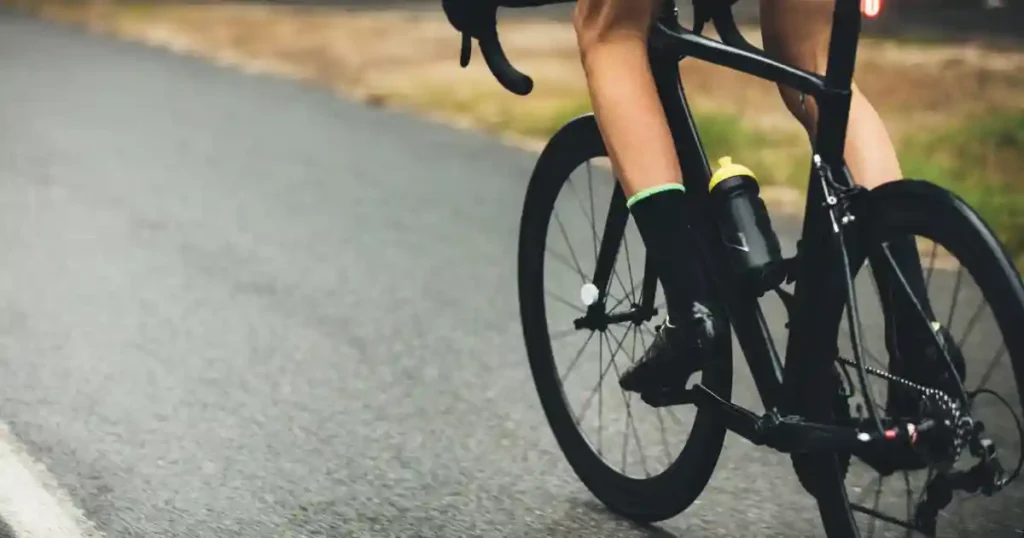
Riding through the streets of Portland, Oregon one morning, I kept asking myself one question, why do my legs burn out so fast? I was not going uphill. The road was flat. Then a fellow rider glanced over and said, “Check your cycling cadence.” That word changed everything for me. Once I understood what cadence really meant and how it affects every pedal stroke, my rides became longer, smoother, and far less painful. In this guide, I will share what I have learned, from personal experience and from the science behind it, so you can ride smarter too.
What Is Cycling Cadence?
Cadence is simply how fast you pedal. More precisely, it is the number of full pedal revolutions you complete in one minute. This is measured in RPM, which stands for revolutions per minute.
Think of it this way. If your right foot makes 80 full circles in 60 seconds, your cadence is 80 RPM. That one number tells you a lot about how your body is working on the bike.
Simple Definition of Cadence
- Cadence = pedal revolutions per minute (RPM)
- Measured using a cadence sensor or a bike computer
- Applies to road bikes, hybrid bikes, and mountain bikes
It sounds simple, and it is. But most riders I talk to never track it. They focus on speed, distance, or heart rate. Cadence gets ignored, and that is a big mistake.
Why Cadence Matters
Here is the truth: cadence affects almost everything about your ride.
- It shapes how fast you can go
- It controls how quickly your legs get tired
- It directly impacts your knee health and joint comfort
- It determines how efficiently your body uses energy
Coach Chris Carmichael, who trained Lance Armstrong for years, put it well: efficient cadence reduces fatigue and improves performance over long rides. That quote stuck with me. Fatigue is the enemy of enjoyment, and cadence is one of the best tools to fight it.
How Cadence Connects to Gearing
Your cadence and your gears work together. On a geared bike, you can shift to maintain a steady RPM even when the terrain changes. That is the whole point of having multiple gears. A beginner might push a heavy gear at 55 RPM without realizing it. An experienced rider shifts down and spins at 85 RPM instead, covering the same ground but using far less muscular effort.
How Cycling Cadence Affects Performance
This is where things get really interesting. Cadence is not just a number on your screen. It changes how your muscles, heart, and joints respond to every mile you ride.
Cadence and Speed
Many people assume that pedaling faster always means going faster. That is only partly true.
Speed depends on three things: your cadence, your gear ratio, and the force you apply. You can pedal at 110 RPM in a very easy gear and barely move. Or you can grind at 60 RPM in a big gear and fly down a flat road.
The sweet spot is matching your cadence to the gear so your effort feels smooth and controlled. High cadences of 90–100 RPM are better for most racing and time trial situations where power production is most important, while very high cadences of 100–120 RPM are most effective when the highest power is needed for short periods, such as during attacks, surges, and sprints.
Cadence and Endurance
This is the piece most beginners miss. Riding at a moderate, steady cadence allows you to go much farther before your legs give out.
Here is why. When you grind a big gear at low RPM, your muscles contract with a lot of force each stroke. That burns through glycogen faster and creates more muscle fatigue. A higher cadence reduces the force per stroke. Your cardiovascular system works a bit harder, but your muscles stay fresher.
Higher cadences may spare muscle glycogen by reducing force requirements, a benefit that becomes significant on long rides. I felt this personally on a 50-mile ride outside Portland. The first half, I was grinding at around 70 RPM. My quads were done by mile 30. The second half, I deliberately shifted down and spun at 85–90 RPM. I finished with energy to spare.
Cadence and Joint Health
Low cadence puts real stress on your knees. Every stroke at a low RPM means pushing harder against more resistance. Over time, that repetitive strain adds up.
A cadence between 80–100 RPM is considered efficient and sustainable over long distances because it strikes a balance between exerting too much force per stroke, which leads to rapid fatigue, and pedaling too quickly, which can be inefficient and hard to maintain.
If your knees ache after rides, cadence is one of the first things to look at. Shifting to a lighter gear and spinning more freely is often all it takes.
Ideal Cycling Cadence for Different Riders
There is no single “perfect” RPM for everyone. Your ideal cadence depends on your fitness level, your goals, and the type of riding you do. Here is what I have found works for different riders.
Beginners: 60–80 RPM
When you are just starting out, focus on finding a comfortable rhythm. Do not worry about hitting 90 RPM right away. Ride at a pace where your pedaling feels smooth and you are not bouncing in the saddle.
Recreational cyclists find comfort at 60–80 RPM, and new cyclists should look for a comfortable cadence around 70–80 RPM. The goal at this stage is consistency, not speed. Keep your upper body relaxed and your pedal strokes fluid.
Intermediate Riders: 80–90 RPM
At this level, you are starting to think about efficiency. Aim for 80–90 RPM on flat roads. This range puts less strain on your muscles and helps you ride longer without tiring out.
Low to moderate cadences of 70–90 RPM are comparatively efficient and useful for ultra-endurance riding when energy conservation is the priority. For intermediate riders doing longer weekend rides, staying in this zone is a smart strategy.
Advanced Cyclists: 90–110 RPM
At the advanced level, your cardiovascular system can handle the higher heart rate that comes with faster pedaling. You have also built the neuromuscular coordination to spin smoothly without bouncing.
Elite and competitive road cyclists typically ride between 90–105 RPM, with some pros maintaining up to 110 RPM during sprints. But getting there takes time. Do not rush it.
Sprint Efforts: 100–120+ RPM
Sprint cadence is in a league of its own. This is peak output for short bursts. Sprint specialists usually keep cadences between 100–120 RPM during explosive efforts. If you are not training for sprints, you rarely need to push this high.
Recommended Cadence by Skill Level
Based on research and real-world riding patterns, here is a practical cadence guide for different rider levels.
| Rider Level | Cadence Range (RPM) | Focus Area |
|---|---|---|
| Beginner | 60–80 | Comfort, rhythm, control |
| Intermediate | 80–90 | Efficiency, endurance |
| Advanced | 90–110 | Speed, sustained power |
| Sprint Efforts | 100–120+ | Maximum power output |
High Cadence vs Low Cadence: What’s Better?
This debate comes up in nearly every cycling group I have been part of. The truth is, neither is universally better. Each has a role, and knowing when to use each one is what separates smart riders from struggling ones.
High Cadence Benefits
Spinning at a faster RPM with a lighter gear:
- Reduces muscular strain per stroke
- Preserves leg strength for longer rides
- Puts less pressure on your knees and joints
- Allows smooth, fluid pedaling over flat roads
On a long ride, high cadence is your best friend. Your muscles get to share the work with your cardiovascular system, which recovers much faster between efforts.
Low Cadence Benefits
Grinding at a lower RPM with a heavier gear:
- Generates more power per stroke
- Useful for climbing steep hills
- Builds leg strength over time
- Suits short efforts where maximum force is needed
When I climb a steep incline, I naturally drop to around 65–75 RPM and push harder through each stroke. Trying to spin fast uphill in an easy gear just does not work, you lose traction and power.
When to Use Each
Here is my personal rule of thumb:
- Flat roads: Spin higher, stay around 80–100 RPM
- Long climbs: Drop cadence, control your effort
- Sprints: Push to 100–120 RPM for a short burst
- Recovery rides: Spin easy at 75–85 RPM
The goal is not to stick to one perfect cadence. Instead, develop what experts call “cadence agility”, the ability to switch smoothly between different pedaling speeds as conditions change. That skill takes time, but it is worth building.
High vs Low Cadence Comparison
This comparison helps you decide when to spin fast or push harder gears depending on your riding situation.
| Feature | High Cadence | Low Cadence |
|---|---|---|
| Muscle Fatigue | Lower | Higher |
| Cardiovascular Load | Higher | Lower |
| Joint Stress | Lower | Higher |
| Best Use Case | Flat roads, endurance | Climbs, strength work |
| Power Per Stroke | Lower | Higher |
| Efficiency Over Time | Better for long rides | Better for short bursts |
How to Measure Your Cycling Cadence
You cannot improve what you do not measure. The good news is that tracking cadence is easier than ever. Here are three ways to do it.
Using a Cadence Sensor
A cadence sensor attaches to your crank arm or shoe. It measures each rotation and sends the data to your bike computer or smartphone app via Bluetooth or ANT+. These sensors are affordable and accurate. Most cost between $20 and $50 and last for years.
I use one on every ride. Watching your cadence in real time is eye-opening. Before I got a sensor, I genuinely thought I was spinning at 85 RPM. Turns out I was barely hitting 68.
Using a Smart Bike Computer
A GPS bike computer like a Garmin or Wahoo often pairs with a cadence sensor and displays your RPM alongside speed, heart rate, and power. Some smart trainers measure cadence automatically. This is the most complete setup for serious training.
Manual Counting Method
No device? No problem. Count the number of times your right knee comes up in 15 seconds, then multiply that number by four. It gives you a quick estimate of your cadence.
It is not perfectly accurate, your mind tends to drift, but it works in a pinch. I used this method for my first year of riding before I invested in a sensor.
Common Mistakes Cyclists Make with Cadence
Over the years, I have made almost every cadence mistake there is. Let me save you some time.
Riding Too Hard in High Gears
This is the most common mistake I see among newer riders. They stay in a big gear and muscle through every pedal stroke. It feels powerful. But it drains your legs fast and strains your knees.
The fix is simple: shift to a lighter gear and let your legs spin more freely. It might feel slow at first. Your speed will actually improve once your legs stop fighting the resistance.
Ignoring Cadence Completely
Many riders track speed, heart rate, or distance but never look at cadence. Without RPM data, you have no idea how efficiently you are pedaling. You might be working twice as hard as needed.
Start tracking cadence on every ride, even if you do nothing with the data at first. Awareness is the first step.
Inconsistent Pedaling Rhythm
Jerky, uneven pedaling wastes energy. Each time you surge and then slack off, you lose momentum and burn extra fuel. Smooth, consistent rotation is far more efficient.
Think of your pedal stroke as a full circle, not just a downward push. Try to apply pressure through the whole rotation, down, back, up, and over. This smooth circular motion is called “pedal economy,” and it makes a real difference over long rides.
Common Cadence Mistakes and How to Fix Them
| Mistake | Effect | Fix |
|---|---|---|
| Grinding in big gears | Knee strain, early fatigue | Shift to an easier gear |
| Never tracking cadence | Poor efficiency, wasted effort | Use a sensor or count manually |
| Uneven pedaling rhythm | Energy loss, reduced speed | Practice smooth circular strokes |
| Copying pro cyclists | Fatigue, poor form | Build cadence gradually |
| Spinning too fast too soon | Bouncing in saddle | Increase RPM in small steps |
How to Improve Your Cycling Cadence
Improving cadence is a training skill just like climbing or sprinting. It takes time, but the results are real.
Practice Spinning Drills
Spinning drills are short bursts of high-cadence pedaling in an easy gear. The goal is not speed, it is smoothness.
Here is how I practice them. On a flat road, I shift to an easy gear and try to spin at 95–100 RPM for 30–60 seconds. Then I recover at my normal cadence for two minutes. I repeat this four to six times per session.
Start by working out your current comfortable cadence on easy rides. Once you know that, introduce short intervals at 5–10 RPM higher, starting with 30–60 second intervals. Gradual increases prevent the bouncing and loss of form that comes from jumping straight to high cadence.
Use Interval Training
Interval training is one of the best ways to build both endurance and cadence control. Alternate between high cadence segments and low cadence segments in the same ride.
For example:
- Ride at 95 RPM for 2 minutes
- Drop to 70 RPM for 2 minutes
- Repeat six times
This builds both cardiovascular fitness and neuromuscular coordination. Your legs learn to handle a wider range of pedaling speeds, which is exactly what you need in real-world riding.
Focus on Pedaling Technique
Technique matters more than people think. Keep your upper body relaxed. Do not grip the handlebars tightly. Let your hips stay stable while your legs spin freely. Tense shoulders and a stiff back actually reduce your pedaling efficiency.
Practice on flat roads first. Once your form feels natural, bring that same technique to hills and faster efforts.
Track Progress Over Time
Use your cadence sensor to log your average RPM on each ride. Over two to four weeks of consistent practice, most riders see measurable improvement. Consistently incorporating cadence drills into training will help you sustain higher RPMs with less fatigue and improve pedal smoothness, which is essential for effective cycling performance.
Cadence Tips for Different Riding Conditions
Your ideal cadence shifts depending on where and how you ride. Here is what works best in each scenario.
Flat Roads
Flat terrain is where you can focus most on cadence. Aim for 80–100 RPM and maintain a steady rhythm. Use your gears to keep your cadence in that window even as your speed changes.
On my regular commute route in Portland, I hold around 88–92 RPM on flat sections. It takes almost no effort once your body adapts to the rhythm.
Climbing Hills
Hills naturally drop your cadence. Your legs need more force per stroke. That is normal. The key is shifting to an easier gear early enough to avoid grinding to a stop.
Try to stay above 65 RPM on moderate climbs. Below 60 RPM, the strain on your knees increases sharply. If your gear range runs out before you hit the top, stand on the pedals briefly to push through the hardest section.
On climbs, cadence tends to drop because you are moving slower and may run out of gears, this is expected and part of natural cadence management.
City and Urban Riding
City riding is unpredictable. Stop signs, traffic lights, pedestrians, your cadence will vary constantly. Do not stress about hitting a specific number here.
Focus on starting smoothly from stops, shifting efficiently when accelerating, and avoiding grinding through intersections. Your cadence will naturally range from 50 RPM to 95 RPM in a single city block. That is fine.
Long-Distance Rides
On long rides, anything over 30 miles, cadence discipline is critical. Stay in a moderate range of 80–90 RPM. Avoid the temptation to push big gears when you are feeling fresh in the first hour.
The riders who finish a century ride (100 miles) strong are almost always the ones who managed their cadence carefully from the start. Save your legs for the final stretch.
FAQs About Cycling Cadence
What is the best cadence for beginners?
Start between 60–80 RPM. Focus on smooth, comfortable pedaling before chasing higher numbers. Rhythm and consistency matter more than raw RPM at this stage.
Is higher cadence always better?
No. The “perfect” cadence does not exist as a universal number, optimal cadence varies by individual, situation, and goal. Higher cadence suits flat roads and endurance riding. Lower cadence suits steep climbs and strength work.
How long does it take to improve cadence?
Most riders see meaningful improvement within two to four weeks of consistent practice. Full adaptation, where a new cadence feels completely natural, typically takes one to three months.
Do I need a cadence sensor?
A sensor makes it much easier to track and improve, but you do not strictly need one. Manual counting works well enough to get started. If you are serious about training, a sensor is worth the small investment.
Does cadence change with age?
It can. Older riders often prefer slightly lower cadences because their cardiovascular systems recover more slowly from the higher heart rate that comes with fast spinning. However, optimal cadence depends on leg strength, cardiovascular fitness, riding discipline, and personal biomechanics, what works for one cyclist may not be ideal for another.
What cadence do professional cyclists use?
The average cadence in the Tour de France depends on the stage, but you can expect professional riders to average between 75–95 RPM, adjusting based on terrain and effort.
Final Recommendation
Cycling cadence is one of the most underrated tools in your riding toolkit. After years of struggling with fatigue and knee pain, learning to manage my RPM changed everything. My recommendation is this: start by tracking your current cadence for two weeks without changing anything. Just observe. Then gradually shift toward the 80–90 RPM range on flat roads, using easier gears than you think you need.
Add two or three spinning drill sessions per week. Be patient. The improvement you feel at the four-week mark will motivate you to keep going. Cadence is not about perfection, it is about finding a sustainable rhythm that lets you ride longer, feel stronger, and enjoy every mile more. That is a goal worth chasing.

Ehatasamul Alom is a dedicated road hybrid bikes expert. With over 15 years of experience, he helps people find the perfect ride. He began his journey as a bike mechanic. He learned the ins and outs of every bike.
Ehatasamul Alom holds a Master's degree in Mechanical Engineering from a Brown University (Providence US 02912), where he specialized in material science and bicycle kinematics. His master's thesis focused on optimizing frame geometry for road hybrid bikes to improve rider comfort and efficiency.
Ehatasamul has an extensive professional background. He spent 10 years (2010-2020) as a Senior Bike Designer at "Urban Cycles," a leading bicycle manufacturer. In this role, he led the development of several award-winning road hybrid bikes, which are known for their durability and performance. He later served (2020-2024) as the Head of Product Development at "Gear Up," a company specializing in high-end cycling components. There, he developed innovative parts and accessories specifically for road hybrid bikes.
Over the years, Ehatasamul has become an authority on Roadhybridbikes. He understands their design and function. His work focuses on making bikes easy to use. Ehatasamul believes everyone should enjoy cycling. He writes guides that are simple to read. His passion for road hybrid bikes is clear. His goal is to share his knowledge with everyone. He wants to see more people on two wheels. His advice is always practical and easy to follow.
- Ehatasamul Alom

- Ehatasamul Alom
- Ehatasamul Alom
- Ehatasamul Alom