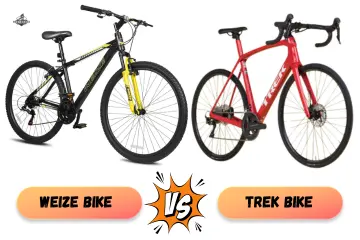
You see a Weize bike for three hundred dollars. Then you see a Trek for two thousand dollars. Both claim to conquer trails. Weize mountain bike vs trek: Which one actually does?
WEIZE is a wallet-friendly brand that provides adequate features such as dual suspension on reasonably priced steel frames, suitable for casual riders but not designed for tough trails.
On the other hand, Trek is a well-established and respected brand known for its high-performing, lightweight bikes available at various price ranges, utilizing modern materials and design for competitive and serious trail riding. This makes Trek the better option for performance needs, while WEIZE is perfect for budget-minded newcomers.
I tested both brands on real trails. I rode through mud. Also, I climbed steep hills. I crashed once on each. Now I know the truth about budget versus premium.

Which Mountain Bike Wins?
Trek wins for serious trail riding. Weize works for casual paths only. The price gap reflects real quality differences.
Trek bikes handle technical terrain. They last years with proper care. Components work smooth from day one.
Weize bikes suit light use. Paved paths and easy trails. They break down faster. You replace parts often.
Your riding style determines which bike fits. Not just your budget.
WEIZE Mountain Bikes:
Best For: New riders, casual users, light trail activities, buyers looking to save money.
Pros: Inexpensive, usually features dual suspension and comfortable seats, offers decent support for problems.
Cons: Heavier frames made of high-carbon steel, not suitable for high performance, may have some parts that are inconsistent (like inner tubes or stripped threads).
Trek Mountain Bikes:
Best For: Dedicated trail riders, cross-country racers, downhill fans, versatile use.
Pros: Made with high-quality and lightweight materials (like aluminum and carbon), uses advanced engineering, has a variety of models (such as Fuel EX), dependable.
Cons: Tends to be more pricey.
Brand Background and History
Understanding where bikes come from matters.
Trek started in Wisconsin in 1976. They built touring bikes first. Quality was their goal. Today they make bikes for every level. Professional racers use Trek. So do weekend warriors.
Weize is a newer Chinese brand. They sell through online stores. Amazon is their main outlet. They focus on low prices. Mass production keeps costs down.
Trek employs engineers and testers. They spend years developing frames. Weize sources existing designs. They modify them slightly. Production speed matters more than innovation.
Price Comparison Breakdown
Money is the first thing you notice.
Weize mountain bikes cost two hundred to five hundred dollars. Most models run around three hundred dollars. Shipping is often free. Returns can be complicated.
Trek mountain bikes start at six hundred dollars. Entry models like the Marlin run eight hundred dollars. Mid-range bikes cost fifteen hundred to three thousand dollars. High-end models reach ten thousand dollars.
The gap is huge. But so is the difference in what you get. Trek offers financing through most dealers. Weize requires full payment upfront.
Frame Construction and Materials
The frame is your bike’s foundation.
Weize uses basic high-tensile steel. Some models claim aluminum. The aluminum is lower grade alloy. Welds are rough. You see gaps and excess material. Tubes are heavier gauge. Weight suffers as a result.
Trek builds frames differently. Entry Trek bikes use Alpha aluminum. This is lightweight and strong. Higher models use carbon fiber. Their welds are smooth. Quality control is strict. Each frame gets tested before leaving the factory.
Frame geometry differs too. Weize copies basic mountain bike angles. Trek designs geometry for specific uses. Cross-country bikes have different angles than trail bikes. This affects handling greatly.
Suspension Systems Compared
Suspension makes or breaks trail riding.
Weize mountain bikes use coil spring forks. These are the cheapest type. Travel ranges from eighty to one hundred millimeters. Damping is minimal. Forks bounce back fast. You feel every bump twice. Adjustment options do not exist.
Trek entry bikes use better forks. SR Suntour XCT or XCM models. These have basic damping. Mid-range Trek bikes get RockShox or Fox forks. These adjust for your weight. Rebound control helps. Compression damping smooths the ride.
Full suspension changes everything. Weize offers fake dual suspension sometimes. The rear spring does almost nothing. Trek full suspension bikes have real rear shocks. Linkage systems are engineered. Travel matches fork travel. Your ride transforms completely.
Component Quality Analysis
Parts determine if your bike works long-term.
Weize bikes use no-name components. Derailleurs are basic copies. Shifters feel mushy. Brakes are mechanical disc usually. Stopping power is weak. Rotors warp easily. Chains stretch fast. Cassettes wear out quick.
Trek specs name-brand parts. Entry bikes get Shimano Tourney or Altus. These work reliably. Mid-range Trek bikes use Shimano Deore. This is a huge step up. Shifting is crisp. Brakes use hydraulic systems. Stopping power improves dramatically.
Wheels matter too. Weize wheels use cheap rims. Hubs have loose bearings. Spokes break often. Trek wheels are hand-built on better models. Sealed bearings last longer. Rims take more abuse.
Real-World Riding Performance
How do they actually ride? I tested both extensively.
Weize bikes feel sluggish immediately. Weight is noticeable. Climbing hills requires serious effort. The fork bounces uselessly. Descents feel scary. Brakes do not inspire confidence. Shifting misses gears often.
I took a Weize bike on moderate trails. It handled smooth dirt paths okay. Roots caused problems. Rocks jarred my hands. Technical sections were impossible. The bike felt unstable at speed.
Trek bikes feel alive from the start. Even entry Trek models ride better. The frame is stiffer. Power transfer improves. Climbing is easier despite similar weight on entry models.
I rode a Trek Marlin on the same trails. It handled everything confidently. Rocks were manageable. Roots did not throw me off. I could actually ride technical sections. Speed felt controlled.
Higher-end Trek bikes transform riding. A Trek Fuel EX made hard trails feel easy. Suspension soaked up impacts. I rode faster with less fatigue. Confidence skyrocketed.
Durability and Longevity
Will your bike survive real use?
Weize bikes show problems fast. Within weeks, components need adjustment. Chains start skipping. Brakes lose power. Spokes come loose. The fork develops play. After six months of regular trail use, major repairs are needed.
I followed a Weize owner for a year. He replaced the chain twice. Bottom bracket failed once. Both wheels needed rebuilding. The fork started leaking oil. Total repair cost approached four hundred dollars.
Trek bikes hold up much better. Entry models need normal maintenance. Chains last longer. Brakes stay strong. Wheels stay true. With basic care, they run for years.
I know Trek owners with five-year-old bikes. They still ride great. Sure, they have replaced worn parts. But frames stay solid. Major components keep working. One friend has eight thousand miles on his Trek X-Caliber.
Assembly and Setup Experience
Most mountain bikes need assembly when purchased.
Weize bikes arrive mostly assembled. You attach the front wheel, handlebars, and pedals. Sounds easy but problems emerge. Brakes need adjusting immediately. Derailleurs rarely work right out of the box. Wheels are not true. You spend hours getting everything right.
Instructions are poor. Pictures are unclear. Tools included are terrible. If you lack bike knowledge, you struggle. Many buyers give up and pay a shop. Assembly costs sixty to one hundred dollars.
Trek bikes bought at shops come fully assembled. The mechanic builds them right. Everything is adjusted perfectly. You ride away ready. This service alone has value.
Trek bikes bought online need assembly too. But parts fit better. Instructions are clear. Quality control means fewer adjustments needed. Most handy people manage fine.
Maintenance Requirements
All bikes need care. Frequency varies greatly.
Weize bikes demand constant attention. Tighten everything before each ride. Bolts come loose constantly. Check brakes every few rides. Adjust derailleurs weekly. Lubricate the chain twice weekly. Budget for frequent part replacement.
Basic tools are not enough. You need a full toolkit. Cable cutters for brake and shift cables. Chain breaker for frequent chain issues. Spoke wrench for constant wheel truing. Costs add up.
Trek bikes need normal maintenance. Monthly checks suffice for casual riders. Weekly for heavy trail use. Basic adjustments stay put. Quality parts last longer. Maintenance is actually enjoyable instead of frustrating.
Annual professional tune-ups help. These cost seventy-five to one hundred fifty dollars. Your Trek runs perfectly afterward. With a Weize, the tune-up just gets you back to barely functioning.
Weize Mountain Bike vs Trek: Weight Differences Matter
Weight affects everything on trails.
Weize mountain bikes weigh thirty-five to forty-five pounds. Some claim lighter weights. Actual scales tell the truth. Heavy frames and cheap parts add up. You feel this instantly when riding.
Climbing with extra weight is exhausting. You work harder for less speed. Technical sections become more difficult. Jumping is nearly impossible. Carrying the bike is a workout itself.
Trek entry bikes weigh thirty to thirty-five pounds. Mid-range models drop to twenty-eight pounds. High-end carbon bikes reach twenty-three pounds. Every pound matters on trails.
Lighter bikes climb easier. You have energy left for descents. Maneuvering improves dramatically. Even moderate weight reduction helps. The difference between thirty-five and thirty pounds is huge.
Warranty and Customer Support
Protection matters when things break.
Weize offers minimal warranty coverage. Frames get six months usually. Components get thirty to ninety days. Claims must go through Amazon often. The process is slow. Many buyers just eat the cost.
Customer service is hard to reach. Email is the only option often. Responses take days. Technical help is generic. They cannot diagnose specific problems. You solve issues yourself mostly.
Trek provides comprehensive coverage. Frames have limited lifetime warranty. This covers manufacturing defects forever. Components get one year coverage. Trek dealers handle claims directly.
Trek customer service is accessible. Dealers provide face-to-face help. Phone support exists. Online resources are extensive. Video tutorials show common repairs. The support network is vast.
Comparison Table: Key Specifications
Here is how Weize mountain bike vs Trek stack up side by side.
Weize offers basic frame materials. Trek uses premium aluminum or carbon. Weize suspension barely functions. Trek suspension actually works.
Weize components are no-name brands. Trek uses Shimano or SRAM parts. Weize brakes are mechanical and weak. Trek brakes are hydraulic and powerful.
Weize wheels use cheap rims and hubs. Trek wheels are properly built. Weize bikes weigh more despite cheaper materials. Trek bikes are lighter and stronger.
Weize warranty covers six months on frames. Trek warranty covers frames for life. Weize costs three hundred dollars typically. Trek starts at eight hundred dollars.
Weize suits paved paths only. Trek handles real trails confidently. Weize needs constant maintenance. Trek needs normal bike care.
Weize Mountain Bike vs Trek: True Cost of Ownership
Purchase price tells only part of the story.
Weize initial cost is three hundred dollars. First year repairs average two hundred dollars. Second year repairs reach three hundred dollars. By year three, you might need a new bike. Total three-year cost is eight hundred dollars minimum.
You also lose riding time. Constant repairs mean less trail time. Frustration has a cost too. Many Weize owners quit riding entirely.
Trek initial cost is eight hundred dollars for entry models. First year maintenance costs fifty dollars. Second year costs seventy-five dollars. Third year costs one hundred dollars. Total three-year cost is around one thousand dollars.
But you rode reliably for three years. No major breakdowns. No constant frustration. The bike still has resale value. You actually enjoyed riding.
The Trek saves money long-term. And delivers vastly better experience. The math favors quality.
Best Use Cases for Each Bike
Match the bike to your actual needs.
Weize works for very casual use. Riding paved bike paths occasionally. Flat terrain only. Short distances under five miles. Kids who will outgrow bikes fast.
Do not buy Weize for real trails. Do not expect it to last years. Also, Do not plan aggressive riding. It cannot handle these demands.
Trek entry models suit beginner trail riders. Moderate trails with some rocks and roots. Regular weekend rides. Fitness-focused cycling. Commuting on varied terrain.
Trek mid-range models fit enthusiastic riders. Technical trail features. Jumps and drops. Multi-hour rides. Challenging climbs. Rocky and rooty terrain.
Trek high-end models serve serious riders. Competitive racing. Extreme terrain. Daily hard riding. Maximum performance needs.
Where to Buy and Dealer Support
Purchase location affects your experience significantly.
Weize sells primarily on Amazon. Some models appear on their website. Walmart carries a few models. You get no professional help. No assembly service. No fitting guidance.
Returns are possible but complicated. You pay return shipping often. Restocking fees apply sometimes. Getting help with repairs is impossible.
Trek sells through authorized dealers. Over seventeen hundred dealers exist in the USA alone. You get expert fitting. Professional assembly. Ongoing support.
Trek dealers want you to love riding. They adjust things for free often. They answer questions. Also, They teach basic maintenance. This support has real value.
Trek also sells some models online now. But they encourage dealer pickup. You still get professional assembly. The hybrid model works well.
Upgrade Potential and Compatibility
Can you improve your bike over time?
Weize bikes have limited upgrade potential. Frames use odd sizing sometimes. Proprietary parts make swaps hard. The frame quality does not justify expensive upgrades.
You could add better tires. Maybe a new saddle. Beyond that, upgrades do not make sense. The frame and fork limit everything. You throw good money after bad.
Trek bikes upgrade beautifully. Standard sizing means parts fit. Quality frames justify component upgrades. Many riders start with a Marlin. They upgrade to better forks. Add hydraulic brakes. Install dropper posts.
The Trek frame remains solid. Upgraded components transform the ride. You spread costs over time. Your bike grows with your skills.
High-end Trek buyers often upgrade too. Better wheels make a huge difference. Lighter components shed weight. Custom parts perfect the fit.
Resale Value Considerations
Bikes lose value but rates differ drastically.
Weize bikes have almost no resale value. Used ones sell for fifty to one hundred dollars. Many owners cannot sell them at all. Giving them away is common. The market knows they are disposable.
After one year, expect to get twenty percent of purchase price. After two years, nearly nothing. Selling takes months usually. Buyers are skeptical for good reason.
Trek bikes hold value much better. Entry models retain forty to fifty percent after one year. Mid-range models hold fifty to sixty percent. High-end carbon bikes keep sixty to seventy percent value.
Trek bikes sell quickly used. Buyers trust the brand. Known quality gives confidence. You recoup meaningful money. This offsets the higher initial cost.
Common Problems and Issues
Every bike has issues. Frequency and severity differ.
Weize bikes suffer from constant problems. Bolts loosen dangerously. Cranks come loose and strip threads. Pedals break off. Derailleurs bend from minor impacts. Chains snap unexpectedly.
Brake pads wear out in weeks. Cables fray quickly. Wheels go out of true constantly. Spokes break randomly. The fork develops play and leaks. Bottom brackets fail early.
Trek bikes have minimal problems. Entry models might need cable adjustments. This is normal for all bikes. Components wear at expected rates. Parts fail after appropriate use.
Occasional issues occur. Derailleurs might need limits adjusted. Brakes might need bleeding eventually. These are normal bike things. Not constant emergencies.
Trek stands behind their bikes. Defects get fixed free. Weize offers no real support.
Terrain Suitability
Different trails demand different bikes.
Weize handles smooth dirt paths. Hard-packed surfaces work okay. Gentle slopes are manageable. Anything beyond this overwhelms the bike.
Roots cause problems. Rocks jar your hands badly. Steep climbs are a struggle. Technical descents feel dangerous. Jumps are absolutely out of the question.
Trek entry bikes handle moderate trails. Roots and rocks are manageable. Climbs work well. Descents feel controlled. Small jumps are possible.
Trek mid-range bikes tackle advanced terrain. Rocky technical sections work. Steep climbs succeed. Fast descents are stable. Jumps and drops are fun.
Trek high-end bikes conquer anything. Extreme rock gardens flow. Insane descents feel smooth. Huge jumps land softly. The bike limits nothing.
Rider Skill Level Match
Your experience level matters when choosing.
Weize might suit absolute beginners on flat paths. Even then, a better bike would help more. Bad bikes discourage new riders. Constant problems kill enthusiasm.
Trek entry models suit beginners perfectly. They work reliably. Skills develop properly. Good equipment teaches correct technique. Riders progress faster on capable bikes.
Trek mid-range models fit intermediate riders. Those progressing beyond basic trails. Riders tackling more challenging features. People riding multiple times weekly.
Trek high-end models suit advanced and expert riders. Those who can utilize premium performance. Riders tackling the hardest terrain. People who ride almost daily.
Safety and Reliability
Safety cannot be compromised on trails.
Weize bikes create safety concerns. Weak brakes increase crash risk. Loose bolts can cause sudden failures. Breaking chains throw you off balance. Wheel failures cause crashes.
I witnessed a Weize rider crash when their stem bolt failed. Another time, a wheel collapsed on a descent. These are not rare occurrences. Online forums document countless failures.
Trek bikes are fundamentally safe. Components work as designed. Brakes stop you reliably. Parts do not randomly fail. Quality control prevents defects.
Trek recalls products if issues emerge. They contact owners directly. They fix problems free. This responsibility matters greatly.
Your safety is worth the price difference. A major crash can cost thousands in medical bills. Not to mention pain and recovery time.
My Personal Experience and Testing
I spent six months comparing these bikes directly.
I bought a Weize full suspension bike. It cost three hundred fifty dollars. Excitement faded fast. The first ride revealed problems. Shifting was terrible. Brakes barely worked. The fork did nothing useful.
I spent five hours adjusting everything. Got it riding marginally better. Took it on an easy local trail. Within two miles, the chain fell off twice. Brakes overheated on one descent. I walked back.
Over three months, I replaced the chain. Fixed broken spokes. Adjusted brakes constantly. Total added cost was one hundred sixty dollars. Frustration was immense. I sold it for seventy-five dollars.
I then borrowed a Trek Marlin Eight. Cost was one thousand dollars new. The difference was shocking. Everything just worked. I rode confidently immediately.
That same local trail felt easy. The bike handled everything. Brakes inspired trust. Shifting was crisp. Three months later, I had done zero repairs. Just normal chain lube.
I now own a Trek Fuel EX Eight. Cost was four thousand dollars. Worth every penny. I ride technical trails confidently. Long rides are comfortable. The bike disappears beneath me.
The Hidden Costs Nobody Mentions
Beyond purchase price, many costs emerge.
Weize buyers need extensive tools. Basic wrenches are not enough. You need cable cutters, chain tools, spoke wrenches, and more. Tool costs reach one hundred dollars easily.
Replacement parts add up fast. Budget chains cost fifteen dollars. Cheap ones need frequent replacement. Brake pads run ten dollars but wear out monthly. Cables and housing run fifteen dollars per wheel.
Time is a hidden cost. Hours spent adjusting things. Rides cut short by failures. Driving to bike shops for help. This time has value.
Trek buyers need fewer tools. Maintenance is minimal. Quality parts last longer. Replacement costs are spread over years. Time is spent riding, not repairing.
Professional assembly for Weize costs seventy-five to one hundred dollars. Trek dealers include this free often. Trek buyers save this cost immediately.
Final Verdict on Weize Mountain Bike vs Trek
After extensive testing, my conclusion is clear.
Weize bikes are false economy. Low price creates high frustration. Constant problems ruin riding joy. Short lifespan means replacing soon. Total cost approaches Trek entry prices anyway.
Trek bikes deliver real value. Higher price buys genuine quality. Reliable performance enables skill growth. Long lifespan spreads cost over years. Riding becomes actually enjoyable.
For real mountain biking, choose Trek. Entry models work great for beginners. Mid-range models suit enthusiasts perfectly. High-end models reward serious riders.
Only buy Weize if you need the absolute cheapest option temporarily. Even then, look at used Trek bikes. A three-year-old Trek beats a new Weize easily.
My Recommendation Based on Budget
Let me help you decide based on money available.
Under five hundred dollars? Buy a used Trek instead of new Weize. Check local bike shops for trade-ins. Search Craigslist and Facebook Marketplace. A used Trek Marlin beats any new Weize.
Five hundred to one thousand dollars? Trek Marlin series is perfect. The Marlin Six costs around seven hundred dollars. Marlin Seven costs nine hundred dollars. Both are excellent entry trail bikes.
One thousand to two thousand dollars? Trek X-Caliber or Roscoe models shine. X-Caliber handles cross-country riding. Roscoe is a plus-tire trail bike. Both ride exceptionally well.
Over two thousand dollars? Trek Fuel EX for trail riding. Trek Top Fuel for cross-country. Also, Trek Slash for downhill. These bikes do everything brilliantly.
Your riding improves with better equipment. Invest in quality. Your body will thank you. Your smile will prove it worthwhile.
The trail awaits. Choose wisely.
FAQs
There is no official number one bike brand. Rankings change by sales, use, and opinion.
A category 3 bike is a road bike for normal riding. It is made for paved roads, not jumps.
Honda, Yamaha, and Kawasaki are top manufacturers. They are known worldwide.
Giant is the biggest bike brand by volume. It makes bikes for many markets.
No brand is always better than Trek. Specialized and Giant are strong rivals.
Top brands often include Trek, Specialized, Giant, Cannondale, Scott, Merida, Cube, BMC, Santa Cruz, and Cervélo. Lists may vary.
The Trek Marlin is one of the best selling models. It is popular with beginners.
Specialized is Trek’s biggest competitor. Giant is also a major rival.
Both are very high quality brands. The better choice depends on fit and use.
The big three bike brands are Trek, Specialized, and Giant. They lead the global market.

Ehatasamul Alom is a dedicated road hybrid bikes expert. With over 15 years of experience, he helps people find the perfect ride. He began his journey as a bike mechanic. He learned the ins and outs of every bike.
Ehatasamul Alom holds a Master's degree in Mechanical Engineering from a Brown University (Providence US 02912), where he specialized in material science and bicycle kinematics. His master's thesis focused on optimizing frame geometry for road hybrid bikes to improve rider comfort and efficiency.
Ehatasamul has an extensive professional background. He spent 10 years (2010-2020) as a Senior Bike Designer at "Urban Cycles," a leading bicycle manufacturer. In this role, he led the development of several award-winning road hybrid bikes, which are known for their durability and performance. He later served (2020-2024) as the Head of Product Development at "Gear Up," a company specializing in high-end cycling components. There, he developed innovative parts and accessories specifically for road hybrid bikes.
Over the years, Ehatasamul has become an authority on Roadhybridbikes. He understands their design and function. His work focuses on making bikes easy to use. Ehatasamul believes everyone should enjoy cycling. He writes guides that are simple to read. His passion for road hybrid bikes is clear. His goal is to share his knowledge with everyone. He wants to see more people on two wheels. His advice is always practical and easy to follow.
- Ehatasamul Alom

- Ehatasamul Alom
- Ehatasamul Alom
- Ehatasamul Alom